Patek Nautilus 5980 & 5990 Super Clone: The Chronograph Guide
The Nautilus 5980 is Patek’s sports chronograph — the steel Nautilus with a flyback chronograph and a mono-counter at six o’clock — and the 5990 is its travel-ready sibling, adding a dual-time Travel Time function. Together they are the most complicated steel Nautilus pieces most buyers will want, and among the most convincing Patek super clones made. This guide covers the references, the difference between the 5980 and the 5990, the clone movement inside, and what to check before buying.

What Is the Nautilus 5980?
Launched in 2006, the 5980 was the first Nautilus with a self-winding chronograph, and it instantly became one of the most wanted steel sports watches in the world. Its signature is the mono-counter at six o’clock — a single subdial that combines the 60-minute and 12-hour chronograph totalisers into one register — paired with a flyback function that lets you reset and restart the chronograph in a single press. The case keeps the classic 40.5mm Nautilus shape with its hinged “ears,” and the dial carries the embossed horizontal relief that defines the line.
On a super clone, the 5980 is one of the strongest Patek pieces available, because the factories have poured development into the steel Nautilus more than almost any other reference. The chronograph works, the mono-counter reads correctly, and the embossed dial and case finishing are reproduced closely — which is exactly why it is one of the most popular Patek super clones.
The Nautilus Chronograph Story
The Nautilus itself was designed by Gérald Genta in 1976 — the porthole-inspired case, the hinged ears, the integrated bracelet — and it became, alongside the Audemars Piguet Royal Oak, the watch that made luxury steel sports watches a category of their own. For thirty years it stayed time-only. The chronograph did not arrive until 2006, when the 5980/1A added a self-winding flyback chronograph and the distinctive mono-counter, turning the Nautilus into a genuine sports chronograph for the first time.
That late arrival is part of why the 5980 is so coveted: it is the Nautilus with the most mechanical character, and for years it was nearly impossible to buy at retail. The 5990 Travel Time Chronograph followed in 2014, layering a dual-time complication on top. Together they sit at the complicated end of the steel Nautilus range — which is exactly why a convincing super clone of either is such an achievement, and such a popular one.
References & Variants
The 5980 family has run through several references and materials over the years. These are the ones worth knowing:
5980 vs 5990 — Which Chronograph?
The 5980 and the 5990 look like cousins, and they are, but they do different jobs. The 5980 is a pure sports chronograph: mono-counter, flyback, clean dial. The 5990 is the Nautilus Travel Time Chronograph — it keeps the chronograph but adds a dual-time (Travel Time) complication, with two pushers on the left of the case to jump the local hour forward and back, plus day/night indicators for home and local time. It is busier on the dial and the case, and it is the choice if you travel and want a second timezone on the wrist.
In short: pick the 5980 if you want the cleaner, more classic sports chronograph; pick the 5990 if you want the travel complication and do not mind a more complex dial. On super clones, both are reproduced, with the 5980 being the simpler and generally more convincing of the two because it has fewer functions to get exactly right.
The Movement
The genuine 5980 runs Patek’s in-house CH 28-520 C, an integrated automatic flyback chronograph. A flagship super clone reproduces it with a clone CH 28-520 built on a reliable chronograph platform (a 7750-type base), decorated to resemble the genuine caliber and holding roughly a 46-hour power reserve. A real chronograph clone like this gives you crisp pusher engagement, a smooth running-seconds hand and a correctly resetting mono-counter — the behaviour that a cheap module-based fake cannot match.

Be clear about the honest limit, though. The decoration you see through the display caseback — the striping, the Calatrava-cross rotor — reproduces the look of Patek finishing, but it is machine-applied rather than hand-finished to the Patek Philippe Seal standard. Treat quoted power-reserve figures as vendor numbers, and remember that a clone CH 28-520 copies the architecture and behaviour of Patek’s chronograph but is not a genuine Patek movement. For the full movement picture across the brand, see our best Patek super clone guide.
Dial & Case
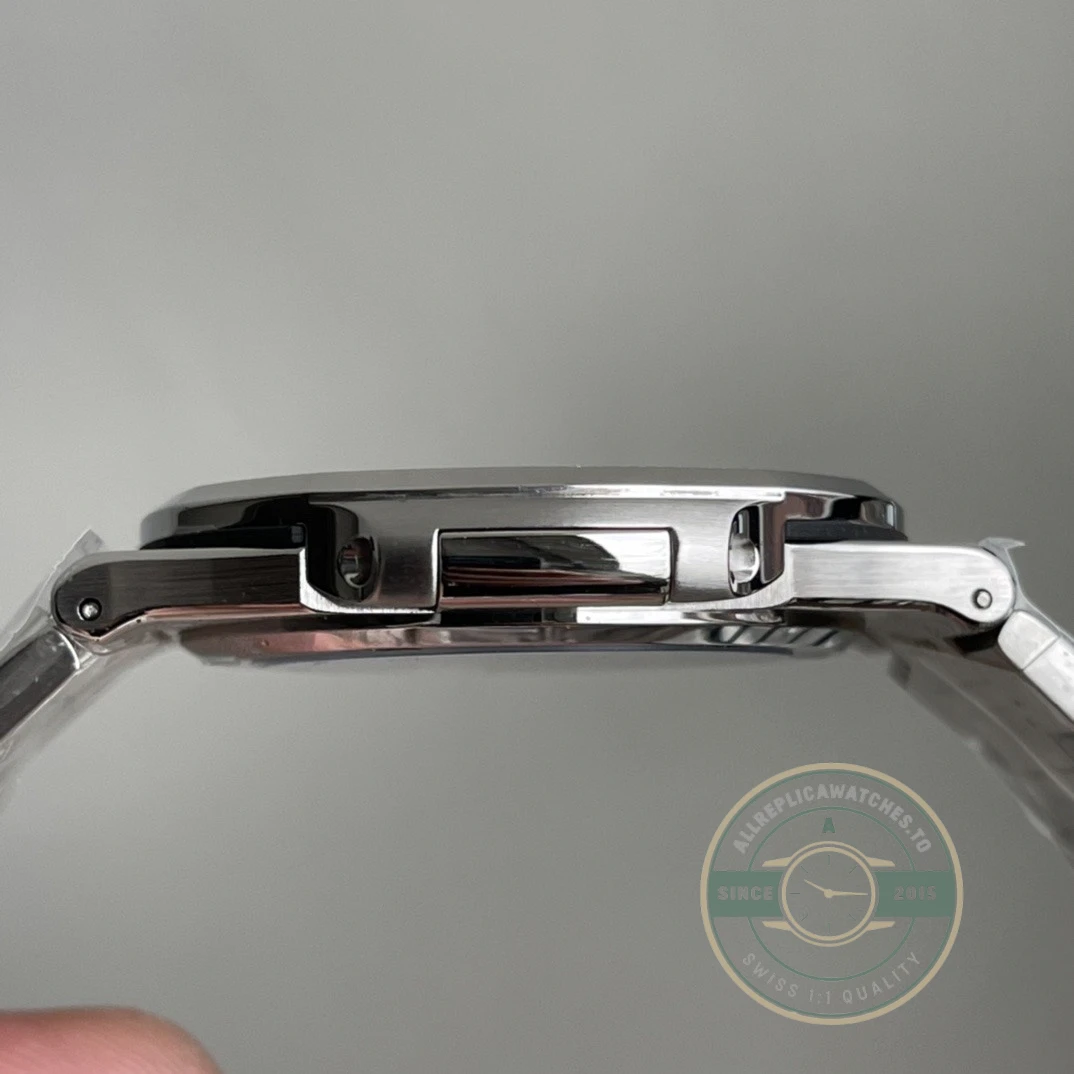
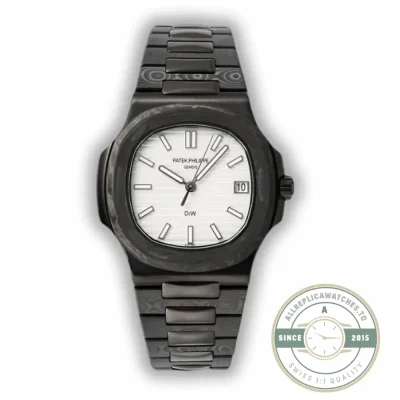
The 5980’s dial carries the Nautilus signature: the embossed horizontal relief that catches light across the face, with the mono-counter set cleanly into it at six o’clock and a date window at three. On a flagship super clone the relief is crisp and even, the applied markers are level and faceted, and the printing is sharp — the details that separate a good build from a cheap one. Watch the mono-counter in particular: its printing and the sub-register ring should be clean and correctly proportioned, not crowded or misaligned.
The case is pure Nautilus — the 40.5mm rounded-octagon shape with the hinged ears at three and nine, alternating satin-brushed tops with mirror-polished sides. The transition line between the two finishes is the key test: on a flagship clone it is razor-sharp and even, and the integrated bracelet repeats the same treatment link by link, tapering smoothly to the clasp. Pick it up and it should feel solid and well-articulated, with no rattle. These are the things to check in QC photos before you buy.
5980 vs 5711 — Chronograph or Time-Only?
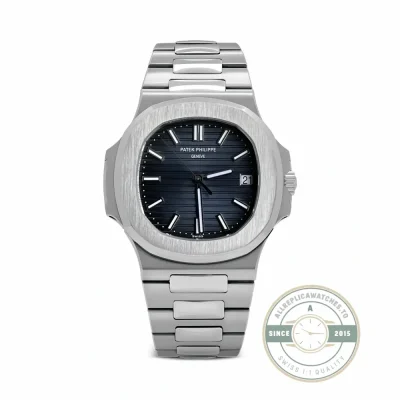
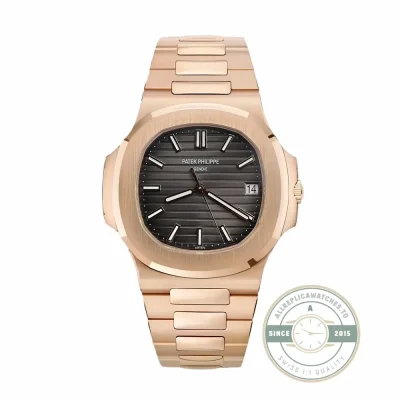
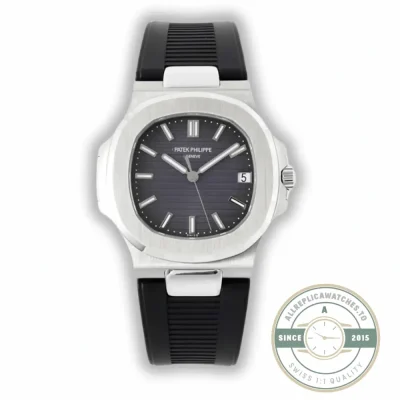
Many buyers choosing a steel Nautilus are deciding between the 5980 chronograph and the time-only 5711. The 5711 is the purist’s Nautilus — thinner, cleaner, just hours, minutes, seconds and a date — and it is the more versatile dress-sport watch. The 5980 is sportier and more mechanical, with the chronograph pushers and the busier dial, and it wears a touch thicker. On super clones, the 5711 is slightly easier to get perfect because it is simpler, while the 5980 offers more watch for a similar price. If you want one steel Nautilus to do everything, the 5711 is the safe pick; if you want the sports chronograph character, the 5980 is the one.
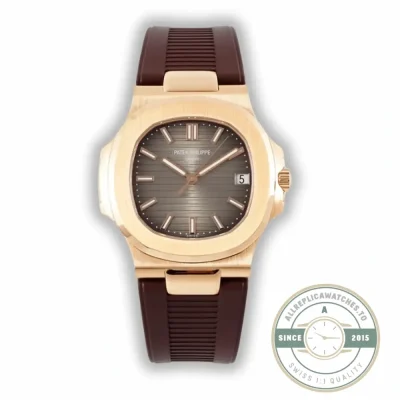
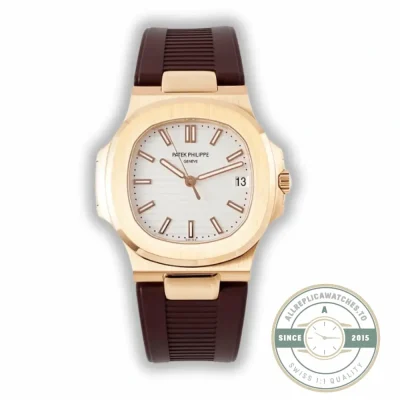
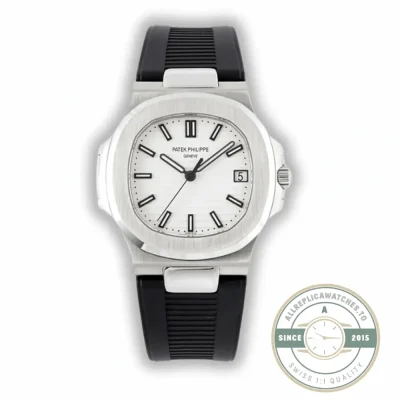
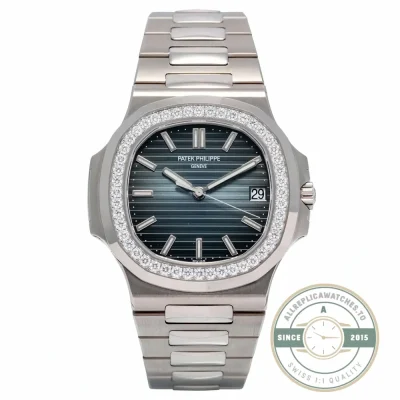
Explore both in the Nautilus collection.
Super Clone Quality — What to Check
Because the 5980 is a chronograph, there are a few extra things to verify beyond the usual Nautilus checks. First, the chronograph function: ask the dealer to confirm the pushers engage crisply and the mono-counter resets cleanly to zero — a flagship build does both. Second, the mono-counter printing, which is the fiddliest part of the dial to get right. Third, the movement through the caseback, which should be cleanly decorated with the Calatrava-cross rotor. And finally the case transitions and bracelet, exactly as on any Nautilus. Ask for QC photos covering all four before you commit, and request the factory and exact reference so you know what you are getting.
Super Clone vs a Genuine 5980
It is worth being clear about the trade. A genuine 5980/1A is a watch most people cannot buy at all — discontinued in steel, with secondary-market prices running into the tens of thousands, and a hand-finished in-house chronograph behind the glass. A flagship super clone gives you the embossed dial, the mono-counter, a working flyback-style chronograph and the full Nautilus case-and-bracelet presence for a four-figure sum.
What you give up is the hand-finished Patek caliber, the archive provenance and any resale value as a genuine watch. What you keep is the entire wrist experience — the look, the weight, the chronograph action and the finishing you actually see and touch. For a buyer who wants the Nautilus chronograph on the wrist rather than a vault asset, that is an easy trade, and buying it honestly as a replica is the only sensible way to do it.
How Much Does a 5980 Super Clone Cost?
A flagship 5980 or 5990 super clone sits in the four-figure range typical of a complicated steel-sports Patek clone — more than a time-only 5711 because of the chronograph, and well below the genuine, which trades for tens of thousands on the secondary market when it appears at all. As always, a “5980” offered for a couple of hundred dollars is a cheap fake with a module-based movement and a flat dial — not a real chronograph clone and not the embossed, sharply-finished build that makes the reference worth owning.
Living With a 5980
On the wrist, the 5980 is one of the most satisfying steel sports watches to own. At 40.5mm it wears broad but comfortable thanks to the integrated bracelet, and the chronograph gives you something to interact with that the time-only Nautilus does not. The flyback function is genuinely useful — one press resets and restarts the timing — and the mono-counter keeps the dial clean despite the complication. It is a watch that reads as dressy from a distance and sporty up close.
Caring for it is simple. Treat the clone chronograph like any mechanical movement: wind it gently, use the pushers deliberately rather than hammering them, and avoid running the chronograph continuously for days on end, which wears any chronograph faster. Keep it away from strong magnets, have it serviced every few years, and keep the bracelet clean with a soft brush. Do that and a flagship 5980 super clone will keep its sharp dial and crisp chronograph action for years. For the wider range of Patek references and the best factory for each, see our Patek super clone guide.
Frequently Asked Questions
What is the Patek Nautilus 5980?
It is the steel Nautilus chronograph, launched in 2006, with a flyback chronograph and a mono-counter at six o’clock that combines the minute and hour totalisers into one subdial.
What is the difference between the 5980 and the 5990?
The 5980 is a pure sports chronograph; the 5990 adds a dual-time Travel Time complication with two extra pushers on the left of the case, making it the traveller’s version.
What movement is in a 5980 super clone?
A clone CH 28-520, a decorated chronograph built on a reliable 7750-type base with roughly a 46-hour reserve. It reproduces the look and behaviour of Patek’s caliber but is not a genuine Patek movement.
Is the 5980 chronograph on a super clone functional?
On a flagship build, yes — the pushers engage crisply, the running seconds sweep, and the mono-counter resets cleanly. A cheap module-based fake feels mushy and resets imperfectly.
Should I buy the 5980 or the 5711?
The 5711 is the cleaner, thinner, more versatile time-only Nautilus; the 5980 is the sportier chronograph with more on the dial. Choose by whether you want the chronograph character or the purist look.
What should I check before buying a 5980 super clone?
The chronograph action and mono-counter reset, the embossed dial relief, the case brushed-to-polished transitions, and the decorated movement through the caseback. Ask for QC photos of all of them.
Browse flagship Patek Nautilus 5980 and 5990 super clones — working chronograph, embossed dials and decorated calibers, with QC photos on request.