Fake Patek Philippe vs Real: How to Spot the Difference
The fastest way to spot a fake Patek Philippe is to turn it over: Patek’s whole identity is its hand-finished movement behind a display caseback, and that is the one thing no replica fully reproduces. From the dial side, a flagship super clone Nautilus or Aquanaut is astonishingly close. Through the sapphire back, a trained eye sees a decorated workhorse movement rather than a hand-finished Patek caliber. This guide walks every difference — dial, case, bracelet and movement — and is honest about exactly where a good super clone matches genuine and where it does not.

The Quick Answer
With Patek, forget the tricks that work on other brands — weight and date-window magnification do not separate the tiers here. Two things do. First, the dial: a Nautilus or Aquanaut has a precise embossed horizontal pattern, and on a cheap fake that pattern is shallow, uneven or wrongly spaced. Second, and decisively, the movement behind the display caseback: genuine Patek finishing is hand-done to the Patek Philippe Seal standard, and no replica matches it.
So the ten-second version is: glance at the dial to eliminate cheap fakes, then flip the watch over. If there is no display caseback at all on a model that should have one, walk away. If there is, look at the finishing — that is where a flagship super clone, however good on the front, quietly reveals that it is a replica. Here is how the three tiers compare across the checks that matter:
Why Patek Is So Hard to Fake
It helps to understand why Patek, of all the big brands, is the one where the front is easy and the inside is a wall. Patek’s whole philosophy is hand-finishing. Since 2009 the brand has certified its own watches with the Patek Philippe Seal, a standard that governs not just accuracy but the finishing of every component — including parts no one will ever see. A single caliber can take hundreds of hours of hand-work: bevelling and polishing the edges of each bridge, hand-cutting the striping, mirror-polishing the countersinks around every jewel.
That is the opposite of what a replica factory does. A super clone is made at scale, so its decoration is applied by machine — fast, consistent and, from a phone photo, convincing. What it cannot do is reproduce the slow, irregular, human quality of hand-anglage and hand-polishing. This is why a flagship Patek super clone can match the dial, the case and the bracelet so closely and still be identified the moment the caseback is examined: the brand’s entire value lives in the one place a factory cannot copy at scale. Understanding that is the key to the whole fake-vs-real question for Patek.
The Movement — Patek’s Real Signature
Patek Philippe’s reputation is built on movement finishing, so this is the only tell that truly matters. A genuine Patek caliber is finished by hand to the Patek Philippe Seal standard: hand-chamfered and polished bridge edges (anglage), hand-applied Côtes de Genève striping, circular perlage, polished countersinks around every jewel, and a gold rotor engraved with the Calatrava cross. Under a loupe it looks like jewellery.

A super clone reproduces the look of this — a decorated rotor with the Calatrava cross, striping on the bridges, the right general layout. Flagship Patek super clones are built on reliable bases (a clone Cal. 324-style automatic on a Miyota platform, or a clone CH 28-520 chronograph on a 7750 platform) and dressed to resemble the genuine caliber. From a phone photo it can fool almost anyone. But the finishing is machine-applied, not hand-done: the bevels are not hand-polished, the striping is regular rather than subtly hand-cut, and the countersinks lack the mirror polish of a real Patek. This is the honest heart of the matter — a Patek super clone copies the architecture and decoration, but not the hundreds of hours of hand-finishing that define a genuine one.
The Dial
The dial is where cheap fakes die and flagship super clones shine. On a Nautilus, the signature is the embossed horizontal relief — raised ridges across the dial that catch light. On a genuine watch and a flagship clone these are crisp, even and correctly spaced; on a cheap fake they are shallow, flat or irregular. Look next at the applied markers and hands: they should be perfectly level, cleanly faceted and filled with even lume. A fake shows tilted markers, dull facets and messy lume. The printing — “PATEK PHILIPPE GENEVE,” the reference text, the date numerals — must be razor-sharp with no bleeding or uneven spacing.
A flagship super clone reproduces the embossed dial, the applied markers and the printing convincingly, which is exactly why the dial no longer separates the best clones from genuine. It is the tool that eliminates the cheap tier instantly, not the one that catches a flagship build.
Case & Bracelet
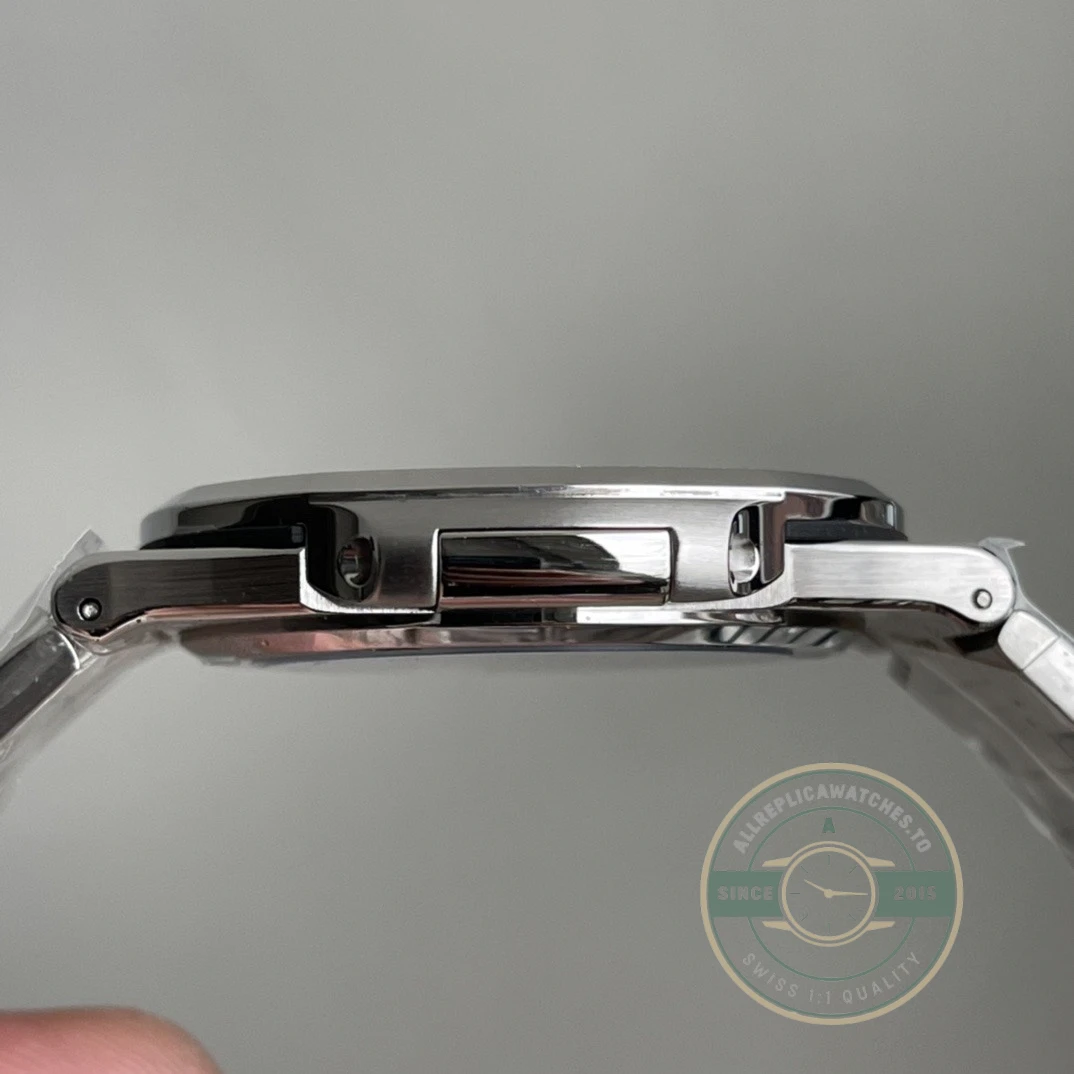
The Nautilus and Aquanaut cases are defined by their finishing transitions, and this is where mid-tier replicas fail even when the dial is right. The Nautilus has its signature “ears” — the hinge-like protrusions at three and nine o’clock — and a case that alternates satin-brushed tops with mirror-polished sides. On a genuine watch and a flagship clone, the transition line between brushed and polished is razor-sharp and perfectly even. On a weaker build it is soft, wavy or inconsistent.
The integrated bracelet is the second test. Each link on a Nautilus or Aquanaut repeats the same brushed-top, polished-side treatment, and the taper from case to clasp must be smooth and symmetrical with tight tolerances between links. Pick the watch up: a flagship super clone has a solid, well-articulated bracelet with no rattle, while a cheap one feels loose and hollow. These are details you can judge clearly from good QC photos — which is why you should always ask for them before buying a Patek super clone.
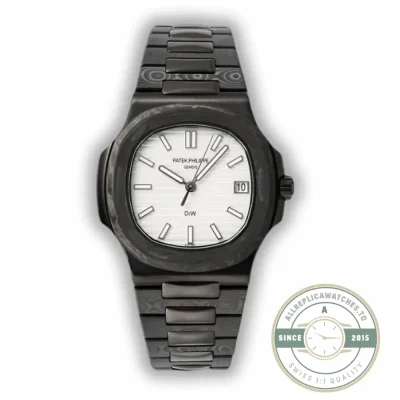
Patek Nautilus Fake vs Real
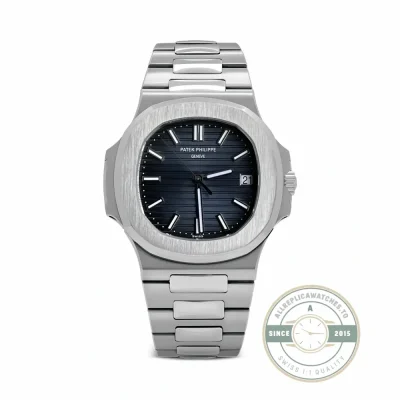
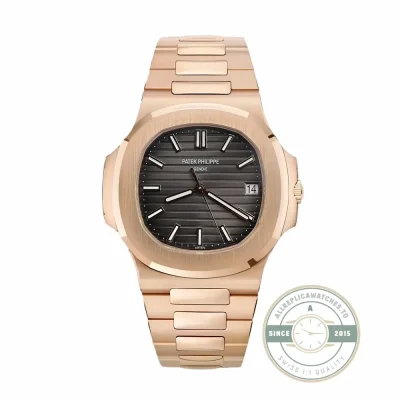
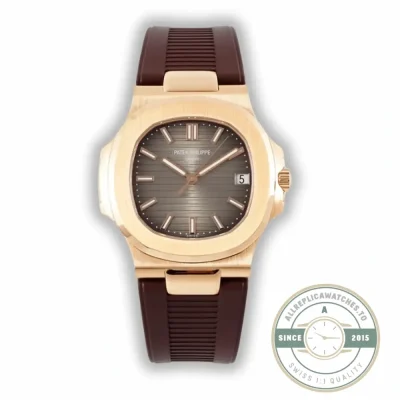
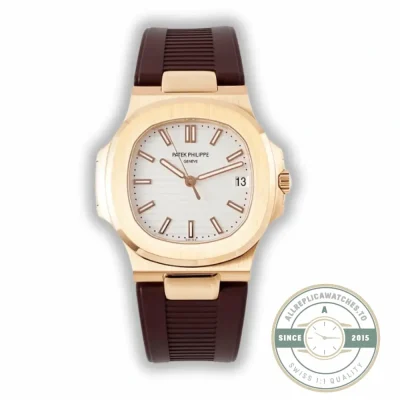
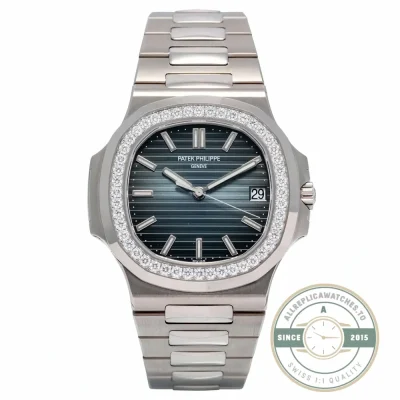
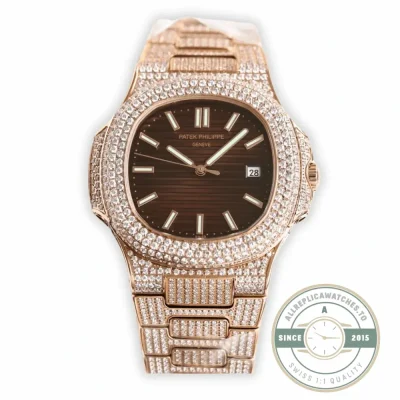
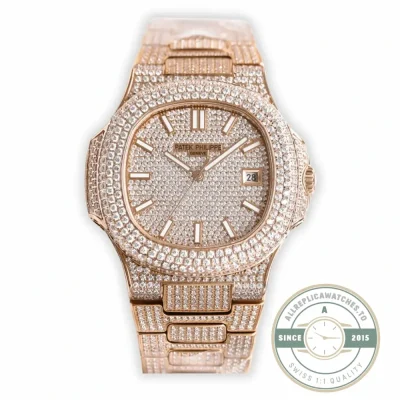
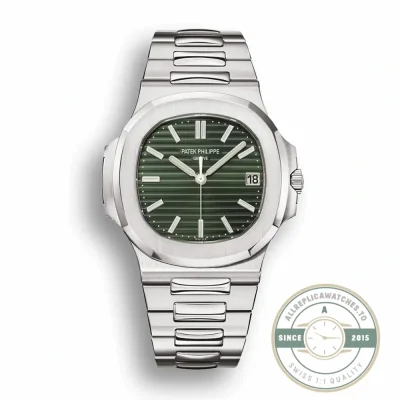
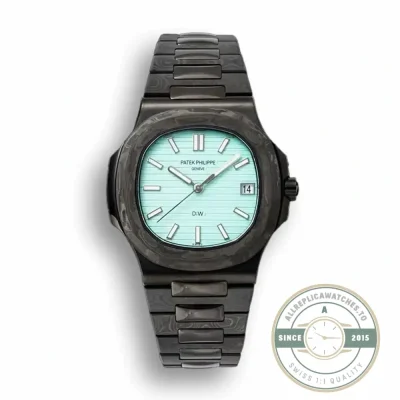
The Nautilus — especially the 5711 and the 5980 chronograph — is the most replicated Patek, so it is where factories have invested the most. On a Nautilus, focus on three things: the embossed dial relief (crisp and even), the case transition between brushed and polished surfaces (sharp), and the movement through the caseback (the real limit). A flagship 5711 or 5980 super clone nails the first two; the third is where it remains a replica. Browse the current range in the Nautilus collection.
Patek Aquanaut Fake vs Real
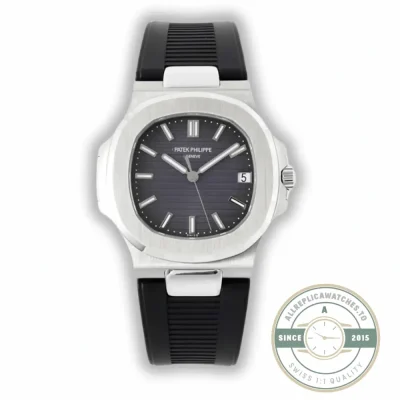
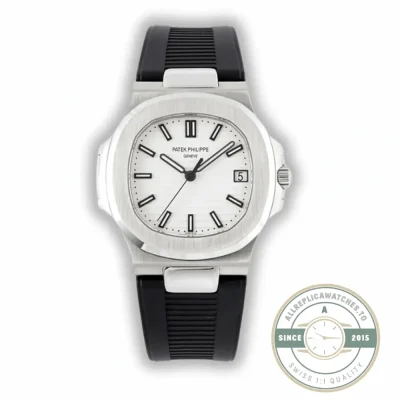
The Aquanaut shares the Nautilus DNA but trades the integrated metal bracelet for a composite “tropical” strap, and that strap is a fast tell. On a genuine watch and a flagship clone the embossed strap pattern lines up precisely with the dial’s relief and the rubber feels dense and high-quality; a cheap fake uses a thin, shiny strap with a mismatched pattern. The rounded-octagon case and the embossed dial follow the same rules as the Nautilus. See the Aquanaut collection.
What No Patek Replica Passes
Two things separate every replica from a genuine Patek, and an honest guide names them:
Everything else — the embossed dial, the case transitions, the bracelet, the Calatrava-cross rotor seen through the back — a flagship super clone now reproduces convincingly. These two it does not, and we would rather tell you plainly than pretend otherwise.
How to Buy a Patek Super Clone Safely
Because the tells on a Patek are concentrated in a few places, buying well comes down to knowing exactly what to ask for. Three habits protect you:
Cheap Fake vs Flagship Super Clone
The takeaway of any Patek fake-vs-real comparison is that “fake” is not one thing. A cheap fake gives itself away on the dial from across a table — shallow embossing, bleeding print, a rattly bracelet. A flagship super clone passes the dial, the case and the bracelet, and only a trained eye with the caseback in view can place it as a replica. If you want the Nautilus or Aquanaut look — and you are honest with yourself that it is a replica, not a genuine Patek — the flagship super clone is the only tier worth buying. For the full breakdown of Patek factories and references, read our best Patek Philippe super clone guide.
Super Clone vs Genuine — the Honest Trade
It is worth saying plainly what you trade. A genuine steel Nautilus or Aquanaut is a six-figure object when you can find one at all — years on a waitlist, enormous grey-market premiums, and a hand-finished caliber behind the glass. A flagship super clone gives you the embossed dial, the sharp case finishing, the integrated bracelet and the decorated rotor for a tiny fraction of that.
What you give up is the hand-finished movement, the archive provenance and any resale value as a genuine Patek. What you keep is everything you interact with on the wrist: the look, the weight, the finishing transitions and the presence of one of the most wanted watches in the world. For a buyer who wants the Nautilus experience rather than an appreciating asset, that is an easy trade — and treating it honestly, as a replica rather than a Patek, is the only way to buy one well. If you want the full breakdown of Patek references and the best factory for each, read our best Patek super clone guide.
Frequently Asked Questions
How can you tell a fake Patek Philippe?
Check the dial for crisp, even embossing and sharp printing, the case for razor-sharp brushed-to-polished transitions, and above all the movement through the display caseback. Genuine Patek finishing is hand-done; a replica’s is machine-applied.
What is the easiest way to spot a fake Nautilus?
The embossed horizontal dial and the case “ears.” On a cheap fake the dial relief is shallow or uneven and the case transitions are soft. On a flagship super clone they are correct — then the movement is the only remaining tell.
Can a super clone Patek fool a jeweller?
From the dial side, often yes. A watchmaker who opens the caseback and inspects the hand-finishing, or who checks the watch against Patek’s archives, will identify it. The movement finishing is the line a replica cannot cross.
Do Patek super clones have a display caseback?
Flagship ones do, reproducing the decorated rotor with the Calatrava cross. That is actually part of the appeal — but the finishing under the glass is machine-done, not hand-finished like a genuine Patek.
Which Patek is most faked?
The Nautilus (5711 and 5980) and the Aquanaut (5167/5968), by a wide margin. They are the most wanted steel sports Pateks, so factories have invested the most R&D in copying them.
What movement is in a Patek super clone?
Flagship builds use a decorated clone caliber on a reliable base — a clone Cal. 324-type automatic or a clone CH 28-520 chronograph. It reproduces the look of Patek’s caliber but is not a genuine hand-finished Patek movement.
Browse flagship Patek Philippe super clones — embossed dials, sharp case finishing and decorated calibers, with QC photos on request.