Panerai Submersible Replica: 300 Meters of Italian Dive Watch Heritage
What’s Inside This Guide
- From Military Frogmen to Luxury Diver
- Submersible Collections Ranked
- Movement Architecture: P.9010 and Beyond
- Case Materials: Steel, Carbotech, BMG-TECH
- The Ceramic Bezel — Details That Matter
- 42mm vs 47mm: Real Talk on Wrist Presence
- Crown-Protecting Bridge Device Explained
- Submersible vs Submariner vs Seamaster
- Strap Game: Rubber, NATO, Caoutchouc
- Water Resistance Testing Reality
- Quality Indicators on Super Clones
- FAQ — 15 Expert Answers
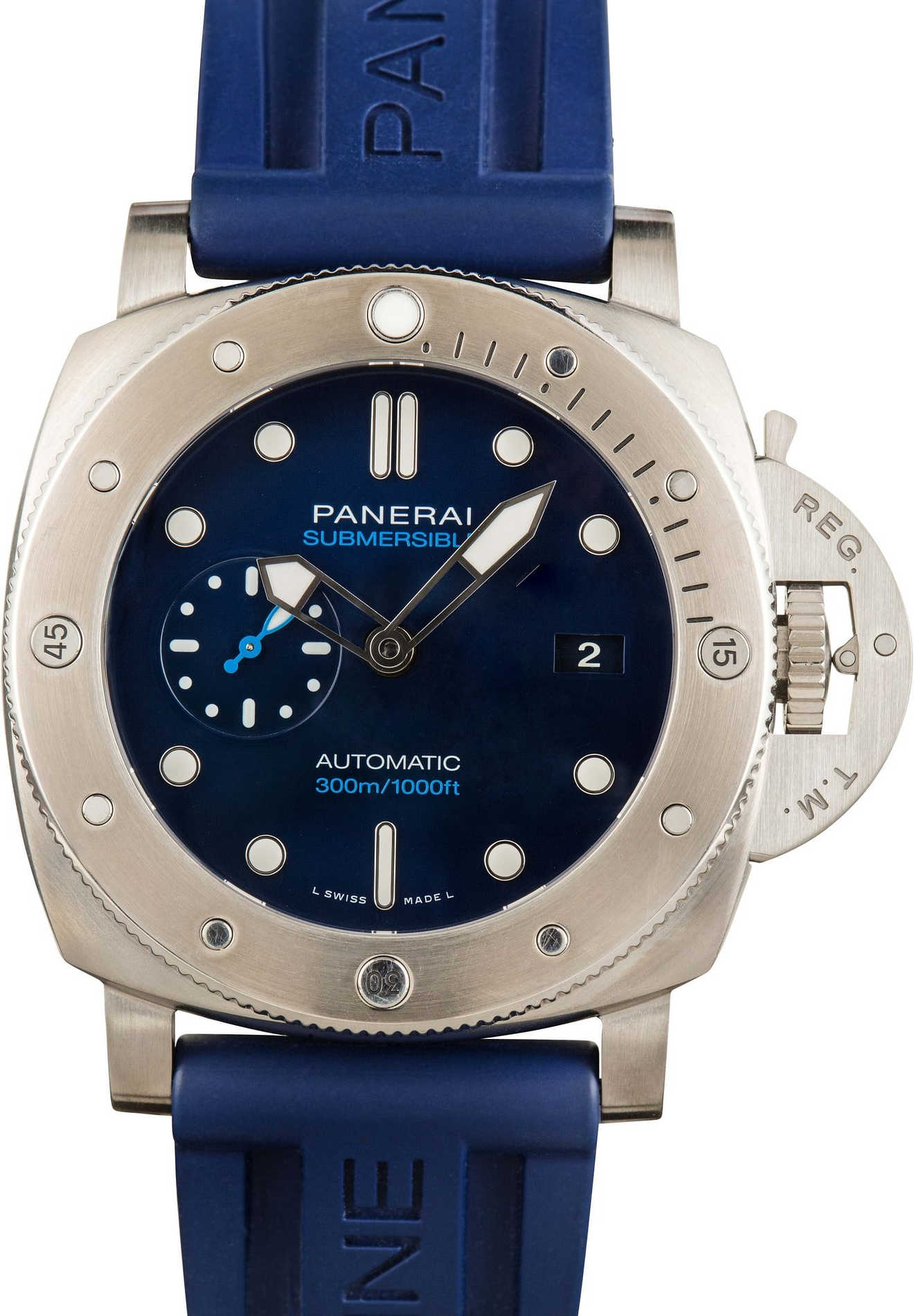
From Military Frogmen to Luxury Diver
Panerai Submersible replica watches carry DNA stretching back to 1956, when the brand built specialized depth gauge instruments for Egyptian Navy combat swimmers. That’s not marketing poetry — it’s verified military procurement history. The original reference, a modified Luminor with enhanced water resistance and a rotating bezel, served frogmen who needed reliable timing at depths where failure meant death. Not “water resistant to splash your hands” — actual operational diving.
The modern Submersible line broke away from Luminor officially in 2019, becoming its own collection family. Panerai recognized what enthusiasts already knew: this wasn’t just a Luminor with a dive bezel. The case geometry, the crown-protecting bridge device, the graduated ceramic insert — these made it a fundamentally different instrument. The separation meant dedicated development resources, resulting in models like the Submersible QuarantaQuattro in 44mm and the imposing 47mm references that define the collection’s visual identity.
What makes the Submersible particularly interesting for the replica market is complexity. More components, tighter tolerances, multiple material combinations — this is where factory quality separates dramatically. A cheap Submersible copy falls apart under scrutiny because there are simply too many details to fake poorly. But a properly engineered super clone? It captures the same engineering philosophy that made Italian Navy divers trust their lives to the original.
Submersible Collections Ranked for Replica Quality
Not every Submersible reference translates equally well to the super clone format. Some models rely on exotic materials that are nearly impossible to replicate authentically, while others use construction methods that high-end factories have absolutely mastered. Here’s the honest breakdown.
| Collection | Case Size | Key Feature | Replica Accuracy | Best For |
|---|---|---|---|---|
| Submersible (PAM01305) | 42mm | Blue ceramic bezel, steel | ★★★★★ | Daily wear, versatility |
| Submersible (PAM00683) | 47mm | Black dial, classic diver | ★★★★★ | Statement piece, large wrists |
| QuarantaQuattro (PAM01229) | 44mm | Green dial, steel | ★★★★☆ | Trendy color, medium wrist |
| Carbotech (PAM01616) | 47mm | Carbon fiber case | ★★★★☆ | Lightweight, tactical look |
| BMG-TECH (PAM00799) | 47mm | Bulk metallic glass | ★★★☆☆ | Tech enthusiasts only |
| Submersible Luna Rossa | 42mm | Sailing team edition | ★★★★☆ | Sporty, distinctive dial |
The steel references — PAM01305 and PAM00683 — consistently deliver the highest accuracy in super clone form. Factories have perfected 316L stainless finishing to match Panerai’s brushed-and-polished case treatment. The 42mm size has become particularly popular since Panerai downsized several references, making them accessible to wrists that found the 47mm overwhelming.
Tip: The PAM01305 (42mm blue dial) is currently the sweet spot for Submersible replicas. Factories produce it in high volume, meaning quality control is more consistent and replacement parts are readily available. If you want one Submersible super clone, start here.
Movement Architecture: P.9010 and Beyond
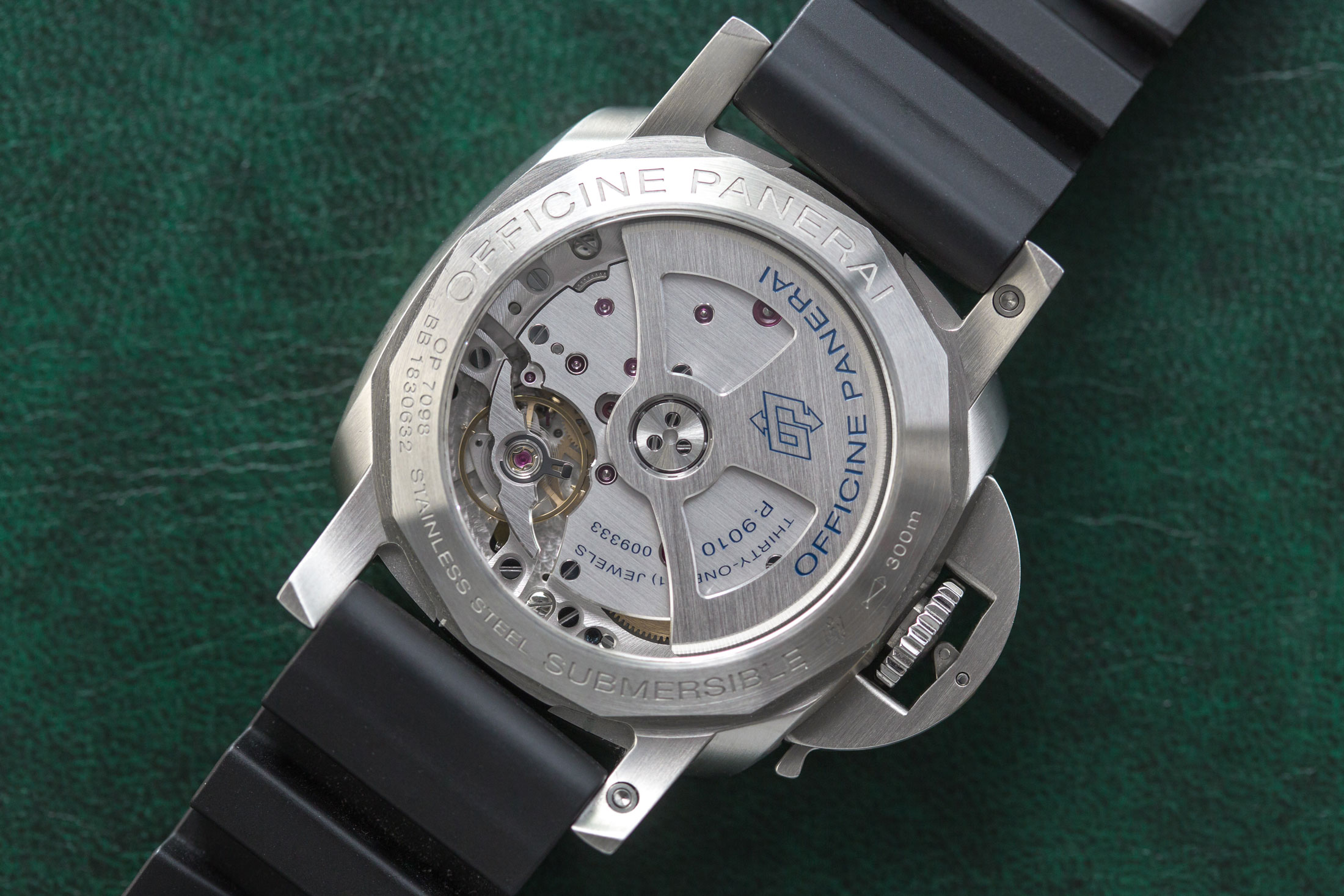
The genuine Submersible runs on Panerai’s in-house P.9010 caliber — a 31-jewel automatic with a 72-hour power reserve and 28,800 vph beat rate. That three-day reserve comes from twin mainspring barrels, which the movement houses in a compact 6.0mm thickness. For a dive watch movement, that’s impressively slim. It features a date function (no date on some references), hacking seconds, and a bi-directional rotor with a tungsten weight for efficient winding.
Super clone replications of the P.9010 come in two primary grades. The standard version uses a decorated Asian automatic as the base, fitted with custom bridges and plates that visually match the genuine caliber through the display caseback. Functional specs hit around 48-hour power reserve — not 72, but entirely adequate for weekend rotation. The premium grade uses a higher-jewel-count base with improved mainspring steel, pushing reserve closer to 60 hours with better amplitude stability over the power curve.
What I watch for on the movement: rotor winding direction and sound. The genuine P.9010 winds bidirectionally with minimal rotor noise. Cheaper copies have a distinctive “whirr” when you shake them — the rotor bearing tolerance is looser. A quality super clone spins with the same muted, precise revolution you’d expect from a caliber that took Panerai’s Neuchâtel manufacture three years to develop.
Movement Specification Comparison
| Specification | Genuine P.9010 | Premium Clone | Standard Clone |
|---|---|---|---|
| Jewels | 31 | 25-28 | 21-23 |
| Power Reserve | 72 hours | 55-60 hours | 42-48 hours |
| Beat Rate | 28,800 vph | 28,800 vph | 28,800 vph |
| Hacking | Yes | Yes | Yes |
| Hand-Wind | Yes | Yes | Some models |
| Date Quick-Set | Yes | Yes | Yes |
| Decoration | Côtes de Genève, perlage | Machine Côtes de Genève | Basic striping |
| Rotor | Tungsten segment | Tungsten-alloy segment | Brass weight |
Case Materials: Steel, Carbotech, BMG-TECH
The genuine Submersible collection plays with materials more aggressively than any other Panerai line. Standard 316L steel makes up the entry-level references, but the collection extends into Carbotech (Panerai’s proprietary carbon fiber composite), titanium, BMG-TECH (bulk metallic glass), and even bronze for limited editions. Each material brings different challenges for replica manufacturers.
Steel Submersible replicas are essentially solved. The 316L alloy composition, brushing direction, polished bevel angles — top factories nail these consistently. The case hardness tests within range, and the weight matches within 3-5 grams of genuine. Unless you’re measuring with calipers, the steel case finishing on a premium super clone is indistinguishable during normal wear.
Carbotech presents a more interesting challenge. Panerai creates this material by compressing thin sheets of carbon fiber at controlled temperatures and high pressure, resulting in a layered pattern where every piece looks unique. Super clone factories use a similar compression process, though with slightly different resin formulations. The visual result is close — you get the distinctive matte black surface with visible carbon fiber grain — but the genuine’s surface has a slightly more refined finish under 10x magnification. On the wrist? Virtually identical.
Watch Out: BMG-TECH replicas are the weakest in the Submersible range. Genuine BMG-TECH (a zirconium-based metallic glass alloy) has a distinctive cool-to-touch feel and unique surface reflection that current replica materials don’t match. Unless you specifically love that reference, stick with steel or Carbotech for better accuracy-to-satisfaction ratio.
The Ceramic Bezel — Details That Matter
Every Submersible — genuine and replica — lives or dies by its unidirectional rotating ceramic bezel. This is the first thing any watch person examines, and it’s where the gap between “decent copy” and “super clone” becomes immediately apparent.
The genuine uses a micro-blasted ceramic insert with engraved, luminous-filled numerals. The ceramic feels smooth but with a matte texture — not glossy, not rough. The bezel rotates counterclockwise only (standard dive bezel safety feature), with 120 clicks per revolution. Each click produces a precise, firm detent with zero backplay. The pip at 12 o’clock contains SuperLuminova that matches the dial indices in both daylight color and darkness glow intensity.
On a premium Panerai Submersible super clone, the ceramic quality is genuinely impressive. The insert material is actual ceramic (aluminum oxide or zirconium oxide), not painted metal. You can verify this with a simple test: ceramic won’t scratch from a steel key, while coated metal will show marks. The click mechanism uses a steel ball-and-spring detent that delivers satisfying tactile feedback, though some copies have slightly lighter clicks than genuine — audible difference but not a dealbreaker.
Markers to check on the bezel: lume dot alignment at 12, consistent depth of numeral engraving around the entire circumference (cheaper copies have shallower engraving at certain positions where the stamping die wears), and color match between bezel lume and dial lume. In green-dialed models, the bezel accent should match the dial’s exact shade — not close, exact.
42mm vs 47mm: Real Talk on Wrist Presence
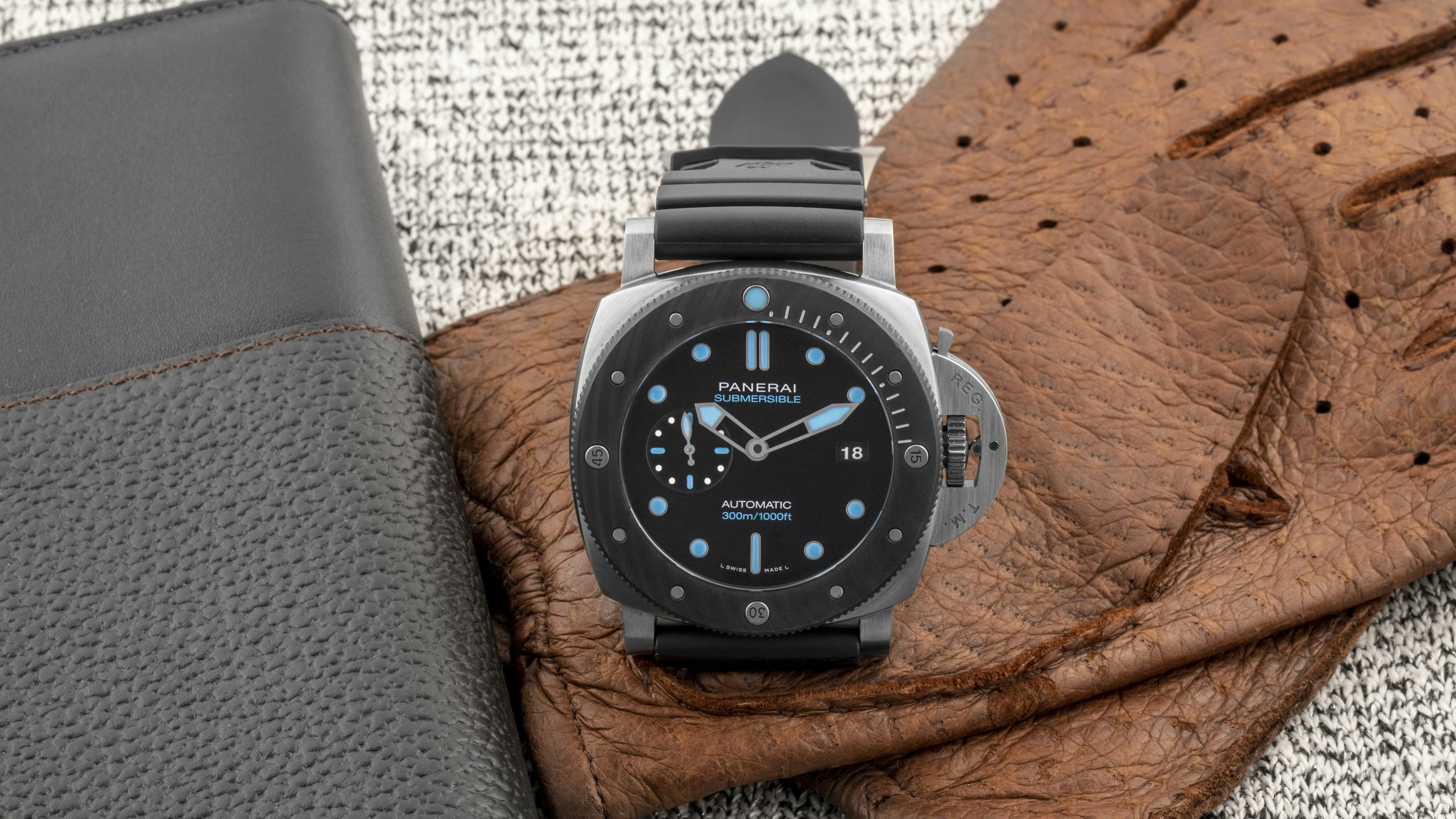
Panerai Submersible replica buyers face this decision immediately, and I’ll be direct: the 47mm is not for everyone. At 47mm diameter with 16.5mm thickness and 55mm lug-to-lug, you need at minimum a 7.25-inch wrist for this watch to sit without overhang. Anything smaller and the lugs extend past your wrist edges, which looks wrong on a dive tool watch that’s supposed to sit tight against the wrist for suit clearance.
The 42mm QuarantaDue references changed the Submersible game entirely. Same design DNA — ceramic bezel, crown bridge device, 300m rating — in a package that works on 6.5-inch wrists and above. The proportions are more balanced, the thickness drops to around 14mm, and the overall wearing experience shifts from “statement piece” to “daily driver.” I wear the 42mm three or four days a week; the 47mm comes out for weekends and occasions where I want the wrist presence to command the conversation.
| Dimension | 42mm Submersible | 44mm QuarantaQuattro | 47mm Submersible |
|---|---|---|---|
| Diameter | 42mm | 44mm | 47mm |
| Thickness | ~14.0mm | ~14.8mm | ~16.5mm |
| Lug-to-Lug | ~50mm | ~52mm | ~55mm |
| Lug Width | 22mm | 24mm | 26mm |
| Min Wrist Size | 6.5″ | 6.75″ | 7.25″ |
| Weight (steel) | ~145g | ~165g | ~190g |
| Water Resist. | 300m | 300m | 300m |
Verdict: If your wrist is 7 inches or under, go 42mm without hesitation. You’ll wear it more, enjoy it more, and the proportional elegance actually highlights the design better than the oversized 47mm does on a smaller wrist. The 47mm only makes sense above 7.25 inches where it can breathe properly.
Crown-Protecting Bridge Device Explained
The crown-protecting bridge is what separates the Submersible visually from almost every other dive watch. Instead of a screw-down crown sitting exposed on the case flank (Submariner, Seamaster, every other diver), Panerai covers it with a hinged steel bridge that locks down with a lever mechanism. On genuine models, this bridge is a separate machined component pinned to the case at two points, with the lever providing roughly 2kg of locking force against the crown.
This device serves two purposes. Functionally, it prevents accidental crown operation during a dive — you can’t bump the crown loose when it’s physically locked under a steel bridge. Aesthetically, it gives the Submersible its distinctive asymmetric profile and that iconic lever-up silhouette that’s instantly recognizable across a room.
On super clone Submersibles, the bridge quality is a reliable quality indicator. Check these points: the bridge should sit flush against the case with no visible gap when locked. The lever mechanism should require deliberate force to open — not flop loose. The pin fitment at the hinge points should be tight with no lateral play. And when locked down, pressing the crown should produce zero movement. A well-made bridge device feels engineered, not decorative.
Submersible vs Submariner vs Seamaster
All three are iconic dive watches. All three have excellent super clone availability. But they serve fundamentally different personalities and situations, which matters more than specifications when you’re choosing which to buy.
| Feature | Panerai Submersible | Rolex Submariner | Omega Seamaster 300M |
|---|---|---|---|
| Diameter | 42-47mm | 41mm | 42mm |
| Thickness | 14-16.5mm | 12.5mm | 13.5mm |
| Bezel Material | Ceramic (unidirectional) | Cerachrom (unidirectional) | Ceramic (unidirectional) |
| Crown Protection | Bridge device + lever lock | Triplock screw-down | Screw-in with guards |
| Depth Rating | 300m | 300m | 300m |
| Character | Bold Italian military | Conservative prestige | Modern sporty-luxury |
| Wrist Presence | Commanding | Subtle | Balanced |
| Dress Versatility | 42mm: good / 47mm: casual only | Excellent | Very good |
| Recognition Factor | Watch enthusiasts | Everyone | Watch enthusiasts |
The Submariner is the safe choice — universally recognized, fits under any cuff, goes with anything. The Seamaster splits the difference with a sportier dial design and the helium escape valve for conversation value. But the Submersible? That’s the choice you make when you want a dive watch that refuses to blend in. The crown bridge alone sets it apart from thirty feet away. You’re not buying a Submersible to fit in — you’re buying it to stand out while maintaining genuine horological credibility.
For the replica buyer specifically, the Submersible offers an advantage: fewer people own genuine Panerai Submersibles compared to Submariner or Seamaster. You’re less likely to encounter someone at dinner who pulls up their sleeve and wears the same watch. That relative rarity of the genuine makes your super clone less likely to invite direct comparison.
Strap Game: Rubber, NATO, Caoutchouc
Panerai’s strap system is one of their strongest features for both genuine owners and replica wearers. The proprietary lug attachment uses screwed bars (not spring bars) on the 47mm references, creating an incredibly secure connection. The 42mm models typically use standard spring bars with a 22mm lug width, which opens up aftermarket strap compatibility substantially.
The factory rubber strap deserves specific attention. Genuine Panerai uses a natural caoutchouc rubber compound that’s notably softer and more flexible than the silicone straps found on most dive watches. It has a matte finish with a slight tackiness that grips the wrist without trapping moisture. Super clone versions use a similar natural rubber formulation — look for straps described as “caoutchouc” rather than “silicone” when ordering. The texture difference is immediately apparent when you handle both side by side.
Tip: The fastest way to refresh a Submersible super clone is a strap change. Swap the rubber for a dark green NATO on a steel-cased model, or try a vintage-style tan leather on the Carbotech — completely transforms the watch’s personality for minimal investment. Panerai’s 22mm and 26mm lug widths have massive aftermarket strap availability.
For actual water use, stick with the rubber or a silicone NATO. Leather looks brilliant on a dive watch (the contrast between tool functionality and luxury material), but salt water destroys leather in a single season. Even fresh water and sweat degrade untreated leather. If you swim with your Submersible — and the 300m rating means you absolutely can — rubber is the only serious option.
Water Resistance Testing Reality
Let’s address the question every Submersible replica buyer asks: can I actually swim with this? The honest answer requires nuance. Genuine Submersibles are rated 300 meters (30 bar), tested at 375 meters (125% safety margin per ISO 6425 dive watch standard). They’re certified for actual diving — not just snorkeling, but recreational SCUBA to 40 meters and beyond with appropriate equipment.
Super clone Submersibles are not tested to ISO 6425. However, the better factories construct cases with proper gasket channels, screw-down crowns with O-ring seals, and caseback gaskets that provide genuine water resistance. In practical terms, quality super clones handle swimming pool depths (1-3 meters), shower use, and snorkeling without issue. I’ve personally swum with Submersible replicas in both pools and the ocean without water ingress.
What I would not do: take a replica below 10 meters without having it pressure tested by a watchmaker first. A pressure test costs around $15-25 at any competent watch shop, and they’ll certify the actual water resistance of your specific case. Most quality super clones test between 50-100 meters — far more than enough for any surface water activity. The screw-down crown and bridge device actually help here, providing a mechanical backup that press-fit crowns on cheaper replicas lack.
Quality Indicators on Super Clones
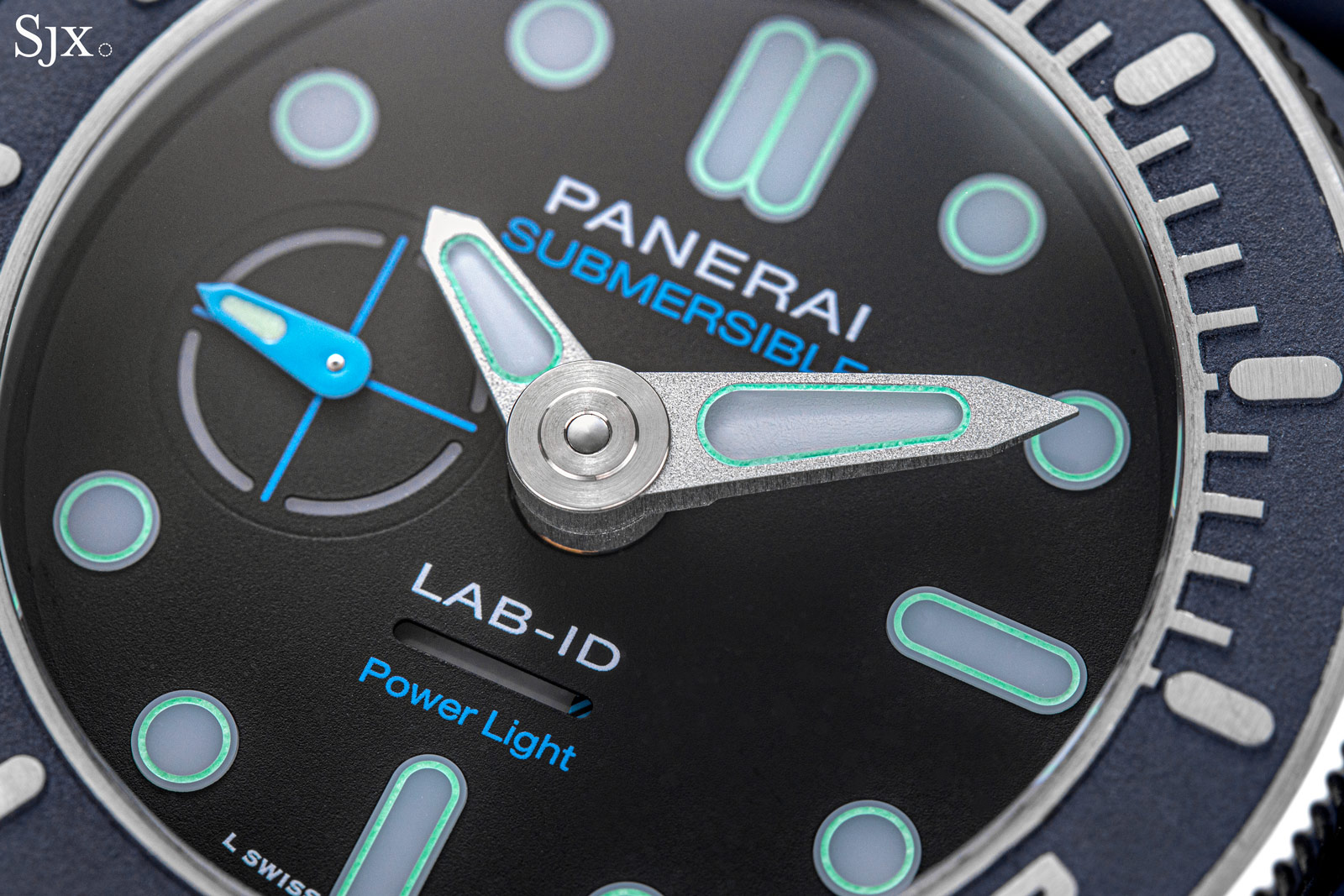
Knowing what separates a premium Submersible super clone from a mid-range copy lets you buy with confidence and wear without worry. These are the specific checkpoints I evaluate on every piece.
Dial printing. The Submersible dial text includes “SUBMERSIBLE” at 6 o’clock, “PANERAI” below 12, and “300M” or depth rating text. On genuine pieces, this text is crisply printed with no bleeding or inconsistent thickness. Under magnification, each letter edge should be clean. Cheaper copies show micro-bleeding where ink spreads into the dial texture — visible under 5x loupe.
Lume application. The Submersible uses sandwich dial construction on some references (two dial layers with lume between them, light shining through cutouts) and applied lume on others. Whichever style, the lume should be evenly applied with no bubbles, cracks, or thin spots. Charge the lume under bright light for 30 seconds and check in darkness — the glow should be uniform across all indices and hands, with no dim markers.
Bezel action. 120 clicks per revolution, counterclockwise only, no backplay, no wobble. Pick up the watch and rotate the bezel while pressing sideways — if the bezel moves laterally, the tolerance is off. Each click should feel identical. The ceramic insert should sit perfectly flush with the bezel edge — no lip, no recess.
Crown bridge alignment. When the bridge is locked down, it should center perfectly over the crown with equal clearance on both sides. The lever mechanism should snap closed with authority. Open the bridge and operate the screw-down crown — it should thread smoothly for 2-3 full turns before seating against the case tube gasket.
Case finishing. Submersibles primarily use a brushed finish on the case flanks with polished bevels on the crown bridge and bezel edge. Run your thumb across the brushing — the grain should be consistent and directional, not random scratching. The polished bevels should be mirror-finished without distortion.
Quality Rule: If three or more of these checkpoints fail on a watch you’re considering, pass on it. A single minor issue (slightly lighter bezel clicks, for instance) is acceptable in the super clone category. Multiple failures indicate a mid-tier copy marketed as premium — and that gap only becomes more obvious with wear.
Frequently Asked Questions
Panerai Submersible Replica — 15 Expert Answers
The Submersible features a unidirectional rotating ceramic bezel for elapsed time tracking, a different crown-protecting bridge design optimized for dive use, and 300m water resistance compared to Luminor’s typical 100m. It became a separate collection in 2019 after decades as a Luminor sub-line.
Quality super clones with screw-down crowns and proper gaskets handle swimming, showering, and snorkeling without issues. For depths beyond 10 meters, get a pressure test ($15-25) from a watchmaker first. Avoid cheap copies with press-fit crowns for any water exposure.
The PAM01305 (42mm, blue ceramic bezel, steel case) offers the best combination of wearability, accuracy, and availability. It’s produced in high volume by top factories, meaning consistent quality and easy servicing.
Premium replications achieve 55-60 hour power reserve (vs 72 genuine), matching beat rate at 28,800 vph, with functional hacking and hand-winding. Standard clones hit 42-48 hours. Both grades maintain acceptable accuracy of ±10-15 seconds per day.
Modern Carbotech replicas use actual compressed carbon fiber sheets, producing the distinctive layered matte black pattern. The visual match is very close — differences only appear under 10x magnification where the genuine’s resin distribution is slightly more refined.
Premium super clones use actual ceramic inserts (aluminum oxide or zirconium oxide). You can verify this — ceramic won’t scratch from a steel key, while painted metal will show marks. Budget copies use coated steel or aluminum, which is easily identified.
The rubber caoutchouc strap is ideal for daily use — comfortable, sweat-resistant, and durable. For a dressier look, dark leather works beautifully but avoid water exposure. NATO straps in dark colors offer a casual military aesthetic that suits the Submersible’s heritage.
For wrists under 7.25 inches, yes — the 55mm lug-to-lug causes overhang that’s both uncomfortable and visually unbalanced. The 42mm version carries the same design language in a package that works on 6.5-inch wrists and above, making it suitable for most adults.
A hinged steel bridge covers the screw-down crown, locked by a lever mechanism that applies approximately 2kg of force. To access the crown, you lift the lever (releasing the lock), swing the bridge open, then unscrew the crown normally. This prevents accidental crown operation during diving or active wear.
Genuine models use SuperLuminova with strong blue-green glow. Quality replicas use similar strontium aluminate compounds achieving 80-90% of genuine brightness and duration. The sandwich dial versions glow particularly bright because the entire numeral cutout emits light rather than just a surface dot.
The Submersible is larger (42-47mm vs 41mm), bolder (crown bridge device vs clean case), and less universally recognized. The Submariner is dressier and more versatile. Choose the Submersible for personality and wrist presence; the Submariner for understated versatility.
The 47mm uses Panerai’s proprietary 26mm screwed-bar attachment on genuine models. Super clones typically replicate this system, but aftermarket strap selection in 26mm is more limited than 22mm. The 42mm uses standard 22mm spring bars with vast aftermarket options.
BMG-TECH is Panerai’s bulk metallic glass — a zirconium-based alloy with unique surface properties. Current replicas struggle to match the genuine’s distinctive thermal feel and surface reflection. Unless you specifically love that material, steel and Carbotech Submersibles offer significantly better accuracy.
With annual servicing (cleaning, lubrication, gasket check), a premium Submersible super clone runs reliably for 5-8 years. The P.9010 clone movements are mechanically sound, and case/bracelet components resist daily wear well. The ceramic bezel is essentially permanent — it won’t fade or scratch under normal conditions.
Yes — most Submersible references include a date window at 3 o’clock, driven by the P.9010’s date complication. Some limited editions and smaller references omit the date for a cleaner dial. Both date and no-date versions are available in super clone form with quick-set date functionality.
The Bottom Line on Panerai Submersible Replicas
The Panerai Submersible replica market has matured significantly. What started as rough copies of an already niche watch has evolved into precision super clones that capture everything that makes the genuine special — the ceramic bezel action, the crown bridge mechanism, the bold Italian presence that no other dive watch delivers. The 42mm steel references offer the best value proposition, combining daily wearability with the highest factory accuracy. The 47mm remains the ultimate statement piece for larger wrists who want a dive watch that demands attention.
Whether you’re drawn to the military heritage, the mechanical complexity, or simply the fact that a Submersible super clone looks unlike anything else at the dive watch price point, this collection rewards the buyer who appreciates thoughtful engineering. Check the ceramic bezel, test the crown bridge, verify the lume — and you’ll find a Panerai Submersible that serves you well for years. Explore additional guides on Panerai Luminor replicas and Panerai Radiomir replicas to complete your knowledge of the full Panerai range.