Best Audemars Piguet Super Clone — Factory Rankings, Movement Breakdown, and What Your Money Actually Gets You
Last updated: March 2026 • 22-minute read • Based on 40+ AP builds examined
Best Audemars Piguet super clone watches come from exactly three factories worth discussing — ZF, JF, and APS. Everyone else is either rebranding their work or producing mid-tier pieces that miss the DNA of what makes an AP special. I’ve handled over forty AP super clones across Royal Oak, Offshore, and Code 11.59 references, and the differences between factories are measurable and consistent. This guide breaks down which factory builds which model best, what movements they use, what you can actually expect at each tier, and how to navigate the ordering process to land the best possible AP on your wrist.
Table of Contents
- 01 AP Factory Landscape in 2026
- 02 ZF Factory — The Royal Oak King
- 03 JF Factory — Offshore Specialist
- 04 APS Factory — The Challenger
- 05 AP Clone Movements Explained
- 06 Model-by-Model Factory Picks
- 07 The Tapisserie Test — What Separates Good from Great
- 08 AP-Specific QC Protocol
- 09 The Ordering Process — Step by Step
- 10 Common AP Flaws and How to Spot Them
- 11 Budget Tiers — What Each Level Gets You
- 12 Where to Go From Here
- 13 FAQ — 20 AP Super Clone Questions
AP Factory Landscape in 2026
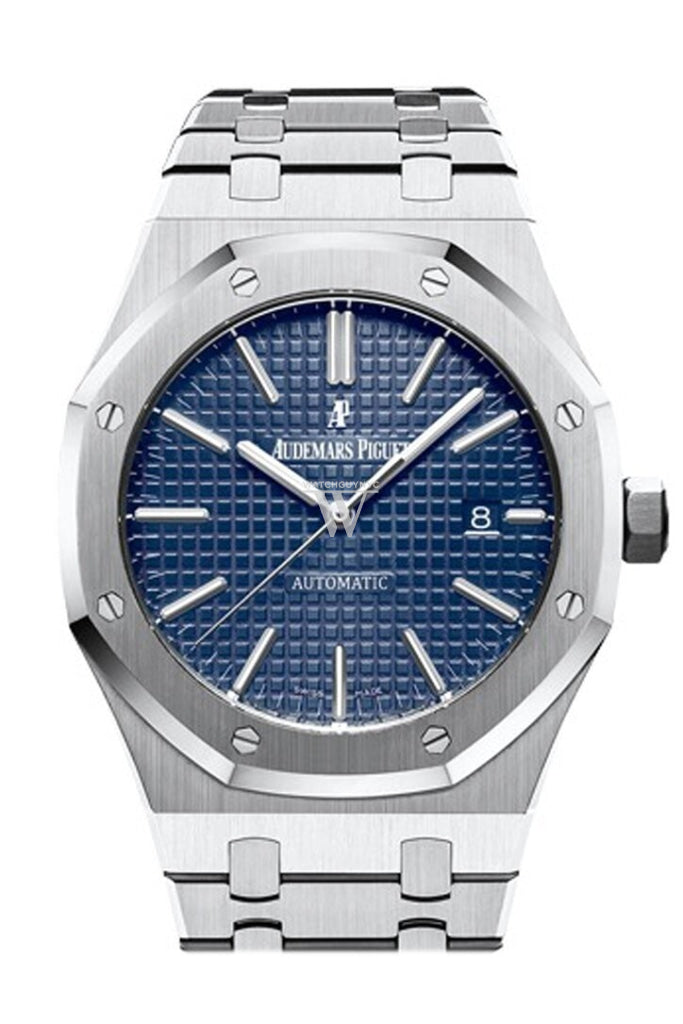
Audemars Piguet is one of the hardest luxury brands to replicate well. The integrated bracelet on the Royal Oak requires sub-millimeter precision at every link junction. The tapisserie dial pattern — that checkered waffle texture — is either convincing or immediately wrong. The octagonal bezel screws need correct hex patterns and flush seating. Miss any of these and the watch reads “off” to anyone who’s seen a genuine AP in person.
That difficulty is exactly why the factory landscape for AP is concentrated. Building a convincing AP requires serious tooling investment — we’re talking CNC machines programmed specifically for the octagonal bezel geometry, custom dial presses for the tapisserie pattern, and specialized polishing jigs that alternate between brushed and mirror surfaces on the same component. Factories that invested in this tooling produce excellent watches. Factories that didn’t produce watches that look like toys.
Three factories have made that investment and proven it over years of production: ZF (also called ZF V3 or ZF V4 depending on the generation), JF (J Factory, long the AP specialist), and APS (a newer factory that’s earned its spot through quality execution). Others exist — XF, K1, and various unnamed operations — but their AP output is inconsistent at best. This guide focuses on the three that matter.
Key insight: Unlike Rolex where you might debate five factories, the AP super clone market is a three-horse race. That simplifies your decision — but makes the details between those three all the more important.
ZF Factory — The Royal Oak King
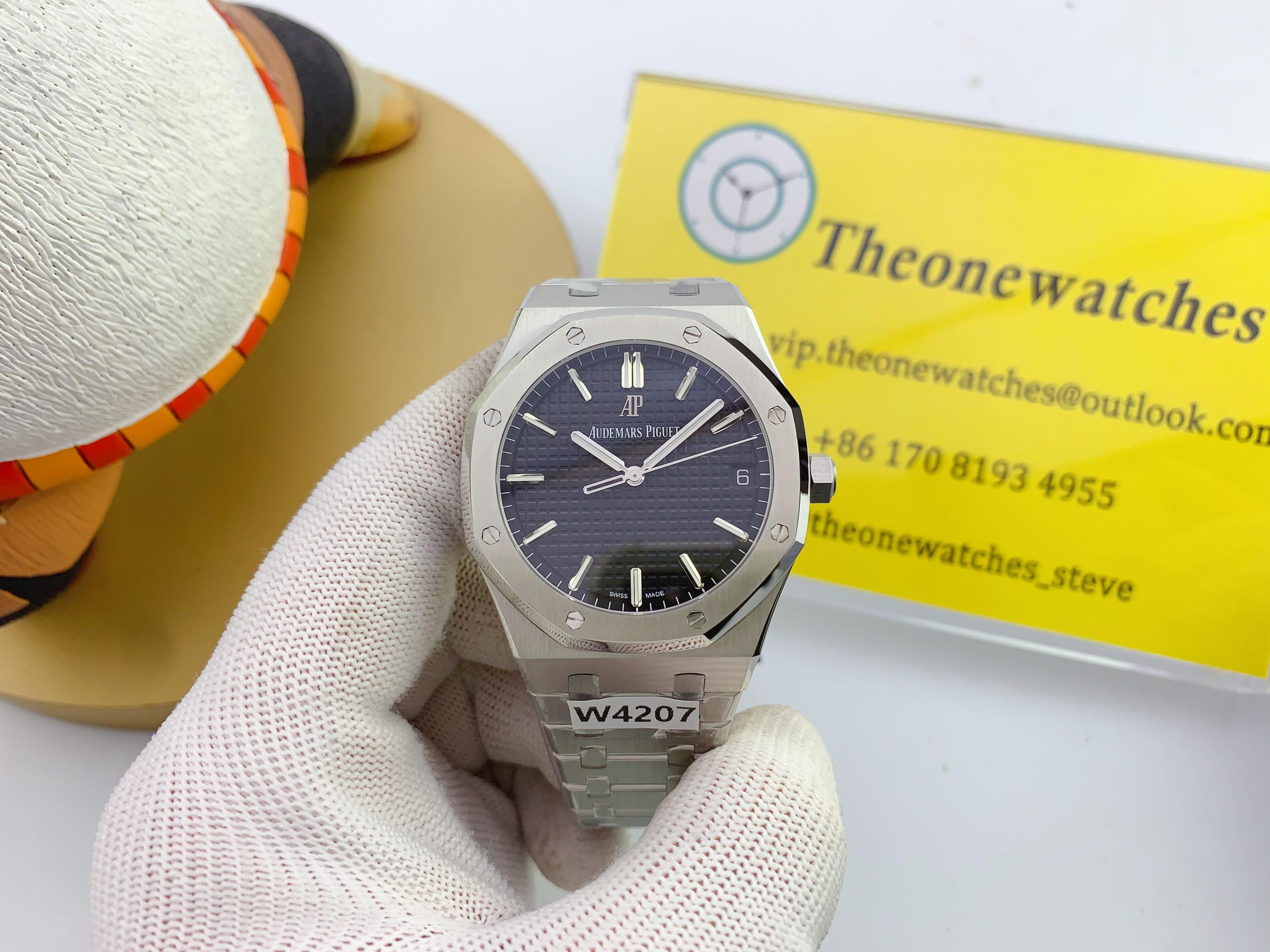
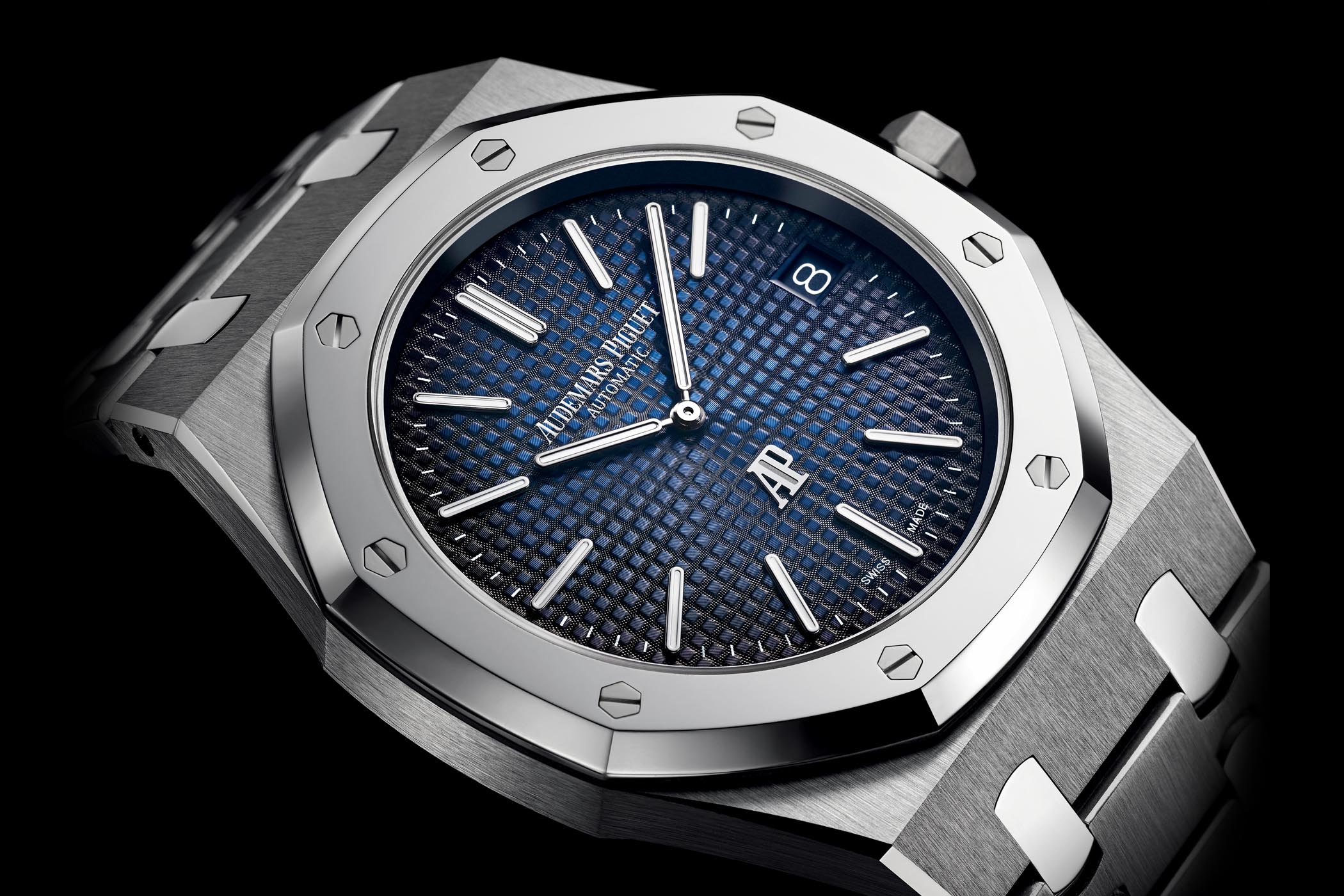
ZF earned their reputation on the Royal Oak 15500ST and have expanded into multiple AP references since. Their current V4 Royal Oak is considered the benchmark — the version against which every other AP super clone is measured. What sets ZF apart isn’t any single component but the overall integration. The case, bezel, bracelet, and dial work together in a way that reads as a single cohesive object rather than an assembly of parts.
The bracelet is ZF’s signature advantage. AP’s integrated bracelet transitions from case to link with no visible gap — a design feat that Gerald Genta made look effortless but is actually a machining nightmare. ZF’s V4 bracelet achieves this transition with sub-0.2mm tolerance. The links have alternating brushed surfaces with polished chamfers on the edges — exactly matching genuine’s finishing language. Each link feels solid, doesn’t rattle, and the folding clasp has a satisfying snap with resistance that feels premium rather than cheap.
The bezel screws — those eight hexagonal screws that define the Royal Oak — are correctly shaped in ZF’s current production. Early generations had slightly oversized screwheads or hex patterns that were too deep. The V4 corrected this: screws sit flush with the bezel surface, hex patterns are sharp, and each screw aligns with its intended orientation (they’re not all identical — genuine AP varies the screw alignment subtly).
ZF’s dial work has matured significantly. The Grande Tapisserie pattern has correct depth and square proportions. The applied AP logo at 12 and the applied hour markers show clean edges without visible glue or alignment issues. The date window at 3 o’clock has a correct font with appropriate weight — one of those details that’s easy to get slightly wrong and hard for a buyer to articulate but noticeable subconsciously.
JF Factory — Offshore Specialist
JF Factory was producing AP replicas before most current factories existed. Their history with Audemars Piguet goes back over a decade, and their specialization shows most clearly in the Offshore collection — the Diver 15710ST and the Chronograph 26470ST are their strongest references. JF understands the Offshore design language: oversized crown guards, rubber-integrated pushers, the “Mega Tapisserie” dial pattern that’s different from the standard Royal Oak’s “Grande Tapisserie.”
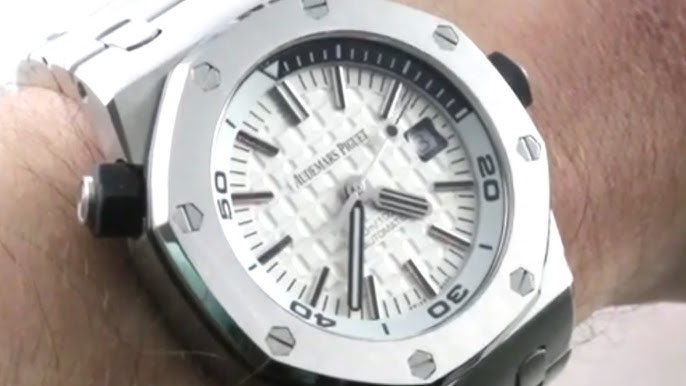
The Offshore rubber strap is where JF’s experience becomes obvious. Genuine AP uses a proprietary rubber compound that has specific hardness, texture, and a particular way it curves around the wrist. JF’s rubber is the closest to genuine — not too soft (which feels cheap), not too stiff (which creates uncomfortable pressure points). The tang buckle and strap holes align properly, and the texture pattern on the strap surface matches genuine’s subtle grid pattern.
Where JF falls slightly behind ZF: the standard Royal Oak. JF’s 15500ST exists, but the bracelet integration isn’t as tight as ZF’s latest version. The tapisserie pattern on JF’s standard Royal Oak dials has been acceptable but not class-leading. This isn’t a criticism — it’s a specialization. JF focuses their R&D budget on Offshore references and it shows in those models.
JF’s chronograph Offshores use a modified Asian 7750 caliber that positions subdials at the correct 3-6-9 layout. The chronograph functions are smooth: start/stop/reset all operate correctly, and the elapsed seconds hand sweeps rather than ticks. The pushers have correct rubber cladding — a detail some factories omit because it adds manufacturing complexity. JF doesn’t skip it.
APS Factory — The Challenger
APS entered the AP super clone market more recently than ZF or JF, but they’ve made a genuine impact. Their approach is interesting: rather than trying to beat ZF at the Royal Oak or JF at the Offshore, APS identified gaps in the lineup — models that ZF and JF either don’t produce or produce with less focus — and went after those. The result is a factory that complements the other two rather than directly competing on their strongest references.
APS’s Royal Oak 15400ST was their breakthrough piece. The 15400 (the predecessor to the 15500) has a different dial layout — no seconds subdial, just a date window. APS nailed the proportions on this reference, and when they moved to the 15500 they carried that precision forward. Their tapisserie is slightly different from ZF’s in character — where ZF’s has a crispier, more angular pattern, APS’s has slightly more rounded squares that some collectors actually prefer as a closer match to certain genuine production runs.
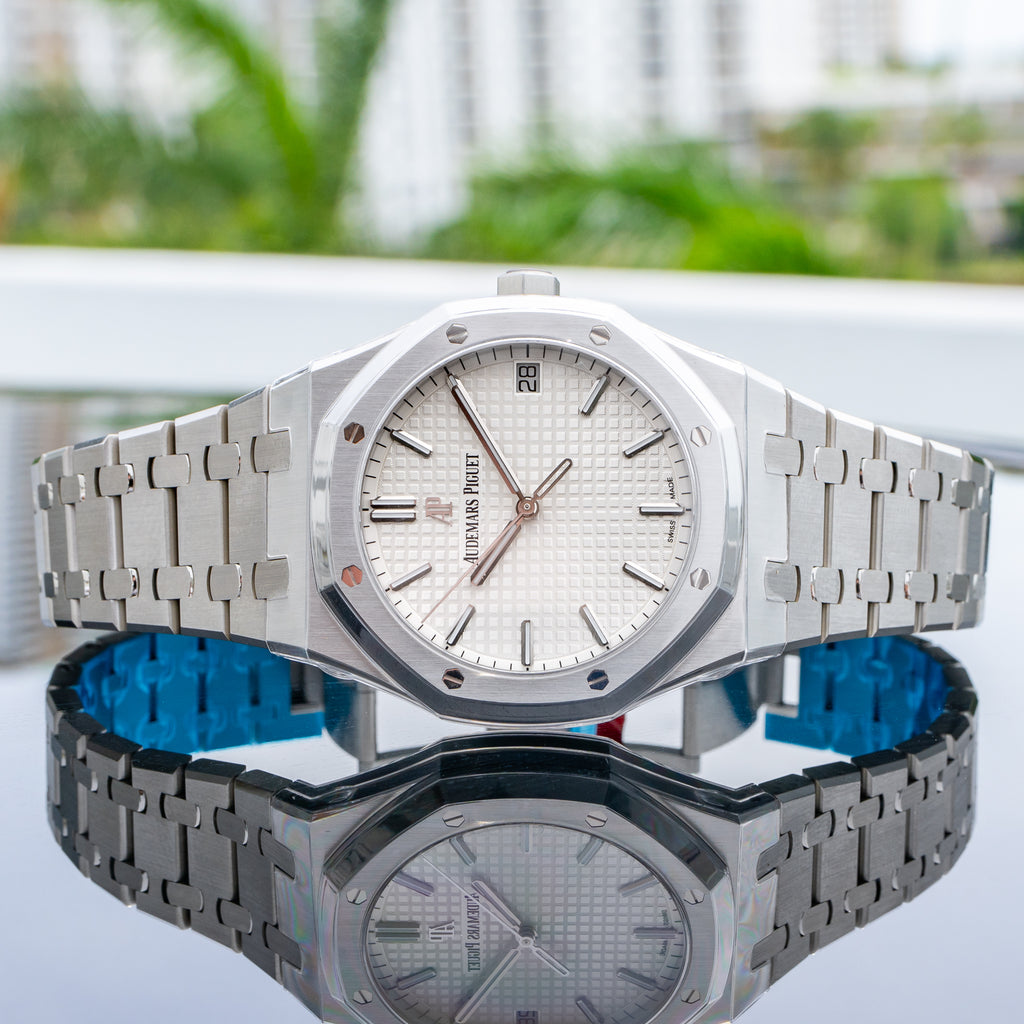
Where APS stands out: dial color accuracy. Their blue dials have a specific gradient that shifts with light angle — moving from deep navy in direct light to a steel blue in overcast conditions. This color shift is a genuine AP characteristic that ZF doesn’t quite capture to the same degree. APS also produces some of the better two-tone (steel and rose gold) Royal Oak variants. Their rose gold plating has improved to 3-5 microns thickness with appropriate warmth — not the overly yellow gold that plagues cheaper options.
The movement in APS watches is their own clone caliber based on the Miyota 9015 platform but with distinct finishing. The decorated rotor carries AP’s “Audemars Piguet” engraving with a slightly different font weight than ZF’s version — neither is objectively better, and both are close to genuine. APS has been refining their movement finishing with each generation, and their current production shows improved Geneva stripes and perlage that look correct through the display caseback.
Worth noting: APS has been pushing into the Royal Oak Chronograph space (26331ST) with mixed results. Their time-only Royal Oak models are strong, but the chronograph requires a different movement architecture, and APS is still working out the subdial alignment on this reference. For AP chronographs, JF remains the safer choice.
AP Clone Movements Explained
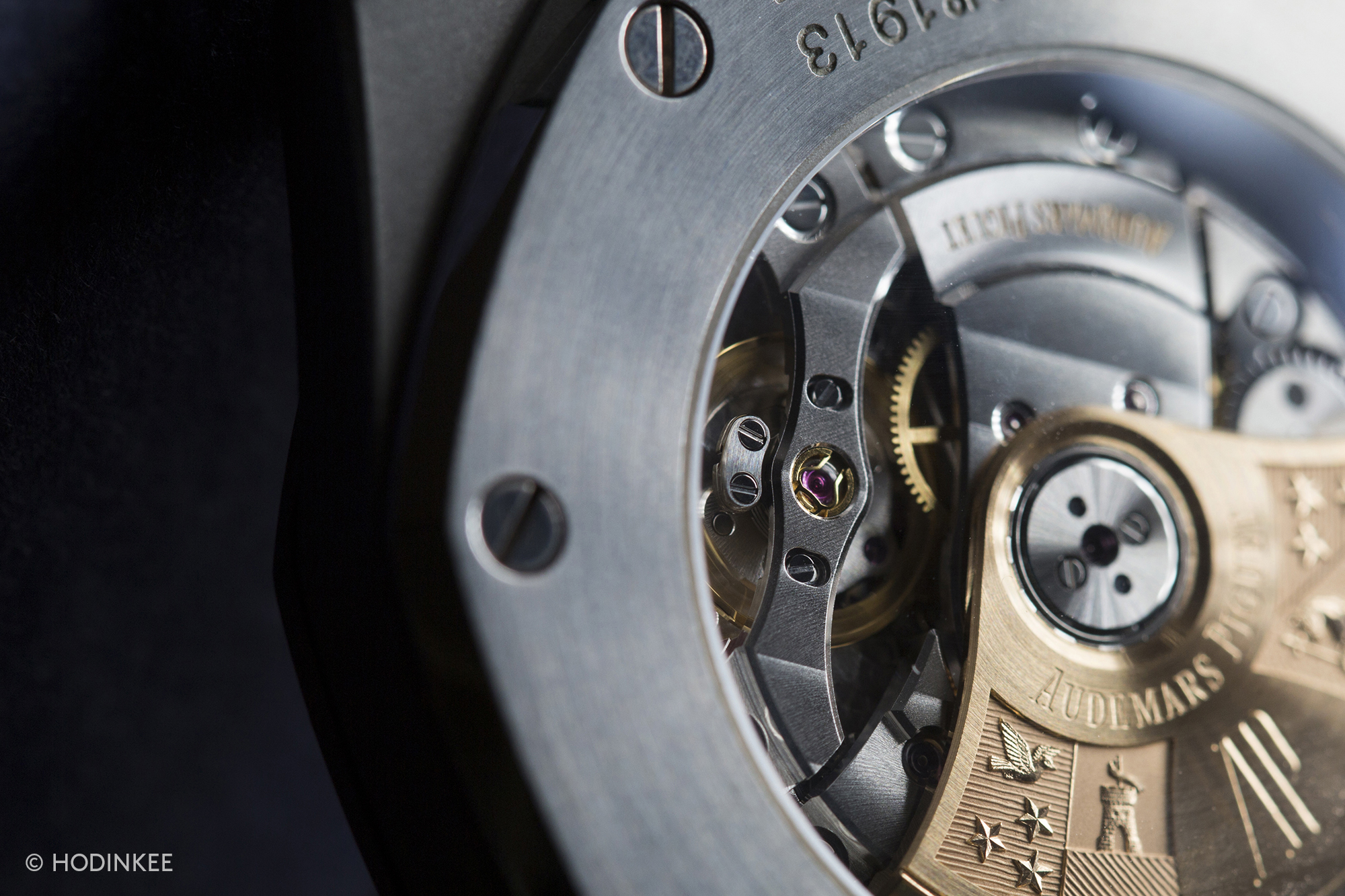
Every AP super clone runs on a movement descended from one of two platforms: the Miyota 9015 (for time-only and date models) or the Asian 7750 (for chronographs). Both are proven Japanese/Chinese calibers with decades of service history. What factories do is modify these base movements with custom bridges, rotors, and plates to visually match AP’s genuine calibers when viewed through the display caseback.
The Miyota 9015 beats at 28,800 vph (4Hz), matching genuine AP’s Cal. 4302 beat rate exactly. It has a 42-hour power reserve (genuine is 70 hours — this is the one spec where the clone falls short). It’s automatic, it hacks (stops the seconds hand when you pull the crown to set time), and it hand-winds. The 9015 has been in production since the early 2010s, which means watchmakers worldwide know how to service it. Parts are available. It’s not exotic — it’s reliable.
The decoration layer is what differentiates a cheap Miyota 9015 build from a super clone version. ZF’s clone Cal. 4302 has a custom rotor with the 21-karat gold mass (genuine uses 22k, the difference is invisible), Geneva stripes on the bridges, and perlage on the main plate. The engravings — “Audemars Piguet,” serial numbers, “Geneve” marks — are laser-etched rather than stamped, producing cleaner text at the cost of slightly less depth than genuine’s chemical etching.
For the Jumbo 15202ST — the ultra-thin Royal Oak at 8.1mm — ZF uses a specially modified Miyota 9015 that’s been slimmed to fit the tight case. This modification reduces power reserve slightly (around 38 hours vs the standard 42) and means the movement needs more careful servicing since the tolerances are tighter. The trade-off is worth it for the correct case profile — the Jumbo’s thinness is its defining characteristic and a fat movement ruins the entire aesthetic.
Service tip: When getting your AP super clone serviced, tell the watchmaker it runs a Miyota 9015 base. The custom bridges and rotor are cosmetic — the functional components are standard 9015 parts. Any competent watchmaker can service a 9015, but not all are familiar with “clone caliber” terminology. Speaking the watchmaker’s language gets better results.
Model-by-Model Factory Picks
This is the section that saves you weeks of research on forums. For each major AP reference, one factory builds it best. Sometimes the margin is wide, sometimes it’s narrow — but in every case there’s a clear recommendation based on current production quality.
The pattern is clear: ZF for time-only Royal Oak on bracelet, JF for anything Offshore or chronograph, APS for two-tone and specific dial colors. This isn’t random — each factory invested in different tooling. ZF spent on bracelet machines and dial presses for the standard Royal Oak dimensions. JF invested in rubber compounding, pusher tooling, and chronograph movement modification. APS focused on plating technology and dial color matching.
The Tapisserie Test — What Separates Good from Great
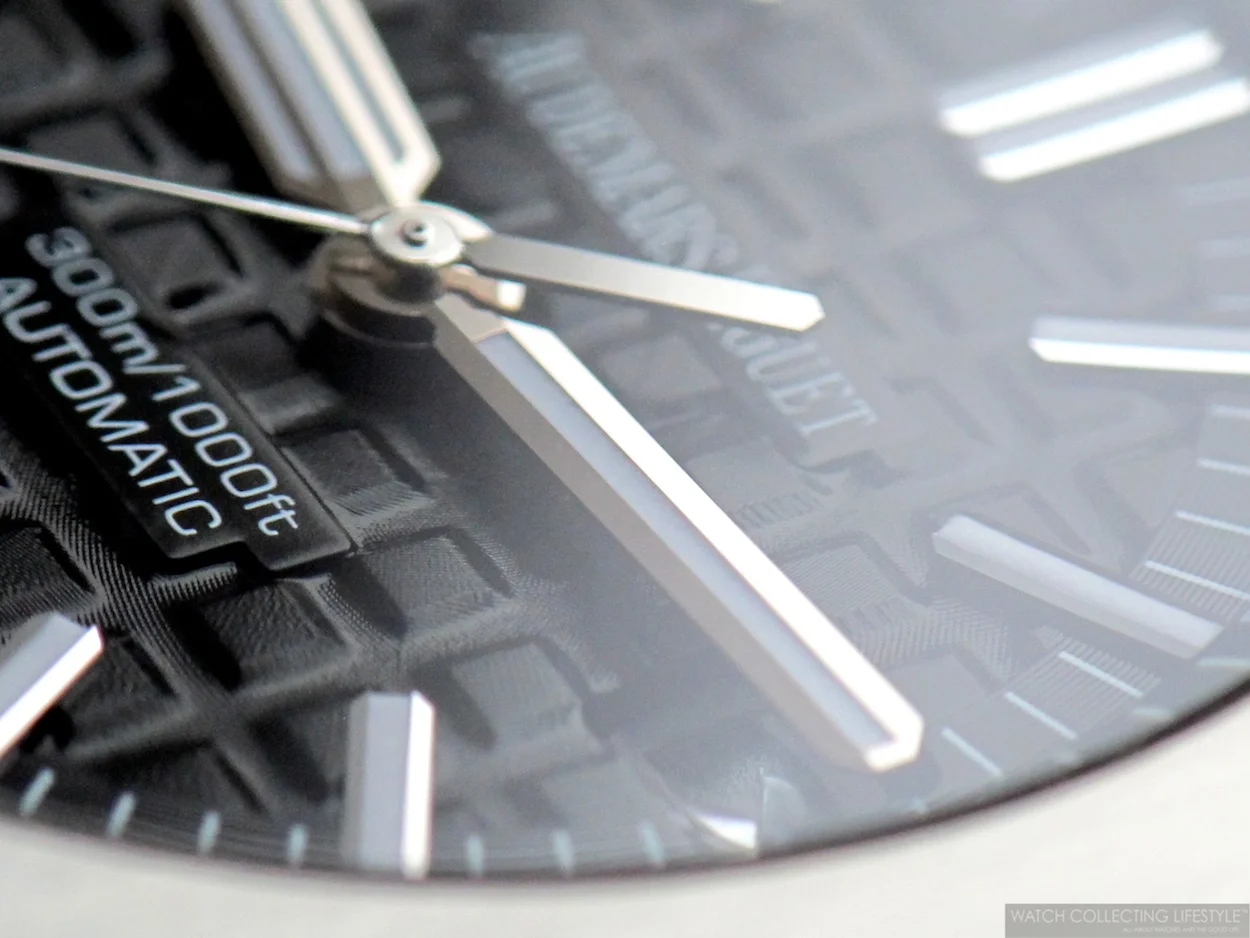
If there’s one element that makes or breaks an AP replica, it’s the tapisserie. This checkered waffle pattern on the dial is AP’s signature — more defining than the octagonal bezel, more distinctive than the exposed screws. Genuine AP creates this pattern using a specialized CNC process that cuts tiny squares into the brass dial blank at precisely controlled depths. The result is a grid of raised squares that catch light from multiple angles simultaneously, creating a visual shimmer that’s unlike any other dial texture in watchmaking.
There are two types: Grande Tapisserie (on the standard Royal Oak) uses smaller, more numerous squares. Mega Tapisserie (on the Offshore) uses larger squares. Each factory approaches these differently, and the quality range is enormous. Here’s what to look for:
Square depth: Each square should be cut deep enough to create shadow definition but not so deep that it looks like a grid of holes. Genuine AP’s depth is approximately 0.15mm — you can feel it with a fingernail but can’t catch a fingernail in the grooves. ZF hits this depth consistently. APS is slightly shallower (0.12mm), which actually looks correct in certain lighting but loses definition in low light.
Square proportion: Each square should be exactly square — not rectangular, not slightly trapezoidal. This seems obvious, but maintaining perfect square proportions across a curved dial surface (AP dials have a subtle convexity) requires precision tooling. ZF and APS both achieve correct proportions. Lower-tier factories frequently show slight rectangular distortion toward the dial edges.
Grid alignment: The tapisserie grid should align with the dial’s center. On genuine AP, the grid radiates from the dial center point — meaning the lines of the grid pass through 12, 3, 6, and 9 o’clock positions. If the grid is rotated even 1-2 degrees from this alignment, the dial looks “off” in a way most people can’t articulate but absolutely notice. ZF’s alignment is correct. APS is correct. JF’s standard Royal Oak occasionally shows slight rotation — another reason JF is better suited for Offshore where the Mega Tapisserie pattern is more forgiving.
AP-Specific QC Protocol
Quality control photos are where your purchase succeeds or fails. For AP specifically, there are checks that matter far more than for other brands. The Royal Oak’s design is so precise and geometric that flaws show more obviously than on, say, a round Rolex case. Here’s the exact QC protocol I use when evaluating AP super clones from QC photos:
1. Bezel screw alignment. Eight screws, each with a hexagonal slot. On genuine AP, these slots are oriented in a specific pattern — not all pointing the same direction. Request a straight-on bezel photo and verify each screw is flush with the bezel surface. No screw should be recessed or protruding. The hex slots should be sharp — no soft edges or burrs.
2. Bracelet-case transition. The junction where bracelet meets case should show zero visible gap on the sides. Ask for a photo at approximately 45 degrees from the 6 o’clock side — this angle reveals gaps that straight-on photos hide. Any light visible between case and bracelet means the tolerance is off and you should request another unit.
3. Dial tapisserie under magnification. Request a macro photo of the dial. The tapisserie squares should be uniform across the entire dial face. Look especially at the outer ring of squares near the hour markers — this is where quality drops in lesser factories because the machining approaches the edge of the dial blank.
4. Date window alignment. The date should be centered vertically and horizontally within the window. AP’s date windows are precisely cut — there’s no room for the date text to sit high, low, or shifted. Check dates with multiple digits (like 22, 28) since wider numbers reveal misalignment more readily.
5. Applied markers and logo. The AP logo at 12 o’clock and all hour markers are applied (glued on raised metal pieces, not printed). Check that each marker is straight, centered on its index position, and at consistent height. Tilted markers are a reject — they can’t be fixed after assembly.
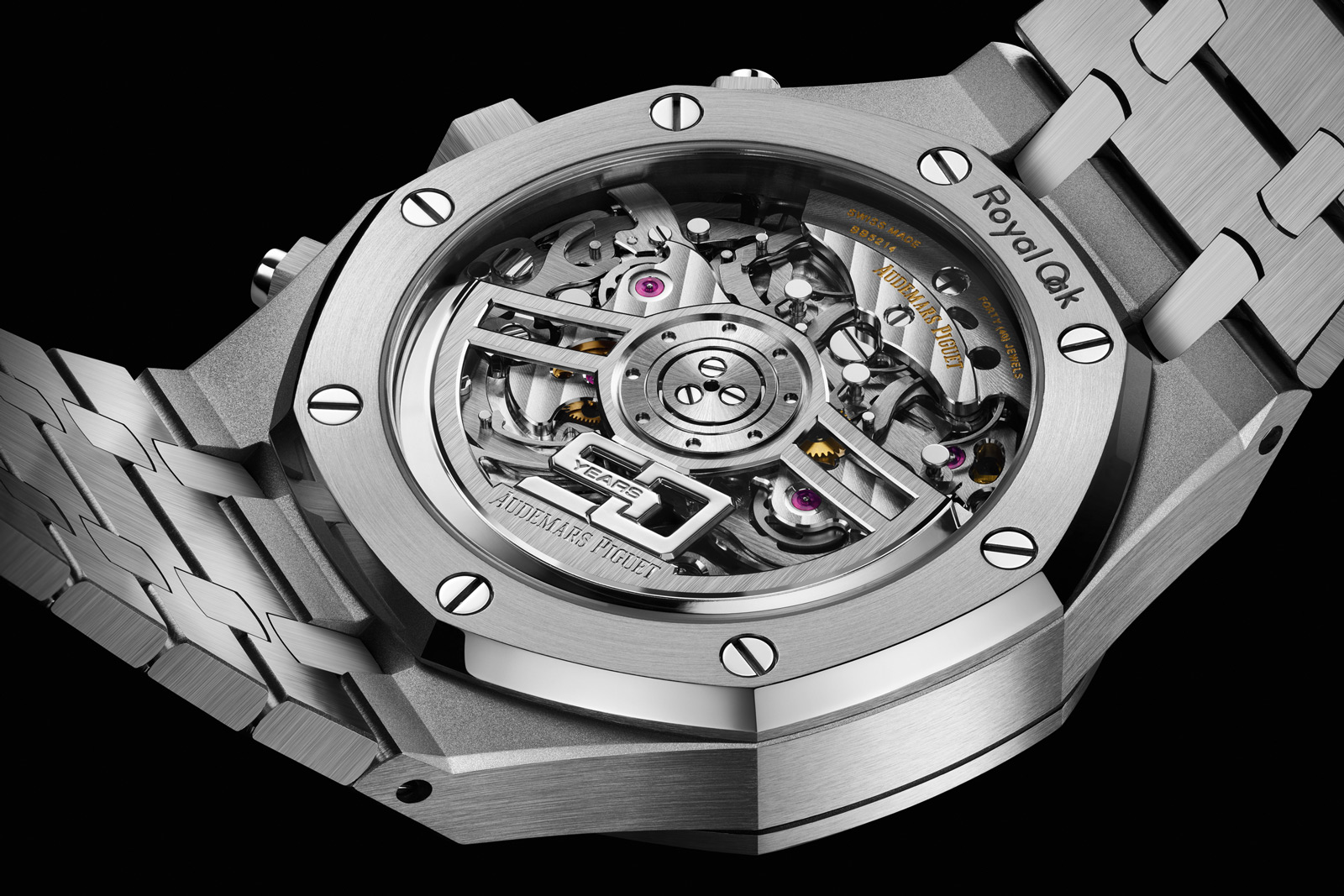
6. Caseback engravings. The display caseback should show clean rotor engravings and correct serial number formatting. The “Audemars Piguet” text on the rotor should have consistent letter spacing. The caseback itself should have “AP” stamp, serial number, and material marking. These are all laser-engraved on super clones — check for crispness.
Quick QC Checklist for AP:
- All 8 bezel screws flush and sharp
- Zero gap at bracelet-case junction (both sides)
- Tapisserie pattern uniform edge to edge
- Date centered in window (check double-digit date)
- All markers straight and level
- AP logo at 12 centered and not tilted
- Crown operates smoothly (ask dealer to confirm)
- Caseback text crisp and correctly spelled
- Lume plots match hour markers in size
- Clasp snaps shut with solid click (ask dealer)
The Ordering Process — Step by Step
Buying a super clone AP isn’t like buying a watch on Amazon. The process is individual, involves direct communication, and includes a quality approval step that doesn’t exist in normal retail. Understanding this process before you start eliminates 90% of the anxiety first-time buyers experience. Here’s exactly how it works:
Step 1 — Choose your reference. Decide which AP model you want before contacting anyone. Know the reference number (e.g., 15500ST.OO.1220ST.01 for a Royal Oak blue dial) and the factory you want (ZF, JF, or APS based on this guide). Having this information ready demonstrates you’ve done research and generally results in better service.
Step 2 — Contact a trusted dealer. Dealers act as intermediaries between you and the factory. They handle ordering, QC photography, and shipping. A good dealer has relationships with multiple factories and can source from whichever you specify. Communication is typically via WhatsApp, Telegram, or WeChat — not email. Response times vary from hours to a day depending on time zones (most dealers are in Asia).
Step 3 — Place your order. Payment methods vary by dealer: bank transfer, cryptocurrency, and sometimes PayPal for established customers. Once payment clears, the dealer orders from the factory. This isn’t picking from a shelf — the factory either has your configuration in current production or starts building one. Wait times range from 3-14 days depending on model availability.
Step 4 — QC photos arrive. This is the critical step. The dealer photographs your specific watch — not a stock photo, YOUR actual unit. You’ll typically receive 8-15 photos showing every angle: dial straight-on, bezel close-up, side profile, caseback, bracelet clasp, lume shot, and timegrapher reading. Evaluate these against the QC checklist above. Take your time — there’s no rush at this stage.
Step 5 — GL or RL. “Green Light” (GL) means you approve the watch and the dealer ships it. “Red Light” (RL) means you want a different unit — specify exactly what’s wrong and why. Legitimate issues get a replacement QC round. Unreasonable RLs (expecting gen-level perfection at super clone pricing) will strain your relationship with the dealer. Be specific: “the date is shifted 0.5mm right” is actionable. “The dial looks weird” is not.
Step 6 — Shipping and delivery. Most dealers ship via triangulated shipping through a hub — the watch goes from China to a transit country, then to your destination. This adds a few days but reduces customs attention. Tracking is provided. Delivery typically takes 10-20 days from GL to your door, depending on destination and shipping method.
Pro tip: If you’re buying your first AP super clone, start with a ZF 15500ST in a standard color (blue, black, or grey). It’s the most refined AP super clone available, the QC is most consistent, and it’s the reference with the most comparison material online for evaluating your QC photos.
Common AP Flaws and How to Spot Them
Every super clone has tells — the question is whether they’re visible at arm’s length, at close inspection, or only under a loupe. The best AP super clones have tells visible only under magnification and only to someone familiar with genuine AP. Here are the most common flaws, ranked by detectability:
The weight difference is worth understanding. Genuine Royal Oak uses a solid steel case and bracelet with extremely tight link-to-link tolerances. Super clone links are made from the same 316L steel but have marginally thinner cross-sections in the link interiors (invisible externally) to simplify manufacturing. This results in approximately 5-8 grams less total weight. On wrist, this is barely perceptible — most people couldn’t distinguish 152g from 160g blindfolded. But if someone places a super clone next to genuine on a scale, the difference is measurable.
The crystal AR (anti-reflective) coating is the most discussed tell, but also the most overstated. Genuine AP uses a multi-layer AR coating that shows a subtle purple-blue hue when viewed at extreme angles. Super clones typically show a slightly more blue hue. Under normal viewing conditions — looking at the dial to read the time — both look identical. You’d need to tilt the crystal at 45+ degrees under specific lighting to see the difference, and even then it requires comparison with a genuine piece.
Budget Tiers — What Each Level Gets You
Not all AP replicas are super clones, and not all super clones are equal. The market has distinct quality tiers, and understanding what each tier delivers helps you set realistic expectations. Here’s a no-nonsense breakdown:
The difference between a DHGate AP and a ZF Royal Oak isn’t subtle — it’s the difference between a Halloween costume and tailored clothing. A DHGate AP has a flat, stamped foil pattern instead of CNC-cut tapisserie. The bezel screws are printed circles. The bracelet rattles. The crystal has no AR coating. It looks like what it is from across the room.
The mid-tier sits in an uncomfortable middle ground: close enough to look right in photos, but wrong enough to look off on the wrist. The bracelet has visible gaps at the case junction. The tapisserie pattern exists but lacks depth. The movement works but can’t hack or hand-wind. For most buyers, this tier is the worst value — you spend meaningful money but don’t get the refinement that makes the watch enjoyable to wear.
The super clone tier — ZF, JF, APS — delivers a watch that functions correctly, looks correct at inspection distance, and provides the tactile experience (weight, bracelet articulation, crown feel) that makes you want to wear it daily. This is where the money-to-enjoyment ratio peaks. You’re getting 95-97% of the genuine experience for a fraction of the cost, and the remaining 3-5% requires specialized tools or direct comparison with genuine to identify.
Bottom line: If you’re considering an AP super clone, commit to the top tier. The mid-tier will disappoint you within a month. The DHGate tier will disappoint you within five minutes. The super clone tier will satisfy you for years.
Where to Go From Here
This guide covered the factory landscape for AP super clones. For deep dives into specific models, these guides continue the conversation:
- Royal Oak Replica Guide — ZF V4 teardown, dial variants, bracelet analysis for 15500ST and 15202ST
- Royal Oak Offshore Replica — JF’s Diver 15710 and Chronograph 26470, rubber strap deep dive
- Best Replica Watches 2026 — AP’s position in the overall super clone landscape
- Replica Watch Factories Guide — ZF, JF, and other major factories across all brands
- QC Photos Masterclass — How to evaluate quality control photos for any brand
- Browse AP Collection — All available Audemars Piguet models
FAQ — 20 AP Super Clone Questions
Which factory makes the best AP Royal Oak super clone?
ZF Factory produces the best Royal Oak 15500ST and 15202ST. Their V4 version has the tightest bracelet integration, most accurate tapisserie dial pattern, and most consistent quality control across units.
Is ZF or APS better for the Royal Oak?
ZF leads overall — better bracelet, better bezel screws. APS has slightly better dial colors on blue and grey variants, and better rose gold plating on two-tone models. For a standard steel Royal Oak, ZF is the safer choice.
Which factory makes the best Offshore?
JF Factory. They’ve specialized in Offshore models for over a decade. Their rubber strap quality, crown guard finishing, and Mega Tapisserie dial work are class-leading for the Diver 15710 and Chronograph 26470.
What movement is inside an AP super clone?
Time-only models use a decorated Miyota 9015 (clone Cal. 4302 or 3126). Chronograph models use a modified Asian 7750 (clone Cal. 3126/3840). Both are reliable, serviceable movements.
How accurate is the tapisserie dial pattern?
On ZF and APS Royal Oaks, the tapisserie is 85-90% accurate to genuine — correct square proportions and depth. The remaining difference is in how the pattern interacts with light, which requires direct gen comparison to notice.
Can a watchmaker service an AP super clone?
Yes. Tell them it’s a Miyota 9015 base movement. The decorative bridges and rotor are cosmetic — all functional parts are standard 9015 components. Any competent watchmaker can service, regulate, and repair it.
How long does an AP super clone last?
With proper care and servicing every 3-5 years, 10+ years is realistic. The Miyota 9015 is a proven workhorse with a documented track record of longevity. The case and bracelet are 316L steel — they won’t degrade.
What’s the biggest giveaway on an AP super clone?
Weight. Super clones are 5-8 grams lighter than genuine due to slightly thinner internal link cross-sections. This is only noticeable side-by-side or on a scale — not on the wrist in isolation.
Is the ceramic Offshore actually ceramic?
From JF Factory, yes — real ceramic components, not painted metal. The matte finish, weight (lighter than steel), and scratch resistance are correct. Be aware that ceramic is brittle — drops are more dangerous than with steel.
How does the ordering process work?
Contact a trusted dealer, specify the model and factory, pay, wait 3-14 days for the factory to produce your unit, receive QC photos of YOUR specific watch, approve or reject, then the dealer ships. Total time from order to delivery: 2-5 weeks.
What should I check in QC photos?
For AP specifically: bezel screws flush and sharp, zero bracelet-case gap, tapisserie uniformity, date window alignment, straight applied markers, crisp caseback engravings. Request a macro dial shot and 45-degree side profile.
Can I swim with an AP Offshore super clone?
JF’s Offshore Diver is tested to 100m, which is sufficient for swimming and snorkeling. Genuine AP rates it at 300m. Don’t dive with it, but regular swimming is fine. Get the crown and caseback gaskets checked every 2 years.
What’s the power reserve like?
About 42 hours on time-only models (Miyota 9015 base). Genuine AP Cal. 4302 has 70 hours. Practically, 42 hours means the watch survives a weekend off your wrist — take it off Friday night, put it on Monday morning, it’s still running.
Does the chronograph actually work?
Yes, on JF’s Offshore Chronograph and Royal Oak Chronograph. Start, stop, and reset all function correctly. The elapsed seconds hand sweeps smoothly. Timing accuracy is sufficient for everyday use — not lab-grade, but functional.
How does the AP bracelet feel compared to genuine?
ZF’s V4 bracelet is the closest — solid feel, clean articulation, satisfying clasp snap. It has slightly more flex between links than genuine (which is famously rigid), but on the wrist the difference is subtle. The brushed-polished finishing alternation is correct.
Should I get a Royal Oak or Offshore?
Royal Oak (15500ST) for everyday elegance — 41mm, integrated bracelet, dressier. Offshore (15710ST) for active lifestyles — 42mm, rubber strap, 300m water resistance. If you wear suits regularly, Royal Oak. If you’re active and want a watch you don’t baby, Offshore.
Is the rose gold plating durable?
APS’s rose gold is 3-5 microns thick — enough for 2-3 years of daily wear before showing steel underneath on high-contact points (clasp, crown). Genuine uses solid gold. For maximum longevity on two-tone, rotate with other watches and avoid abrasive surfaces.
What’s the best first AP super clone to buy?
ZF Royal Oak 15500ST in blue dial. It’s the most refined AP super clone available, has the most consistent QC, and blue is the most iconic Royal Oak color after the original steel/blue combination Genta designed in 1972.
Can I replace the bracelet or strap?
On the Royal Oak — technically possible but the integrated bracelet design makes third-party options limited. On the Offshore — rubber straps can be swapped with aftermarket options in various colors. JF’s Offshore uses standard AP-compatible strap dimensions.
How much accuracy can I expect?
Out of the box, ±5-15 seconds per day. A watchmaker can regulate it to ±3-5 seconds for a small fee. Genuine AP’s COSC standard is -4/+6 seconds. A well-regulated super clone falls within COSC range — indistinguishable in daily use.
Final Word
Audemars Piguet makes some of the most beautiful watches on the planet — and the best super clone factories have gotten remarkably close to replicating that beauty. ZF for Royal Oak, JF for Offshore, APS for two-tone. The QC process protects you from the occasional off-spec unit. The Miyota 9015 base movement gives you reliable daily service for years. Know which factory builds your reference best, insist on thorough QC photos, and you’ll end up with a watch that delivers 95%+ of the genuine AP experience on your wrist every day.