Omega Planet Ocean Replica — 600M, Ultra Deep, GMT, VSF Build Quality, and Why This Is the Diver’s Diver
Last updated: March 2026 • 20-minute read • Every Planet Ocean reference and factory analyzed
The Omega Seamaster Planet Ocean sits in the sweet spot between luxury sport watch and legitimate diving instrument. While the Diver 300M gets the James Bond attention and the Speedmaster gets the NASA mythology, the Planet Ocean is the Omega you strap on when you actually plan to go underwater. At 600 meters water resistance, 43.5mm of case diameter, and over 200 grams on the wrist, this is a watch that means business. The orange bezel — the Planet Ocean’s most iconic look — has been a Seamaster signature since the collection launched in 2005. In the super clone world, VSF produces the definitive Planet Ocean, using the same ceramic materials, the same VS8900 clone movement architecture, and the same attention to detail that made their Diver 300M legendary. This guide covers the 600M, the insane Ultra Deep, the GMT complication, factory comparisons, and how the Planet Ocean fits into your collection alongside — or instead of — the Diver 300M.
Table of Contents
- 01 The Planet Ocean Identity
- 02 600M — The Core Collection
- 03 The Orange Bezel — Signature Look
- 04 All Dial Variants Ranked
- 05 Ultra Deep — 6000M Madness
- 06 Planet Ocean GMT
- 07 VSF Planet Ocean — Build Quality
- 08 Planet Ocean vs Diver 300M
- 09 Planet Ocean vs Submariner
- 10 QC Checklist
- 11 FAQ — 15 Planet Ocean Questions
The Planet Ocean Identity
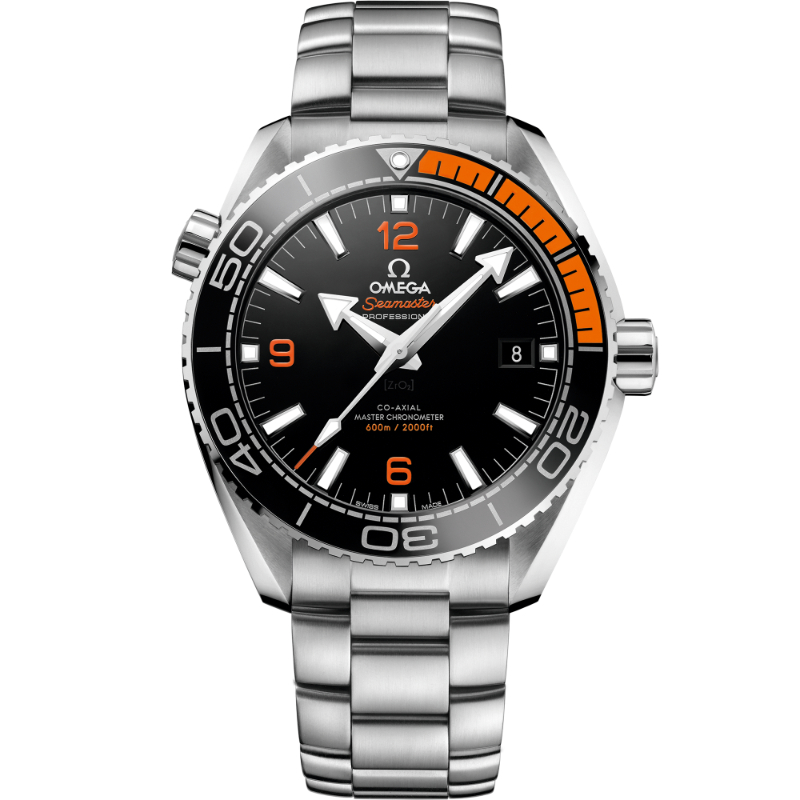
Omega launched the Planet Ocean in 2005 to fill a gap in their Seamaster lineup. The Diver 300M was an excellent daily-wear diver but lacked the sheer presence and depth rating that serious dive watch enthusiasts demanded. The Planet Ocean answered with 600 meters of water resistance, a larger case, and a design language that emphasized tool-watch functionality over dressy refinement. The Planet Ocean has never left the Seamaster family, which is why an Omega Seamaster Planet Ocean replica is catalogued alongside the Diver 300M rather than on a page of its own.
The name itself — Planet Ocean — came from Omega’s partnership with oceanographer and environmentalist Jacques Cousteau’s foundation, though the connection was more marketing than technical. What matters is the result: a watch built around the Cal. 8500/8900 Co-Axial movement with anti-magnetic properties (Master Chronometer certification, resistant to magnetic fields up to 15,000 gauss), a unidirectional ceramic bezel with Liquidmetal-filled diving scale, and a helium escape valve for saturation diving operations.
The Planet Ocean carved its own niche. People who find the Rolex Sea-Dweller too conservative and the Panerai Submersible too niche gravitate toward the Planet Ocean. It’s big without being absurd, colorful without being loud (the orange bezel walks that line perfectly), and technically impressive without being complicated. Among dive watch enthusiasts — people who actually dive — the Planet Ocean has earned genuine respect, which is rare for a watch that’s primarily bought as a fashion accessory.
600M — The Core Collection
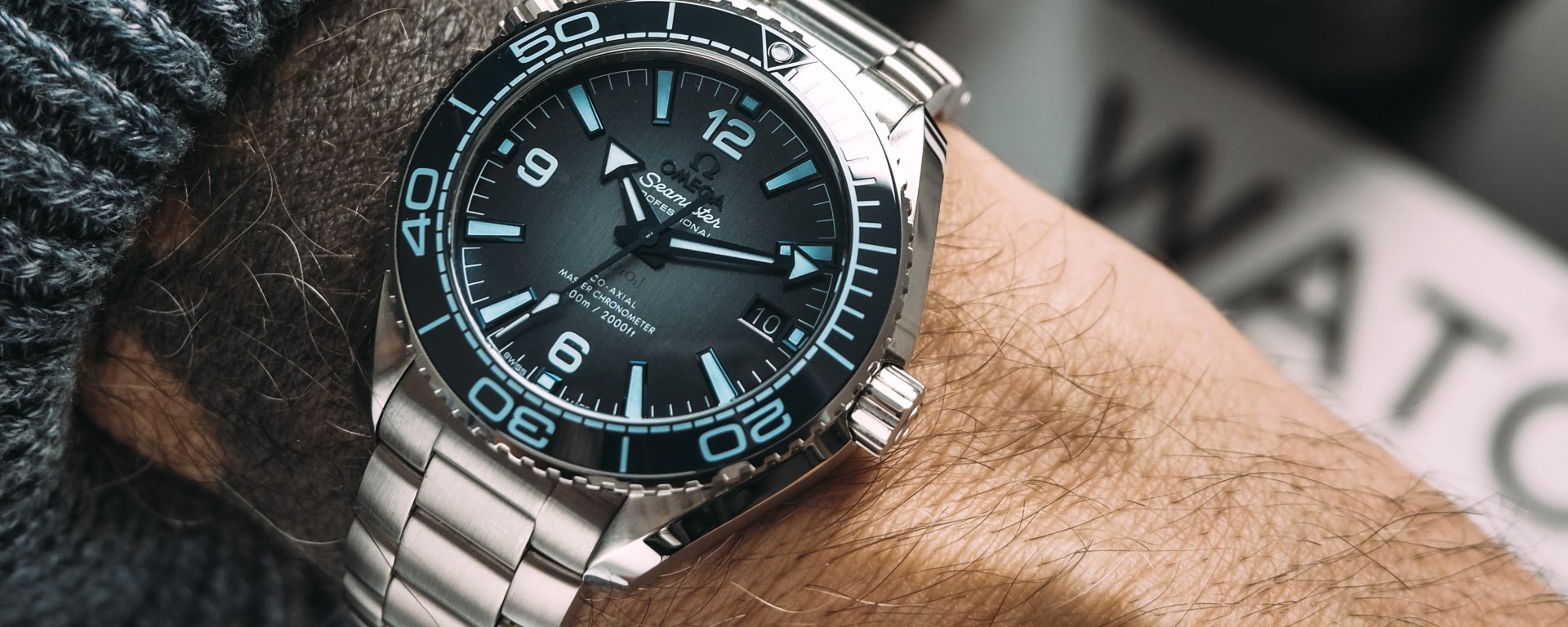
The current Planet Ocean 600M (reference 215.30.44.21.01.001 for the 43.5mm black) uses Omega’s latest case design with improved ergonomics. At 43.5mm wide and 16mm thick, this is a substantial watch. The lug-to-lug is 51mm, which means it wears large — you need at least a 7-inch wrist for this to look proportional. Smaller wrists should consider the 39.5mm version (reference 215.30.40.20.01.001), though the super clone options for the smaller size are limited.
The case construction is impressive even in the genuine. Alternating brushed and polished surfaces, an integrated helium escape valve at 10 o’clock, screw-down crown with the Omega seahorse logo, and crown guards that flow into the case profile. The caseback is stamped (not display) on the steel versions, with the Planet Ocean wave pattern and hippocampus embossed in the metal.
Inside beats the Cal. 8900 — Omega’s top-tier automatic with Co-Axial escapement, two barrels for 60-hour power reserve, and free-sprung balance. The 8900 is the movement Omega uses in their most important non-chronograph watches, and it’s been incredibly reliable in genuine form. VSF’s clone of the 8900 (the VS8900) is a close replica of the plate layout and bridge architecture, though it uses a single barrel rather than two (resulting in approximately 48 hours of power reserve vs genuine’s 60).
The Orange Bezel — Signature Look
The orange-on-black combination is the Planet Ocean’s visual identity. When someone who knows watches sees an orange ceramic bezel, they think Planet Ocean — it’s that strongly associated. The orange is ceramic, not paint, which means it’s scratch-proof and colorfast (it won’t fade from UV exposure over years). The Liquidmetal-filled diving scale markings are white against the orange, creating high contrast that’s actually functional for diving timing.
VSF’s orange ceramic bezel is close to the genuine’s color — a specific burnt orange rather than bright traffic-cone orange. The difference between VSF and genuine orange is approximately half a shade, visible only in direct comparison under controlled lighting. In daily wearing conditions — sunlight, office light, bar light — the colors are indistinguishable. The Liquidmetal fill quality on VSF’s bezel is clean with minimal bleeding at the numeral edges.
Style Tip: The orange bezel Planet Ocean is a statement piece. It pairs brilliantly with casual outfits — denim, navy chinos, earth-tone shirts — but looks out of place with formal suits. If you need one Planet Ocean for all occasions, the black bezel/black dial is more versatile. If you already own a conservative watch (Submariner, Datejust) and want something with personality for weekends, the orange bezel is the answer.
All Dial Variants Ranked
Ultra Deep — 6000M Madness
In 2022, Omega released the Seamaster Planet Ocean Ultra Deep — a watch rated to 6,000 meters (yes, six thousand). To put that in perspective: the Mariana Trench, the deepest point in any ocean, is approximately 10,994 meters. The Ultra Deep can survive depths that no recreational or professional diver will ever reach. It’s pure engineering ego — and it’s magnificent.
The Ultra Deep is 45.5mm wide and 18.12mm thick, making it the largest and heaviest watch in the entire Omega collection. The case uses Omega’s proprietary O-MEGASTEEL alloy, and the crystal is a dome of sapphire thick enough to withstand 6,000 meters of water pressure. The bezel is ceramic with Liquidmetal, and the movement is the Cal. 8912 visible through a sapphire caseback (at 6,000m rating, the caseback engineering is extraordinary).
Super clone versions of the Ultra Deep exist from ORF, but they’re novelty pieces rather than serious reproductions. The engineering required for the genuine’s depth rating — special case alloy, extreme crystal thickness, proprietary caseback seal system — isn’t replicated. The super clone looks like an Ultra Deep and wears like one (very heavy), but it’s functionally a 50-meter water resistant watch in an Ultra Deep costume. Buy it if you love the design and the absurdity of a 6,000m dive watch. Don’t buy it expecting genuine engineering.
Planet Ocean GMT
The Planet Ocean GMT adds a second timezone hand (the orange-tipped GMT hand) and a 24-hour bi-color bezel. The reference is 215.30.44.22.01.001 for the 43.5mm black version. The GMT hand tracks a second timezone on the bezel, while the main hour hand can be independently adjusted for local time — true GMT functionality, same as the Rolex GMT-Master II.
ORF produces the most common Planet Ocean GMT super clone. The GMT complication works correctly — the orange GMT hand moves independently and the bezel has the correct bi-color (orange/black or blue/black depending on the reference). Accuracy is approximately 83% — the GMT complication adds complexity that factories haven’t perfected. The main tells: the GMT hand’s orange tip color is slightly off compared to genuine, and the movement (a modified Asian movement with GMT module) isn’t as smooth in time-zone adjustment as the genuine Cal. 8906.
VSF Planet Ocean — Build Quality
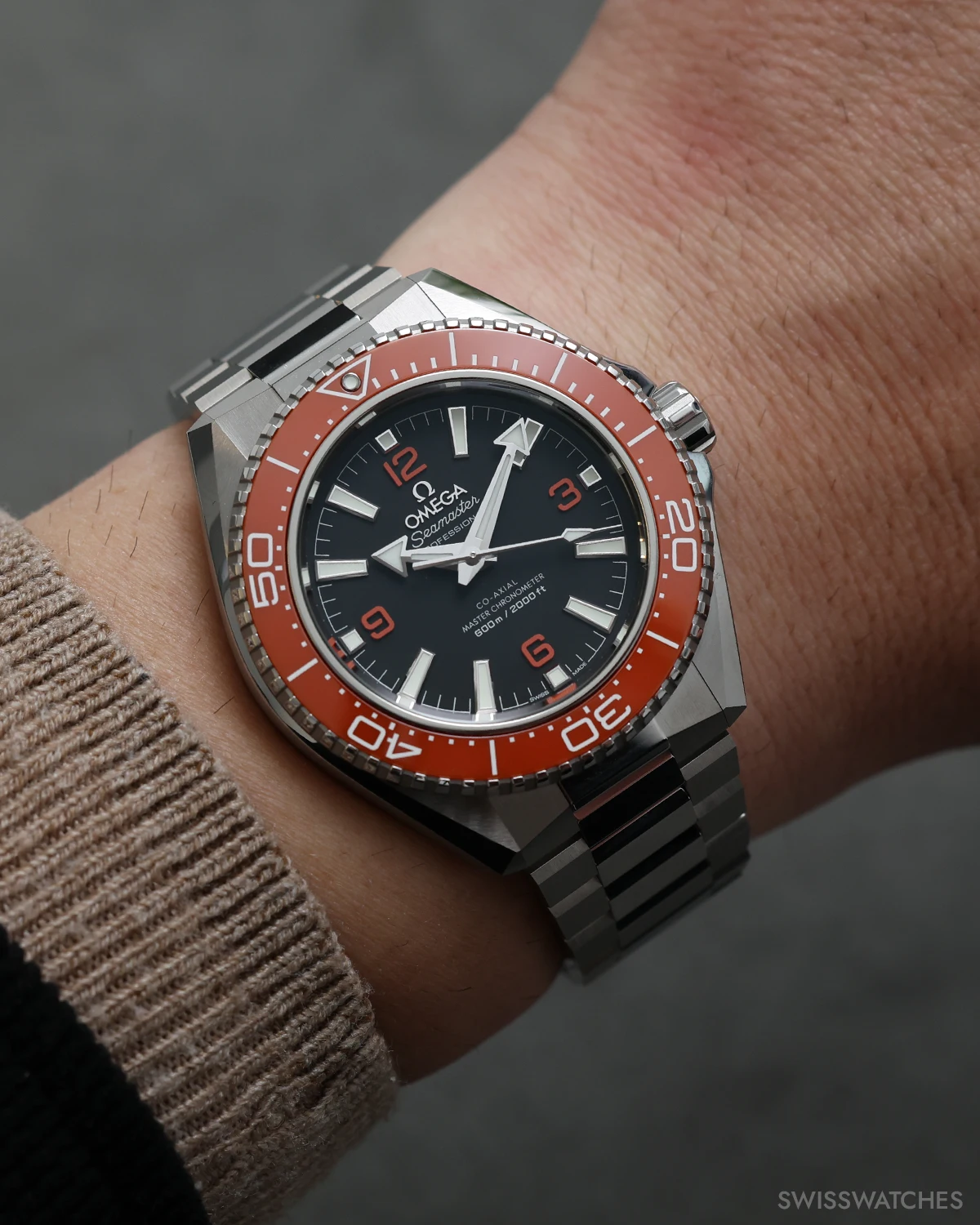
VSF’s Planet Ocean sits at approximately 90% accuracy — slightly below their 95% Diver 300M. The difference comes from the larger case, which has more surface area where finishing transitions (brushed/polished boundaries) can deviate from genuine. But 90% is still excellent, and in many ways the Planet Ocean’s design is more forgiving than the Diver 300M’s because the larger proportions make micro-details less noticeable on the wrist. Every VSF bezel color of this reference sits in the same Omega Planet Ocean clone range.
The ceramic bezel is genuine ceramic — ZrO2 composition with the correct hardness and surface texture. VSF’s orange bezel color is their best work outside of the Diver 300M’s blue. The Liquidmetal-filled diving scale is crisp, with legible numerals and a clean 12 o’clock triangle marker. The bezel action is firm with 120 clicks, same as the genuine.
The VS8900 movement inside the Planet Ocean is a cousin of the VS8800 used in the Diver 300M. Architecture is similar — clone of the genuine Cal. 8900 plate layout with single barrel (48-hour power reserve). The caseback is stamped steel (no display), so movement accuracy-to-genuine matters less than in a display-back watch. What matters: the movement runs accurately (±5 s/d typical), winds smoothly, and the date changes crisply at midnight.
Build Quality Note: The Planet Ocean’s bracelet is arguably VSF’s best. The wider links (compared to the Diver 300M) have more surface area for finishing, and VSF uses that area well — the alternating brushed/polished pattern is accurate, the clasp is solid with a well-functioning diver’s extension, and the bracelet drapes around the wrist without the “stiff” feeling that budget bracelets have. At 43.5mm on a matching bracelet, the complete package has genuine Omega-level wrist presence.
Planet Ocean vs Diver 300M — Which One?
This is the most common question in the Omega Seamaster world: should I buy the Diver 300M or the Planet Ocean? The answer depends on your wrist, your wardrobe, and your personality.
If you own one watch: Diver 300M. It’s more versatile, higher accuracy as a super clone, and works with everything. If you own three watches and want variety: the Planet Ocean fills the “big, bold, weekend” slot perfectly. The orange bezel Planet Ocean next to a black Submariner and a blue Diver 300M gives you three completely different vibes for three different days. The Planet Ocean and the Diver 300M both sit in the Omega Seamaster replica category, so the two cases can be compared side by side.
Planet Ocean vs Submariner — Different Philosophies
The Submariner is a 40mm (or 41mm with the current 126610) stealth diver. It’s designed to disappear on the wrist — to be the watch that works with everything without drawing attention. The Planet Ocean is the opposite philosophy: 43.5mm of “look at me” with an orange bezel that catches every eye in the room. They’re both dive watches, but they approach the concept from completely different directions.
As super clones, the Clean Submariner (93% accuracy) edges the VSF Planet Ocean (90% accuracy), but the Planet Ocean is more visually complex — more bezel colors, larger case details, more finishing surfaces — which means the 90% achievement is arguably more impressive from an engineering standpoint. Both are excellent purchases. The choice is purely personal: do you want quiet confidence (Submariner) or expressive sport luxury (Planet Ocean)? If the answer is Omega, the catalogue of Omega watch replica builds runs well beyond the divers.
Planet Ocean QC Checklist
FAQ — 15 Planet Ocean Questions
Q: Is the Planet Ocean too big for my wrist?
At 43.5mm with a 51mm lug-to-lug, you need at least a 7-inch wrist for the Planet Ocean to look proportional. Under 6.75 inches, the lugs may overhang, which looks awkward. If your wrist is 6.5-6.75 inches, the 39.5mm Planet Ocean is a better fit — but super clone options for that size are limited. Try measuring your wrist and comparing to the lug-to-lug measurement.
Q: Can I swim with a VSF Planet Ocean?
Yes — same as the Diver 300M. VSF’s water resistance is approximately 50 meters (not the genuine’s 600m), which covers swimming, snorkeling, and showering. The helium escape valve functions but isn’t relevant for recreational use. Have a watchmaker check the gaskets if you plan to swim regularly.
Q: Orange or black bezel?
If the Planet Ocean is your only watch: black bezel — more versatile. If you have a conservative daily watch and want the Planet Ocean as a weekend/casual piece: orange — it’s the reason this watch exists, it’s the signature, and it’s spectacular in person. You’ll never regret the orange.
Q: Planet Ocean vs Rolex Sea-Dweller — which is better as a super clone?
The Clean/ZF Sea-Dweller super clone is marginally more accurate (~92% vs 90%) because Clean has perfected the Rolex case shape. But the Planet Ocean is the more visually interesting watch — the orange bezel, the different design language, the Seamaster heritage. Both are excellent. The Sea-Dweller is for Rolex loyalists; the Planet Ocean is for people who want something different.
Q: Is the bracelet or rubber strap better for the Planet Ocean?
The bracelet is the default choice — VSF’s Planet Ocean bracelet is their best. But at 43.5mm on a steel bracelet, the total weight exceeds 200g, which some people find tiring for all-day wear. The rubber strap drops the weight significantly and gives a sportier look. Many Planet Ocean owners eventually try both and settle on rubber for summer and bracelet for winter.
Q: Does the VS8900 movement differ from the VS8800?
They share the same fundamental architecture — both are clone Omega movements based on modified Hangzhou calibers. The VS8900 is configured for the larger Planet Ocean case and has slightly different bridge geometry to match the genuine Cal. 8900’s appearance. Performance is identical: 48-hour power reserve, ±5 s/d accuracy, hacking seconds, quickset date.
Q: Is the Planet Ocean GMT worth it?
If you travel frequently and want GMT functionality in an Omega package, it’s a solid choice at 83% accuracy (ORF). But if pure super clone quality is your priority, the standard time-only Planet Ocean from VSF (90%) is better. The GMT complication adds complexity that current factories haven’t mastered to the same level as the base model.
Q: How does the Ultra Deep wear?
Like strapping a hockey puck to your wrist. At 45.5mm x 18mm, it’s the largest watch most people will ever wear. If you have large wrists (7.5+ inches) and enjoy attention, it’s a conversation piece. If you prefer subtle, look elsewhere. The ORF Ultra Deep is fun as a novelty but it’s not a daily wearer for most people.
Q: How does the ceramic bezel hold up over time?
Ceramic is essentially scratch-proof for daily wear. VSF uses real ceramic (not coated steel), so the bezel will look the same after years of wear. The only thing that can scratch ceramic is another ceramic surface or something harder (diamond, sapphire). The Liquidmetal-filled markings may develop minor wear at the edges after years of heavy use, but this takes a very long time.
Q: Is the Planet Ocean a good first super clone?
It can be — if you have the wrist for it and prefer a bigger, bolder watch. Most first-time buyers are better served by the Diver 300M (more versatile, higher accuracy) or a Clean Submariner (universal design). The Planet Ocean is a better second or third purchase, when you already have a versatile daily watch and want something with more personality for casual wear.
Q: What’s the lume like?
VSF uses C3 SuperLuminova — same green glow as the Diver 300M. On the Planet Ocean, the indices are larger, so the lume patches are bigger, which means more visible glow in the dark. The lume brightness is approximately 80% of genuine in the first hour. The Planet Ocean is one of the most legible VSF watches in low light because of those large, generously lumed indices.
Q: Planet Ocean or Panerai Submersible — which diver?
Completely different watches that happen to be dive-rated. The Panerai Submersible is 42-47mm with a cushion case, crown guard bridge, and Italian military heritage. The Planet Ocean is a Swiss sports watch with Omega’s Co-Axial technology. The Planet Ocean is more mainstream; the Panerai is more niche. Super clone quality: VSF Planet Ocean (90%) vs VSF Panerai (88%). Both are great — it comes down to which design language speaks to you.
Q: Can I replace the rubber strap with a NATO?
Yes. The Planet Ocean uses 22mm lug width (21mm for the 39.5mm model). A NATO strap threads between the spring bars and case, which works perfectly with the Planet Ocean’s case design. The combination of a 43.5mm tool diver on a NATO strap is extremely popular in the dive watch community. Orange-accent NATOs that match the bezel are available for $15-25.
Q: VSF or ORF for the Planet Ocean?
VSF for the standard time-only models (600M in black or orange). ORF for the GMT versions and two-tone models. VSF’s standard Planet Ocean is 90% accurate with a clone movement; ORF’s is 83% with a Miyota. The price difference (VSF costs more) is justified by the movement quality and overall finishing. For the standard Planet Ocean, always choose VSF if available.
Q: How heavy is the Planet Ocean on the wrist?
On the steel bracelet: approximately 205 grams (VSF). That’s 20 grams heavier than the Diver 300M and 50 grams heavier than a Submariner. You’ll feel it on your wrist — and many Planet Ocean owners say that weight is part of the appeal. It feels like a serious tool. On rubber, it drops to approximately 140 grams, which is much more comfortable for extended wear.
Final Verdict
The Planet Ocean is the Seamaster for people who want more — more size, more presence, more visual impact. VSF’s 43.5mm black/orange is a 90% accurate reproduction that captures everything that makes the Planet Ocean special: the iconic orange bezel, the ceramic quality, the tool-watch gravitas, and the VS8900 movement reliability.
It’s not a subtle watch. It’s not trying to be. It’s the watch you wear when you want to announce your presence — and when you strap a Planet Ocean to your wrist, you’ll understand why Omega chose to name it after the entire ocean planet we live on.
— Patrick Cassino, allreplicawatches.to —
Read more: Omega Seamaster Guide • Speedmaster Guide • Factory Guide