Omega Speedmaster Replica — Moonwatch Professional, Racing, Dark Side of the Moon, and the Factory Showdown You Need to Read
Last updated: March 2026 • 22-minute read • Every Speedmaster reference and factory compared
The Omega Speedmaster is the most storied chronograph in watchmaking history. NASA strapped it to astronauts’ wrists for the Apollo 11 moon landing in 1969, and the “Moonwatch” legend has defined this watch for over half a century. The Speedmaster Moonwatch Professional (ref. 310.30.42.50.01.001) remains one of the best-looking manual-wind chronographs ever designed — 42mm, hesalite crystal, the caliber 3861 beating inside. The super clone market for Speedmasters is more nuanced than Rolex or Omega Seamaster because the Speedmaster’s manual-wind chronograph movement is genuinely difficult to replicate. No factory has produced a clone Cal. 3861. Instead, factories use modified Asian chronograph movements — and the results range from impressive to mediocre. This guide covers every Speedmaster variant worth knowing, the factory hierarchy, movement realities, and exactly how to set your expectations before ordering.
Table of Contents
- 01 The Moonwatch Legacy
- 02 Moonwatch Professional — The Icon
- 03 Dark Side of the Moon
- 04 Speedmaster Racing & Reduced
- 05 Silver Snoopy Award — The Grail
- 06 Factory Rankings — OMF, JHF, OS
- 07 Movement Reality Check
- 08 Hesalite vs Sapphire Crystal
- 09 Every Reference Ranked
- 10 Speedmaster QC Checklist
- 11 Speedmaster vs Daytona
- 12 FAQ — 15 Speedmaster Questions
The Moonwatch Legacy
In 1962, NASA began looking for a chronograph that astronauts could use for EVA timing during space missions. They tested watches from several manufacturers — Rolex, Longines, Hamilton, and Omega among them. Only the Omega Speedmaster survived every test: extreme temperature cycling (-18°C to +93°C in seconds), high humidity, vibration, shock, decompression, and magnetic fields. The Speedmaster was certified as “Flight Qualified for All Manned Space Missions” in 1965, and four years later, Buzz Aldrin wore his Speedmaster reference ST 105.012 on the lunar surface during Apollo 11.
That story alone would make the Speedmaster a legend. But the Apollo 13 incident cemented its status forever. When the service module exploded and the crew lost power, astronaut Jack Swigert used his Speedmaster to time the critical 14-second engine burn that corrected their trajectory for re-entry. Without that timing — which had to be exact — the crew would have skipped off the atmosphere and drifted into space. Omega later created the “Silver Snoopy Award” edition to commemorate NASA’s recognition of the Speedmaster’s role in saving three lives.
This history matters for the replica market because it explains why the Speedmaster has a collector base that cares deeply about specific details: the step dial, the DON bezel, the hesalite crystal, the exact tachymeter font. Speedmaster collectors are among the most knowledgeable in the watch world, which means replica scrutiny is intense. But it also means that a good Speedmaster replica has an incredible story behind it — and that story adds value to the wearing experience in a way that pure aesthetics can’t match.
Moonwatch Professional — The Icon
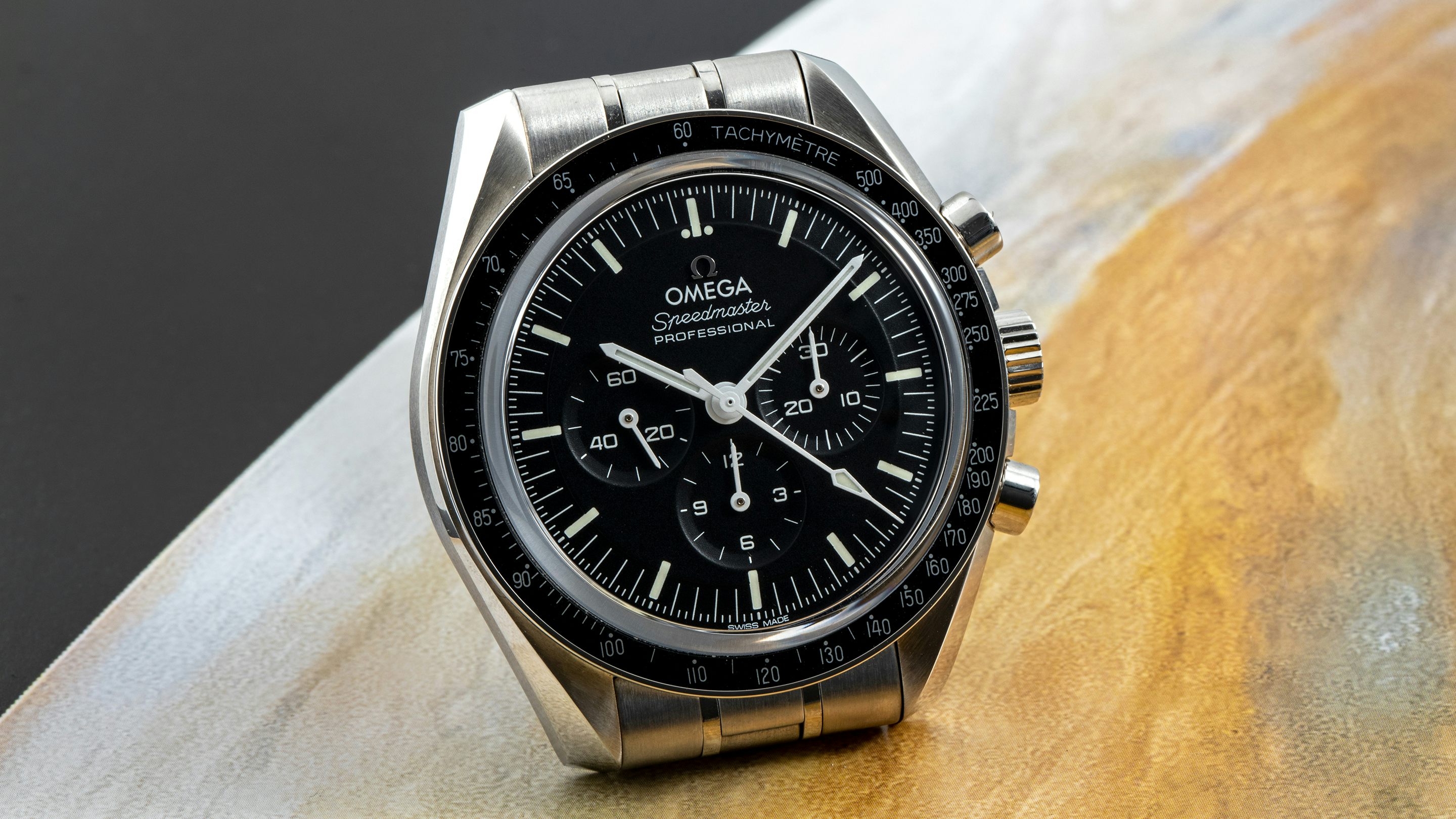
The current Moonwatch Professional (reference 310.30.42.50.01.001) launched in 2021 with the new Co-Axial Master Chronometer Cal. 3861, replacing the legendary Cal. 1861 that had been used (in various iterations) since 1968. The case is 42mm, the bezel is ceramic with a tachymeter scale in Liquidmetal, and the crystal is hesalite (acrylic) — the same material used on the original flight-qualified watches. Omega also offers a sapphire sandwich version (sapphire front and caseback) for those who want to see the movement.
The Moonwatch is 42mm x 13.2mm with a lug-to-lug of 47mm. Those proportions make it sit beautifully on wrists from 6.25 inches up. The case shape features the distinctive asymmetric profile with crown guards at 3 o’clock — a design element that’s been part of the Speedmaster since 1963 (ref. 105.003). The pushers at 2 and 4 are pump-style (push/release) for the chronograph start/stop and reset functions.
The dial is black with a step — meaning the sub-dials are recessed below the main dial surface. This step dial design creates a three-dimensional effect and is one of the most scrutinized details by collectors. The three sub-dials are: running seconds at 9, 30-minute counter at 3, and 12-hour counter at 6. The hour markers are applied (raised) with luminous fill, and the hands feature the iconic sword-shaped hour hand and baton minute hand.
For super clone purposes, the Moonwatch Professional is the most commonly replicated Speedmaster. OMF (OM Factory) produces the highest-quality version, with the correct case dimensions, ceramic bezel, and dial proportions. The hesalite crystal on OMF’s version has the correct slight dome shape and the way it distorts edges at extreme angles — a subtle detail that sapphire doesn’t replicate.
Dark Side of the Moon
The Speedmaster Dark Side of the Moon (DSOTM) is a full ceramic version — case, bezel, and caseback are all black ceramic. At 44.25mm, it’s larger than the Moonwatch Professional and has a more modern, aggressive aesthetic. The movement is the Co-Axial Cal. 9300 — an automatic chronograph, not manual-wind like the Moonwatch. The DSOTM comes in several variants: standard black, “Pitch Black” (completely matte black with black lume), “Vintage Black” (aged lume), and limited editions.
The DSOTM is popular in the super clone market partly because the full ceramic case hides finishing imperfections better than polished steel. The matte black ceramic surface is more forgiving visually than the mirror-polished surfaces on a Moonwatch Professional. OMF’s DSOTM uses actual ceramic (not DLC-coated steel), matching the genuine’s weight characteristics — ceramic is lighter than steel but heavier than titanium.
The movement inside OMF’s DSOTM is a modified Asian 9300 clone — it’s automatic, has a functioning chronograph, and is visible through the sapphire caseback. The movement finishing is the weak point: genuine Cal. 9300 has elaborate decoration that the clone doesn’t fully replicate. But through the black ceramic caseback at normal viewing distance, the impression is convincing.
Speedmaster Racing & Reduced
The Speedmaster Racing is a separate sub-collection within the Speedmaster family — not the same as the Moonwatch. The Racing uses the Co-Axial Cal. 3330 (automatic) and features a distinctive multi-colored tachymeter bezel and a more colorful, sport-oriented dial. At 40mm, it’s slightly smaller than the Moonwatch and wears differently on the wrist — sportier, more casual.
The Speedmaster Reduced (ref. 3510.50.00) is the smaller, automatic version of the classic Speedmaster — 39mm with an integrated automatic chronograph movement. Omega discontinued it years ago, but it remains popular on the secondary market. Replica-wise, the Reduced is available from several factories at budget quality (~75% accuracy), but no top-tier factory produces a premium version. If you want a smaller Speedmaster super clone, the Racing is the better option.
Silver Snoopy Award — The Grail
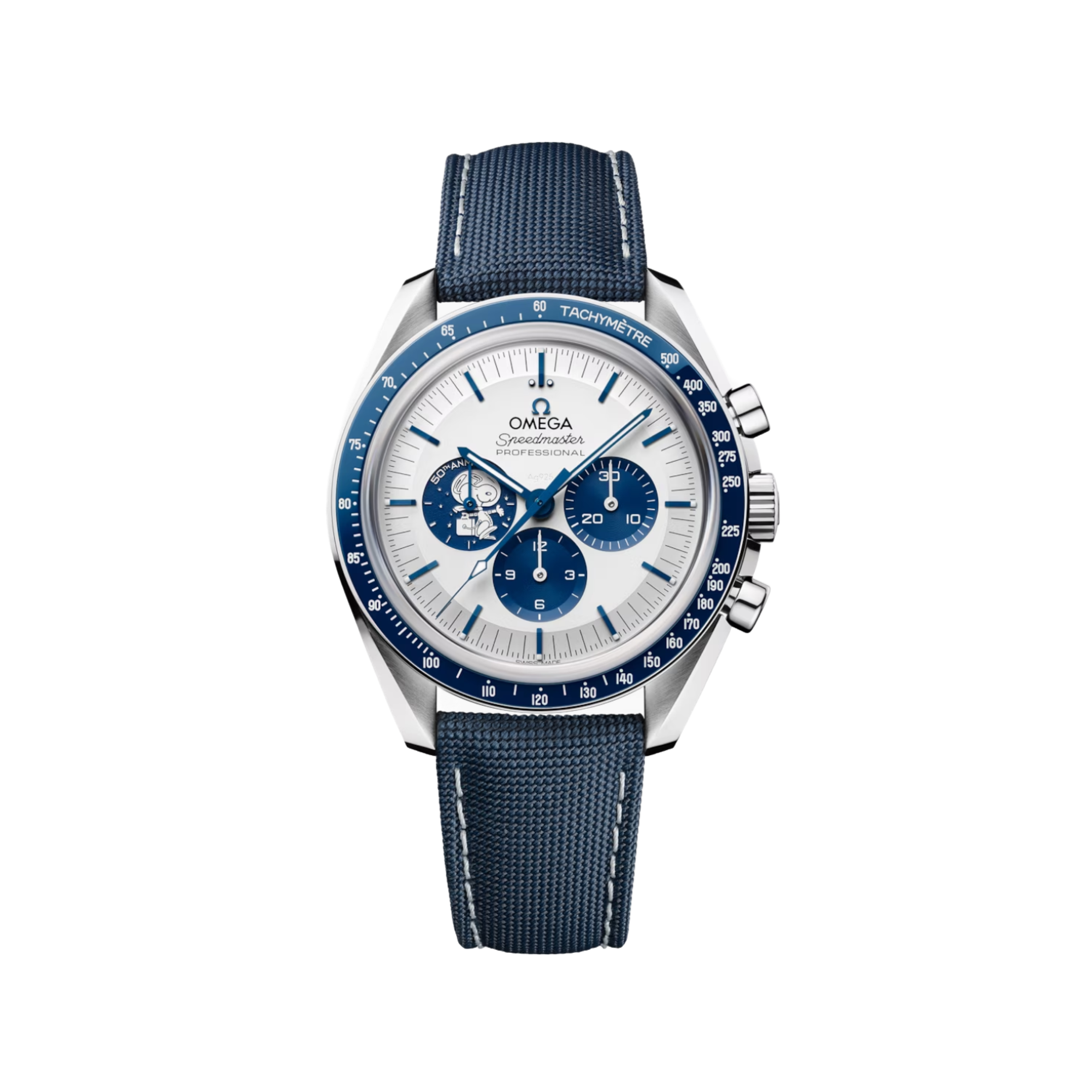
The Speedmaster “Silver Snoopy Award” 50th Anniversary (reference 310.32.42.50.02.001) is the most desired modern Speedmaster. The silver/blue color scheme — silver dial with blue sub-dials, blue ceramic bezel, and a Snoopy medallion on the caseback — is stunning. But the real party trick is the caseback animation: when the chronograph is running, a small Snoopy figure orbits the moon on the caseback. This micro-animation uses the chronograph’s running seconds gear to drive the Snoopy orbit. Retail is approximately $14,100, but secondary market prices have reached $30,000+.
The super clone Snoopy exists — OMF produces a version — but with important caveats. The caseback animation works (Snoopy orbits when the chrono runs), but the movement of the figure is slightly less smooth than genuine. The silver dial color is close but genuine uses a proprietary silver finish that has a specific sheen under sunlight. The blue ceramic bezel color is accurate. The Snoopy medallion on the caseback is well-executed with clear detail. Overall accuracy is approximately 85% — lower than a VSF Seamaster but still impressive for a watch this complicated.
Is the Snoopy worth buying as a super clone? If you love the design and the story, yes. The caseback animation is a genuine conversation piece — people will ask to see it, and it works. Just know that this isn’t a VSF-level reproduction where you need a loupe to find differences. The Snoopy super clone is an 85% watch that captures the spirit of the original.
Factory Rankings — OMF, JHF, OS
OMF leads the Speedmaster segment, but the gap between OMF’s best Speedmaster and VSF’s best Seamaster is significant. The Speedmaster super clone market is approximately 5-7 years behind the Seamaster/Submariner market in terms of movement technology and overall accuracy. No factory has produced a true clone of the Cal. 3861 (manual-wind column-wheel chronograph), and this limitation means every Speedmaster super clone uses a modified automatic chronograph movement — which changes the winding experience, the pushbutton feel, and the view through the caseback.
Honest Assessment: If you’re choosing between a VSF Seamaster Diver 300M and an OMF Speedmaster, the Seamaster is the objectively better super clone — 95% accuracy vs 88%, clone movement vs modified generic, and better overall finishing. The Speedmaster wins on story and design appeal. Buy the Speedmaster because you love the Moonwatch legend, not because you expect VSF-level accuracy.
Movement Reality Check
Here’s the truth about Speedmaster super clone movements, and I’m going to be direct because this is where unrealistic expectations cause the most disappointment.
The genuine Speedmaster Moonwatch Professional uses the Cal. 3861 — a manual-winding column-wheel chronograph. You wind it by hand (no rotor), the pusher feel is crisp (column wheel), and the movement architecture is completely different from any automatic chronograph. No factory has cloned this movement. Period. The engineering required to produce a manual-wind column-wheel chronograph at replica price points doesn’t make business sense for factories.
Instead, OMF and other factories use modified versions of the Asian 7750 — an automatic cam-lever chronograph based on the Valjoux 7750 architecture. This means: (1) the watch is automatic, not manual-wind — there’s a rotor inside, and you don’t need to wind it daily; (2) the chronograph feel is different — cam-lever pushbutton engagement feels mushier than column-wheel; (3) the sub-dial layout is modified — the Asian 7750’s native sub-dial positions don’t match the Speedmaster’s, so factories use spacer rings and modified dial feet to reposition the sub-dials.
The practical impact: the chronograph works fine for timing things. Start, stop, reset — all functional. But if you hand a genuine Speedmaster and an OMF Speedmaster to someone who knows watches, the pushbutton feel and the winding behavior will immediately identify the replica. This is the fundamental limitation of current Speedmaster super clones.
Hesalite vs Sapphire Crystal
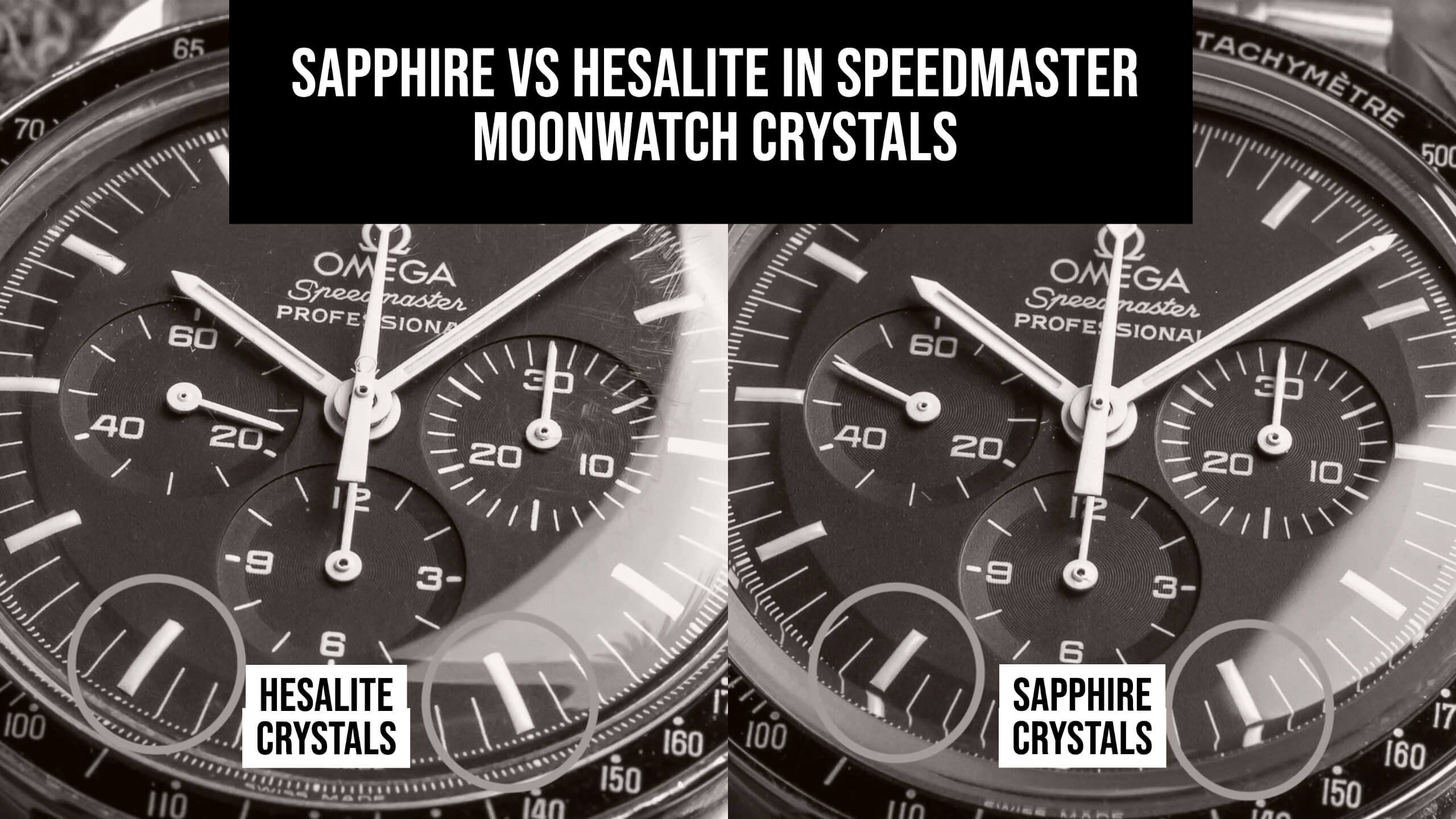
The original Moonwatch uses a hesalite (acrylic/plexiglass) crystal — not sapphire. This is a deliberate choice that Omega has maintained for decades because hesalite was the material used on the flight-qualified watches. Hesalite has a distinct warm, slightly soft visual quality — it absorbs light rather than reflecting it sharply like sapphire. Under certain angles, hesalite creates a subtle glow effect on the dial that sapphire doesn’t.
OMF’s Moonwatch uses actual hesalite — acrylic, not sapphire — which gives it the correct visual character. The dome shape (hesalite is slightly domed, sapphire is flat) is accurately reproduced. The downside of hesalite: it scratches easily. A month of daily wear will produce micro-scratches visible under direct light. The upside: polyWatch scratch remover (a $10 tube of paste) buffs hesalite scratches out in minutes. Sapphire is scratch-resistant but can’t be polished if it does scratch.
Omega offers a “sapphire sandwich” version of the Moonwatch — sapphire on front and back, allowing you to see the movement. OMF produces this version too, with a mineral crystal caseback (not sapphire, but visually similar). If you want to see the movement through the back, go sapphire sandwich. If you want the authentic Moonwatch experience, go hesalite. Purists will tell you hesalite is the only correct choice.
Every Reference Ranked
Speedmaster QC Checklist
Speedmaster QC requires more attention than a Seamaster because the chronograph adds complexity and more things that can be wrong.
Speedmaster vs Daytona — The Eternal Rivalry
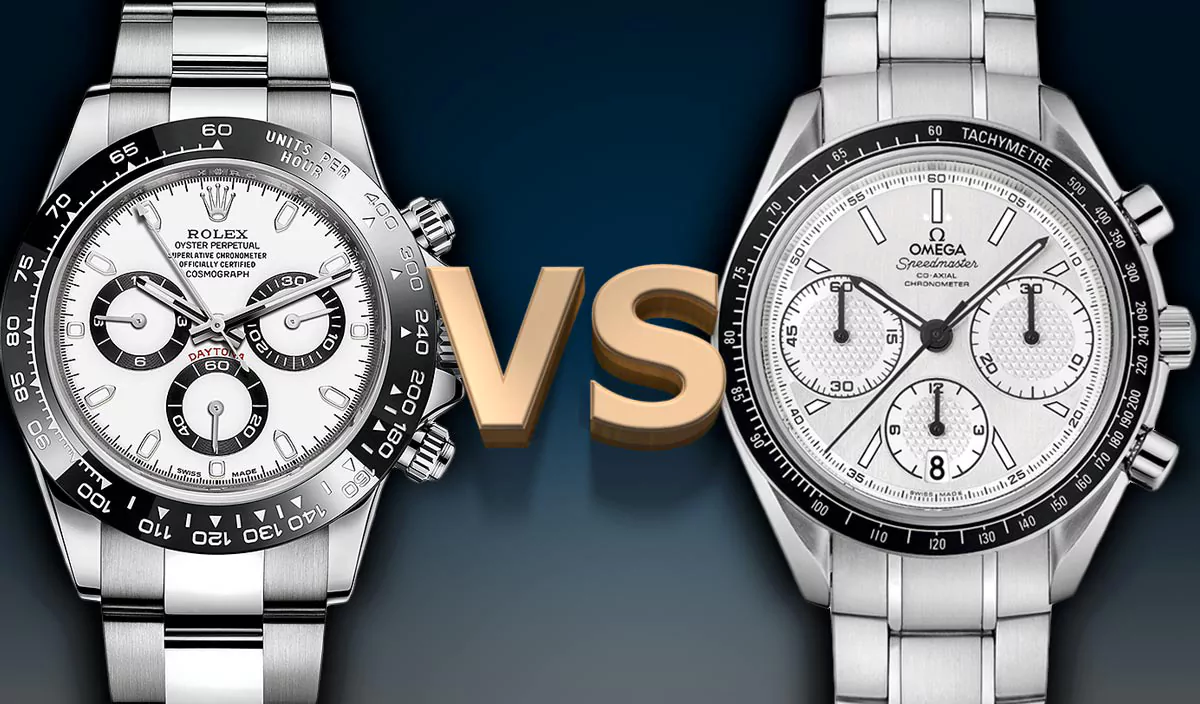
Every watch collector has an opinion on Speedmaster vs Daytona. In the genuine market, both are iconic chronographs at different price points (Speedmaster ~$6,900, Daytona ~$14,800 retail). In the super clone market, the comparison shifts dramatically because the reproduction quality differs.
The Clean Factory/BT Factory Daytona has a significant advantage: the 4130 clone movement is a far more accurate reproduction of the genuine Rolex Cal. 4130 than any Speedmaster clone is of the Cal. 3861. This means the Daytona super clone has correct pushbutton feel, correct sub-dial positions without spacers, and a caseback view (if visible) that matches genuine architecture. The Speedmaster clone uses a fundamentally different movement type (auto vs manual-wind), which creates detectable differences in operation.
If you’re choosing based on which super clone is more accurate: Daytona wins. If you’re choosing based on design preference and story: that’s personal. The Speedmaster has the moon landing. The Daytona has Paul Newman. Both are correct choices. Many collectors own both — the Daytona for understated elegance, the Speedmaster for its chunky, tool-watch personality.
FAQ — 15 Speedmaster Questions
Q: Is the OMF Speedmaster automatic or manual-wind?
Automatic. OMF uses a modified Asian 7750 (or similar automatic chronograph). The genuine Moonwatch Professional is manual-wind. This is the most fundamental difference and cannot be changed without a completely new movement design.
Q: Does the chronograph actually work?
Yes. Start, stop, reset — all functional. The chronograph seconds hand sweeps smoothly, the minute counter advances correctly, and the hour counter works on the 12-hour sub-dial. The Asian 7750 chronograph module is well-proven and reliable.
Q: Can I tell it’s a replica by pressing the pushers?
A watch enthusiast who has used a genuine Speedmaster will notice the difference. The genuine’s column-wheel chronograph has a clean, crisp snap when you press the pushers. The OMF’s cam-lever mechanism has a mushier feel with more resistance. Casual users won’t notice — they’ll just think “it’s a chronograph button.”
Q: Why is the Speedmaster super clone less accurate than the Seamaster?
Two reasons: (1) chronograph complications are harder to replicate — more parts, more visible functions, more things to get wrong; (2) VSF invested in a clone Omega movement (VS8800) for the Seamaster, while no factory has invested in a clone Cal. 3861 for the Speedmaster. The Seamaster market is larger and justifies the R&D investment.
Q: Should I get the hesalite or sapphire version?
Hesalite if you want the authentic Moonwatch experience — it’s what the astronauts wore and it gives the dial a warm, slightly soft visual quality. Sapphire sandwich if you want to see the movement through the caseback and prefer scratch resistance. Purists choose hesalite. Pragmatists choose sapphire.
Q: Does the Snoopy caseback animation work on the replica?
Yes. The Snoopy figure orbits the moon on the caseback when the chronograph is running. The animation mechanism is driven by the chronograph seconds gear. OMF/OS versions work correctly — Snoopy moves smoothly around the Earth/Moon dial. The motion is slightly less fluid than genuine but the effect is the same and it’s a genuine party trick.
Q: How thick is the OMF Speedmaster?
OMF’s Moonwatch Pro is approximately 14mm thick — about 0.8mm thicker than the genuine (13.2mm). This difference comes from the automatic movement (which has a rotor) being thicker than the genuine’s manual-wind Cal. 3861. On the wrist, the additional height is barely noticeable unless you’re wearing a very tight-cuffed shirt.
Q: Can I put a NATO strap on the Speedmaster?
Yes — and you should. The Speedmaster is legendary on a NATO strap (the astronauts wore it on a Velcro strap over their spacesuits). The lug width is 20mm. A high-quality nylon NATO in grey or bond (grey/black stripe) costs $15-30 and completely changes the look. Many Speedmaster owners alternate between the steel bracelet and a NATO depending on the day.
Q: Is the DSOTM better than the Moonwatch as a super clone?
In some ways, yes. The full ceramic case hides micro-finishing imperfections that are visible on polished steel. The DSOTM uses an automatic Cal. 9300 clone which is closer to the genuine’s automatic movement than the Moonwatch’s manual-wind discrepancy. And the all-black aesthetic is more forgiving visually. The trade-off: it’s 44.25mm, which is large on most wrists.
Q: How reliable is the Asian 7750 movement?
The Asian 7750 has been in production for decades and is well-understood. Reliability is generally good — typical lifespan without service is 3-5 years of daily wear. The chronograph function is the most likely thing to need attention over time (reset misalignment is the most common issue). Parts are widely available and any competent watchmaker can service it.
Q: Speedmaster or Seamaster — which Omega should I buy first?
As a super clone: the Seamaster Diver 300M from VSF — it’s more accurate, has a better clone movement, and is more versatile for daily wear. As a watch design: the Speedmaster — it’s one of the most important watches ever made, and wearing it connects you to a story no other watch can match. If you can only buy one, Seamaster. If you can buy two, add the Speedmaster.
Q: Will the Speedmaster super clone market improve?
Gradually, yes. The trend in the super clone industry is toward genuine clone movements — VSF did it for Omega (VS8800), Clean did it for Rolex (VR3135). Eventually a factory may develop a clone Cal. 3861 for the Speedmaster. But manual-wind column-wheel chronographs are expensive to reverse-engineer, and the Speedmaster market is smaller than Submariner or Seamaster. Realistic timeline: 3-5 years, maybe longer.
Q: Is the bracelet good on the OMF Speedmaster?
Decent. The five-row link bracelet has the correct proportions and alternating brushed/polished finishing. The clasp works well and the micro-adjustment holes are present. Where it falls short compared to genuine: the links have slightly more play (rattle) and the clasp finishing is less refined. It’s a perfectly functional bracelet that looks right — it just doesn’t feel as premium as genuine Omega or as good as VSF’s Seamaster bracelet.
Q: Can I use the Speedmaster as a daily beater?
Yes. The OMF Speedmaster is robust enough for daily wear. The hesalite crystal will scratch (use polyWatch to remove scratches), the case will pick up desk-diving marks, and the chronograph will keep working through it all. Many owners deliberately beat up their Speedmaster and enjoy the patina — it’s a tool watch designed to be used, not babied.
Final Verdict
The Speedmaster super clone is an honest proposition: you get 88% of the most famous chronograph ever made, with a functioning chronograph, correct aesthetics, and a watch that tells one of the greatest stories in horological history. The movement is the compromise — automatic instead of manual-wind — but for most wearers, this is actually a convenience (no daily winding).
Buy the OMF Moonwatch Professional with hesalite crystal. Wear it on the bracelet during the week and a NATO on weekends. Tell someone about Apollo 13 when they notice it on your wrist. That’s the Speedmaster experience — and no amount of accuracy percentage can quantify what it feels like to wear a watch that went to the moon.
— Patrick Cassino, allreplicawatches.to —
Read more: Omega Seamaster Replica Guide • Super Clone vs Cheap Replica • Factory Guide