Omega Seamaster Replica — Diver 300M, Planet Ocean, Aqua Terra, VSF vs ORF, and the Complete Buyer’s Breakdown
Last updated: March 2026 • 26-minute read • 40+ Seamaster builds compared across 5 factories
Omega Seamaster replica watches represent one of the smartest entry points into the super clone world — and one of the most rewarding. Unlike Rolex or Patek, where a single reference dominates conversation, the Seamaster family spans at least four distinct sub-collections: the Diver 300M (the James Bond watch), Planet Ocean, Aqua Terra, and the heritage-inspired Seamaster 300. Each sub-collection has its own design language, movement, and factory specialization. VSF (VS Factory) has emerged as the undisputed champion of the Seamaster Diver 300M, producing what many collectors consider the single most accurate super clone relative to its genuine counterpart. This guide covers every Seamaster sub-collection, every dial variant worth buying, the factory hierarchy, the critical VS8800 clone movement, and exactly how to order and QC your first (or fifth) Seamaster super clone.
Table of Contents
- 01 The Seamaster DNA — 75 Years of Ocean Heritage
- 02 Diver 300M — The James Bond Reference
- 03 Every Dial Variant Ranked
- 04 Planet Ocean — The Tool Watch
- 05 Aqua Terra — The Everyday Luxury
- 06 Seamaster 300 — Heritage Reborn
- 07 VSF — The Omega King
- 08 ORF, SBF & Other Factories
- 09 VS8800 Clone Movement Deep Dive
- 10 Bracelet vs Rubber — Which Strap
- 11 Seamaster QC Checklist
- 12 Genuine vs VSF — Side by Side
- 13 FAQ — 20 Seamaster Questions Answered
The Seamaster DNA — 75 Years of Ocean Heritage
Omega launched the Seamaster in 1948, originally designed as a robust everyday watch for the British military — not a diver’s instrument. The CK 2518 Seamaster that debuted that year was waterproof and shock-resistant, borrowing technology from the watches Omega supplied to the Royal Navy during World War II. It took another 15 years before Omega created a purpose-built dive watch, the Seamaster 300, in 1957.
What happened between 1957 and today is the story of how one watch family branched into four distinct sub-collections. The Seamaster 300 stayed as the heritage diver. The Diver 300M arrived in 1993 and became the modern dive watch — and then James Bond strapped one on in GoldenEye (1995), changing everything. The Planet Ocean came in 2005 as the serious tool watch for actual diving. And the Aqua Terra launched that same year as the luxury daily-wear piece with water resistance you’ll never need but is nice to have.
Each sub-collection has its own personality, size range, and target customer. But all four share two things: the Seamaster caseback hippocampus logo (a sea horse — Omega’s maritime emblem since 1948) and the increasingly impressive in-house Co-Axial Master Chronometer movements. This dual identity — heritage pedigree plus cutting-edge movement technology — is why the Seamaster family outsells every other Omega collection combined, including the Speedmaster.
Diver 300M — The James Bond Reference
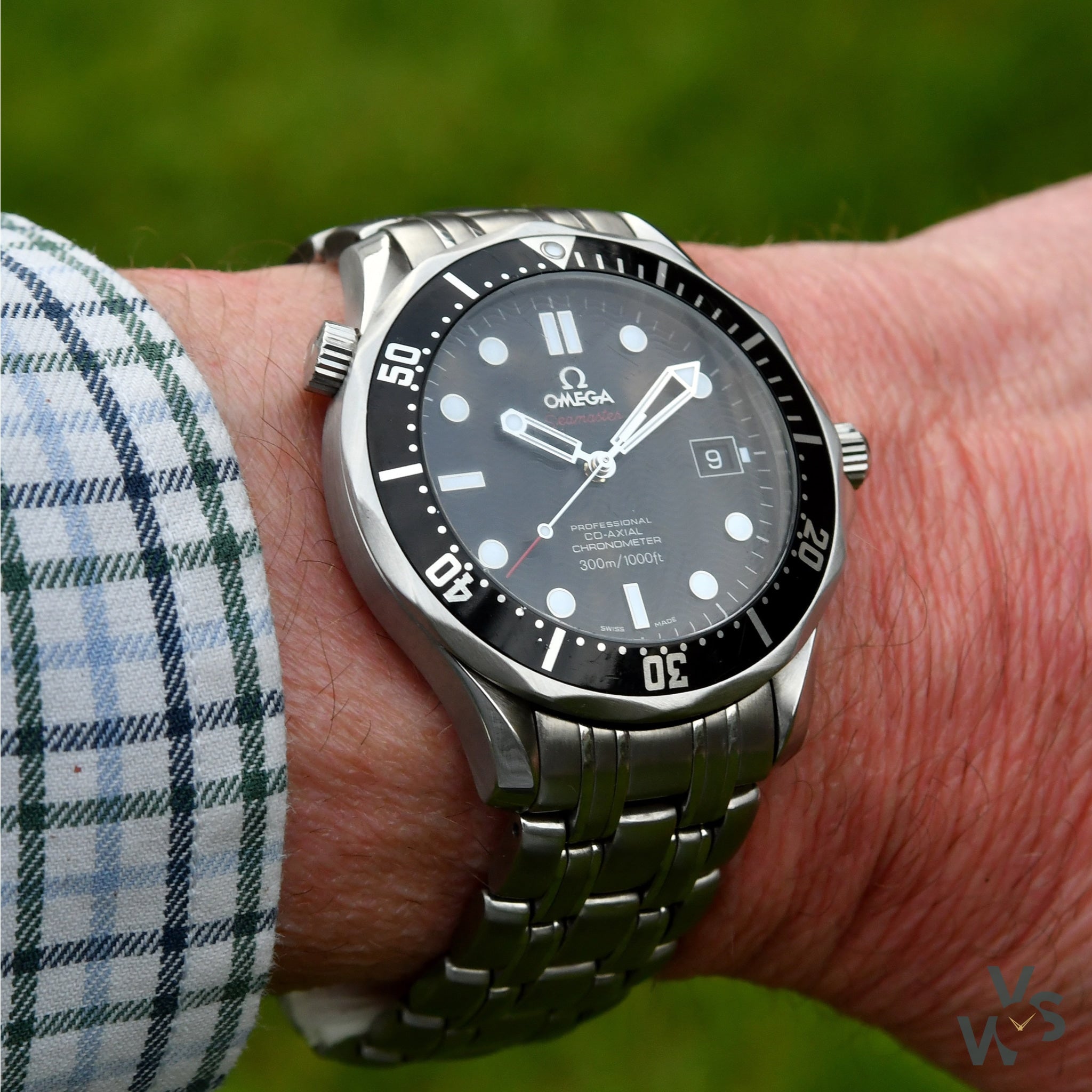
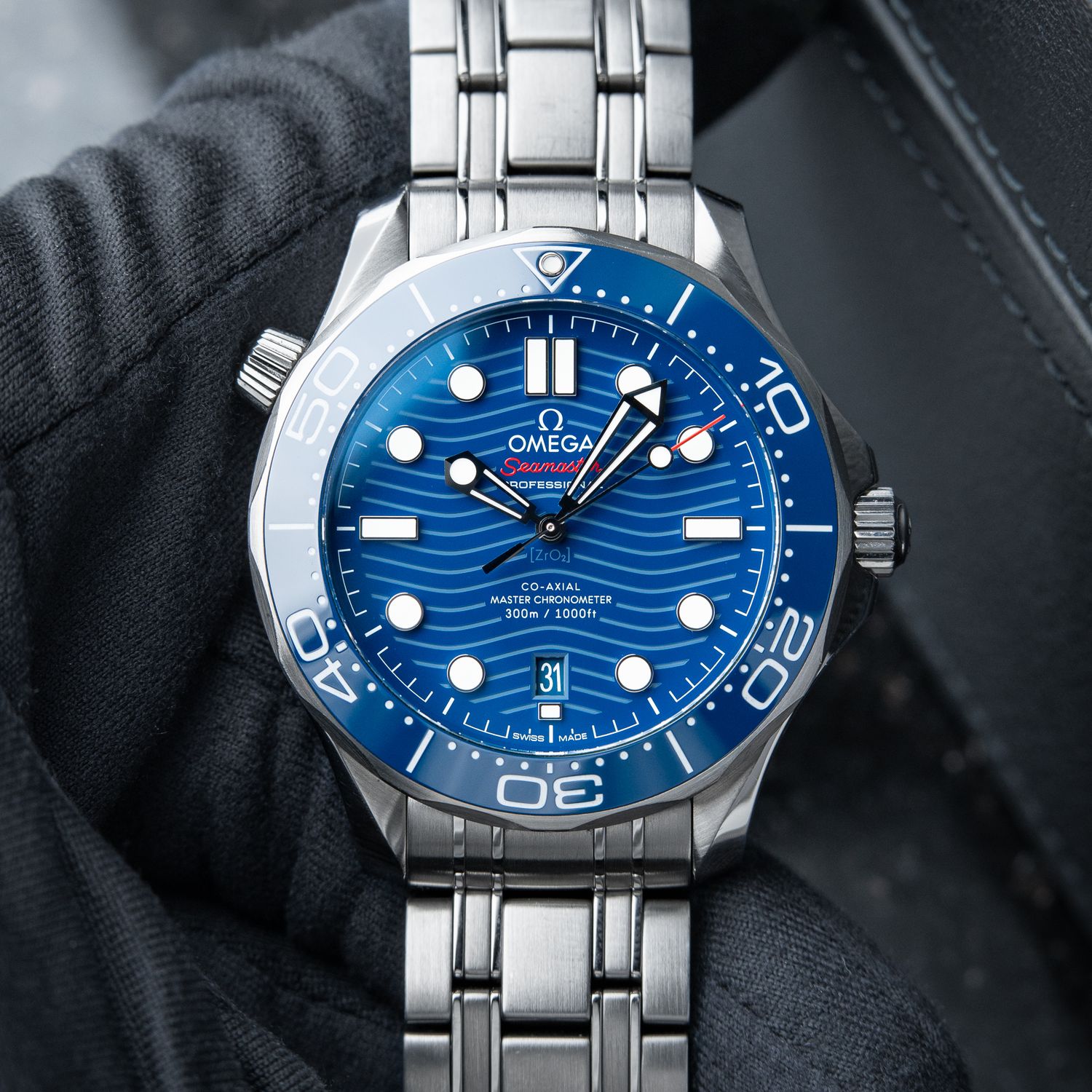
The current-generation Seamaster Diver 300M (reference 210.30.42.20.03.001 for the blue on steel) debuted in 2018 with a complete redesign that made every previous version look dated. The key changes: ceramic bezel with enamel-filled diving scale instead of aluminum, a laser-engraved wave pattern on the ceramic dial (replacing the older painted wave motif), and a ceramic caseback with the hippocampus rendered in relief. Case diameter stayed at 42mm but Omega refined the proportions, specifically the lug-to-lug distance (50mm), making it wear more compact than the measurements suggest.
The wave pattern dial is the Seamaster’s signature. On the genuine, Omega uses a laser to etch a repeating wave pattern into the ceramic dial surface. This pattern catches light differently depending on the angle — from straight on, the waves are subtle; from the side, they become pronounced. The waves are a visual tribute to the original 1990s Seamaster that had painted wave motifs, but the laser-etched ceramic version is significantly more refined.
VSF’s reproduction of this dial is the primary reason they dominate the Seamaster market. Their wave pattern has the correct depth, spacing, and light-catch behavior. Side-by-side with genuine at arm’s length, you genuinely cannot tell them apart. Under a loupe, the genuine’s laser cuts are fractionally cleaner at the wave troughs, but this is a difference you need magnification and a genuine reference piece to identify.
Collector’s Note: The Seamaster Diver 300M is often called the best “value” genuine Omega — retail is approximately $5,400 for the steel/blue version. But the super clone version from VSF is widely considered the most accurate super clone in the entire industry, percentage-wise closer to genuine than any other factory’s product. If you’re buying one super clone watch to start your collection, many experienced collectors will tell you to start here.
Case Construction and Finishing
The Diver 300M case is 42mm x 13.5mm with a lug-to-lug of 50mm. It’s 316L stainless steel with alternating brushed and polished surfaces — the case sides are brushed, the bezel edge is polished, the crown guards are polished, and the caseback is a mix. VSF matches these finishing transitions with remarkable precision. The helium escape valve at 10 o’clock is functional (it actually works — not a decoration) and VSF replicates the valve mechanism with the correct screw-down action and a seal that’s waterproof to at least 50 meters (genuine is rated to 300m).
Weight is 185 grams on the bracelet — VSF hits 183 grams, which is functionally identical on the wrist. This weight is noticeable but comfortable, heavier than a Submariner (155g) but lighter than a Planet Ocean (200g+). The case profile when viewed from the side shows a gradual taper from the bezel down to the caseback — VSF reproduces this taper accurately. One micro-detail: the polished bevel where the case meets the caseback is slightly wider on VSF than genuine by approximately 0.1mm. You will never notice this without calipers.
The Ceramic Bezel
Omega’s ceramic bezel is a feat of manufacturing. The diving scale markings and numerals are recessed into the ceramic and filled with white enamel (or Liquidmetal on some references). VSF’s ceramic bezel uses actual ceramic — not a coating — with the correct ZrO2 (zirconium dioxide) composition that gives it the slightly glossy, stone-like surface feel. The color match on blue bezels is within half a shade of genuine. The enamel-filled markings are crisp, with minimal bleeding at the edges.
Bezel action is unidirectional with 120 clicks per rotation, same as genuine. VSF’s click feel is firm and precise — not mushy, not too stiff. The bezel grip edge (the knurled edge you grab to rotate) has the correct pattern depth and spacing. One genuine detail that VSF handles well: the triangle marker at 12 on the bezel has a SuperLuminova pip inside it, and VSF’s pip matches the lume color and brightness of the dial markers.
Every Dial Variant Ranked
The Diver 300M comes in numerous dial/bezel combinations. Here’s how the VSF versions rank in terms of accuracy and desirability.
The blue dial is the best-selling Seamaster Diver 300M — genuine and replica — and for good reason. VSF’s blue dial matches the genuine’s sunburst-under-wave texture almost perfectly. The blue shade shifts from deep navy in low light to vibrant cobalt in sunlight, just like the genuine. The black version is equally accurate but less popular simply because blue is the Seamaster’s signature color.
The green dial is a newer addition and VSF’s color match is close but not perfect — the green runs slightly more olive than the genuine’s forest green in certain lighting conditions. It’s still a beautiful watch and the difference requires a genuine next to it to identify. The “No Time to Die” edition in titanium/mesh is popular because of the Bond connection. VSF uses actual grade 2 titanium (not steel) for this version, which means it has the correct weight (noticeably lighter than steel) and the distinctive matte grey finish. The full dial lineup for every Omega Seamaster clone build is worth scanning before you settle on a favorite.
Insider Tip: The two-tone Sedna Gold version is the weakest VSF Seamaster. The rose gold plating on genuine Omega uses their proprietary Sedna gold alloy — a specific copper/palladium/gold composition that creates a unique warm pink tone. VSF’s plating is standard rose gold and appears slightly more yellow/copper than genuine Sedna gold, especially under warm lighting. If two-tone is your preference, ORF’s version actually has a better color match for the gold elements.
Planet Ocean — The Tool Watch
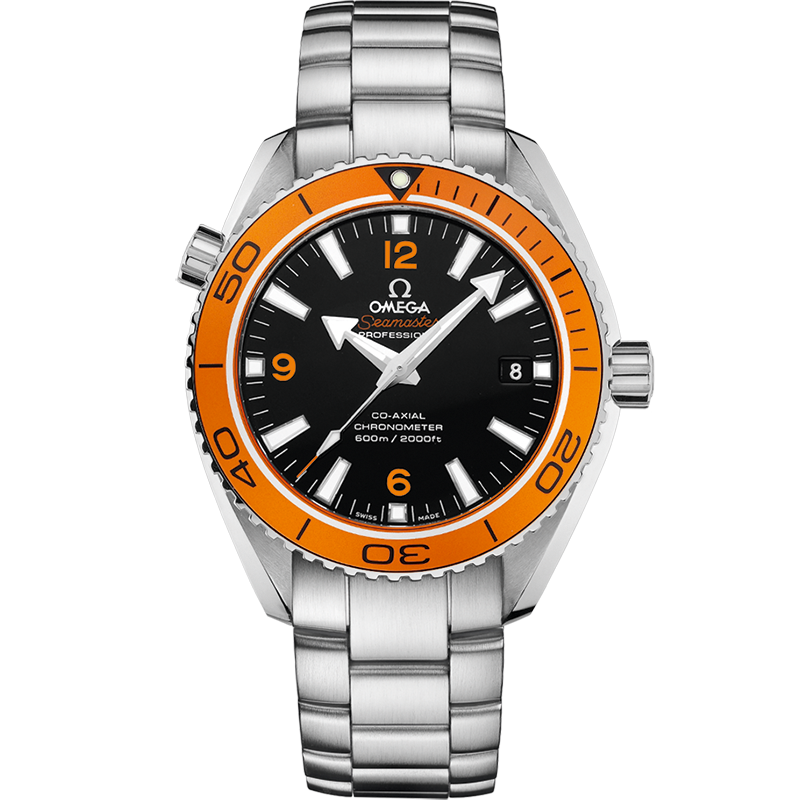
The Planet Ocean is the Seamaster for people who think the Diver 300M is too refined. At 43.5mm and 16mm thick, the Planet Ocean is a chunk of steel on the wrist. It weighs over 200 grams on the bracelet and has 600-meter water resistance — serious enough for actual saturation diving, not just snorkeling on vacation. The bezel is ceramic with a Liquidmetal-filled diving scale, and the movement is the Co-Axial Master Chronometer Cal. 8900.
VSF produces the Planet Ocean 600M in the 43.5mm size with several dial variants. The accuracy level is slightly below the Diver 300M — about 90% vs 95% — primarily because the Planet Ocean’s larger case has more surface area where subtle finishing differences can appear. The ceramic bezel insert is excellent, the dial printing is clean, and the Liquidmetal-filled minute track is correctly rendered. Where VSF’s Planet Ocean falls short relative to their Diver 300M: the brushing grain direction on the case flanks is slightly coarser than genuine.
The Planet Ocean orange bezel version is the most popular — that orange-on-black combination has been a Seamaster signature since the original Planet Ocean launch. VSF’s orange ceramic bezel color is very close to genuine. The 39.5mm “small” Planet Ocean is less commonly replicated; if you want this size, you’re limited to fewer options and the accuracy drops to roughly 85%. Across the whole Seamaster Planet Ocean replica range the 43.5mm case is the safe default, simply because that is where the factories concentrate their tooling.
Aqua Terra — The Everyday Luxury
The Aqua Terra is the Seamaster you wear with a suit. At 41mm and 13.2mm thick, it sits flat and thin on the wrist — closer to a dress watch than a diver. There’s no rotating bezel, no helium escape valve, no wave dial. Instead, the Aqua Terra has a teak-concept dial: vertical grooves inspired by the wooden decks of luxury sailboats. The hour markers are applied (raised metal), the date window is at 6 o’clock, and the overall impression is sophisticated rather than sporty.
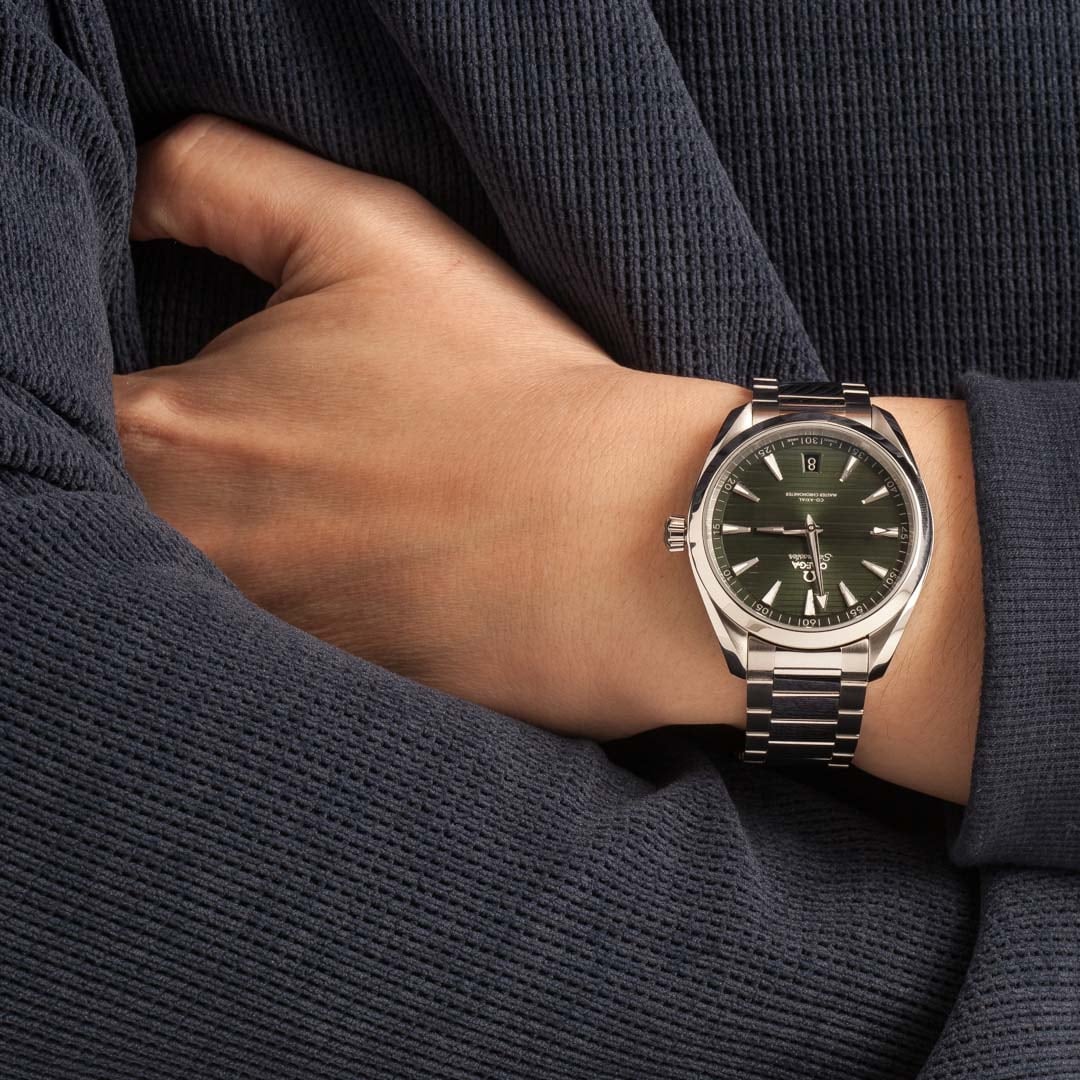
VSF’s Aqua Terra is their second-best Omega after the Diver 300M. The teak-concept dial lines are correctly spaced and have the right depth. The applied hour markers are well-finished with clean edges. The date window at 6 has the correct font weight and positioning. Color variants include blue (most popular), black, green, and silver — VSF’s blue Aqua Terra dial color is excellent; the green version suffers from the same slightly-too-olive issue as the green Diver 300M.
The Aqua Terra bracelet is a tapered design that’s quite different from the Diver 300M’s wider, sportier bracelet. VSF’s AT bracelet has the correct link shape and taper, with the clasp machining being slightly less refined than genuine — the butterfly clasp has marginally less polish on the internal surfaces. This is invisible when wearing the watch.
One strong argument for the Aqua Terra: it’s the most versatile Seamaster. You can wear it to a board meeting, a beach barbecue, and a wedding without looking out of place. The Diver 300M is sportier, the Planet Ocean is bigger, the Seamaster 300 is more niche. The Aqua Terra works everywhere. At 150m water resistance, you’re still covered for swimming and snorkeling.
Seamaster 300 — Heritage Reborn
The Seamaster 300 (not the Diver 300M — different watch) is Omega’s tribute to their original 1957 dive watch, the CK 2913. The current version (reference 234.30.41.21.01.001) uses a sandwich dial construction where the indices are cut out of the top dial layer, revealing a luminous layer beneath. This gives the lume a different visual character than applied markers — more vintage, more tool-watch.
The bezel is ceramic with Liquidmetal-filled numerals, and the caseback features the vintage “naiad lock” — a system where the seahorse emblem on the caseback always stays upright when the caseback is screwed in. The crown is a large, knurled design reminiscent of vintage diving crowns. Inside beats the Cal. 8912, visible through the sapphire caseback.
SBF (S Factory) produces the best Seamaster 300 super clone. Their sandwich dial execution is convincing, with the correct lume-through-cutout visual effect. The case shape — which has softer, more curved lines than the angular Diver 300M — is accurately reproduced. The “naiad lock” caseback text alignment is correct. The main tell is the movement finishing: SBF uses a decorated Miyota base (not a clone Omega caliber), so the view through the caseback is less convincing to someone who knows what a genuine Cal. 8912 looks like.
VSF — The Omega King
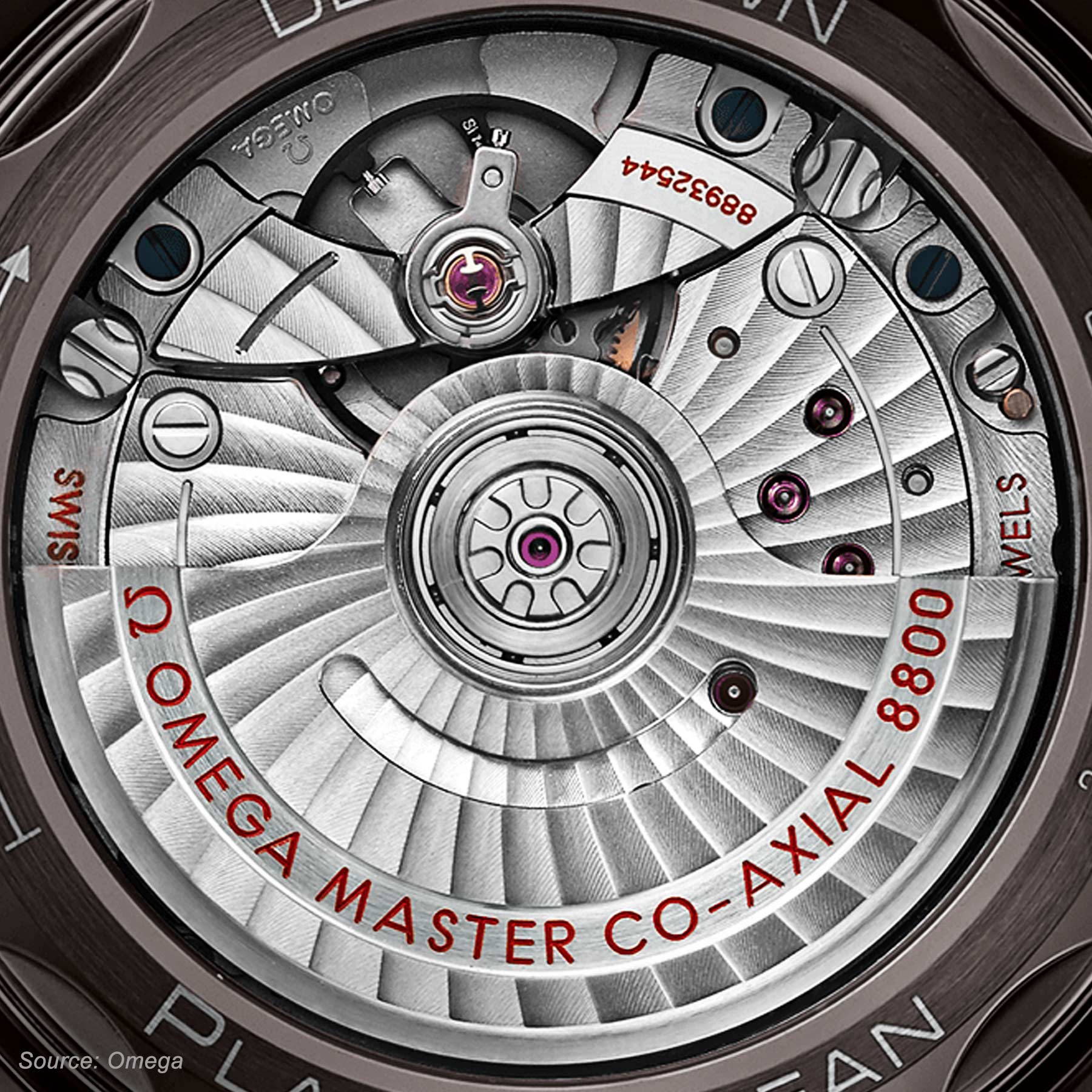
VS Factory (VSF) dominates Omega replicas the way Clean Factory dominates Rolex. Their position isn’t just about accuracy — it’s about the complete package: dial quality, case construction, movement reliability, and bracelet finishing. VSF invested in developing their own clone movement (the VS8800) rather than decorating a generic Swiss or Japanese movement, which is the primary reason their Omega products stand above the competition.
VSF was raided by Chinese authorities in 2021, along with several other major factories, in a broad intellectual property enforcement sweep. They went dark for approximately four months, then gradually resumed production. The post-raid VSF products are generally considered equal to or slightly better than pre-raid quality — they apparently used the downtime to refine their molds and tooling.
The VSF production hierarchy for Omega products: Diver 300M (their best, arguably the best single super clone in existence) → Aqua Terra (excellent, 92% accuracy) → Planet Ocean (very good, 90%) → the occasional limited edition piece. VSF does not produce the Seamaster 300 heritage model or the Speedmaster — different factories handle those references.
Factory Insight: VSF’s competitive advantage isn’t just one thing — it’s systematic. They have dedicated ceramic processing (real ceramic, not coated steel), their own movement production line (VS8800/VS8900), proprietary lume application methods, and strict quality control that rejects pieces other factories would ship. This vertical integration is expensive, which is why VSF products typically cost 15-25% more than comparable factory offerings — and why they’re worth it.
ORF, SBF & Other Factories
ORF (OR Factory) positions itself as the VSF alternative at a lower price point. Their Diver 300M uses a decorated Miyota 8215 movement instead of a clone Omega caliber, which reduces cost but also means the movement visible through the caseback doesn’t match genuine Omega’s finishing or architecture. The external accuracy is roughly 85% — good but noticeably below VSF when placed side by side. ORF’s main advantage: their two-tone models (Sedna gold + steel) actually have a better gold color match than VSF’s.
SBF (S/Sea Best Factory) specializes in the Seamaster 300 heritage line and produces a decent Planet Ocean. Their strength is in vintage-inspired models where the aesthetic is more forgiving of minor imperfections. MKS Factory produces budget Seamasters that are serviceable at roughly 75% accuracy — fine as casual wear, not convincing under scrutiny.
VS8800 Clone Movement Deep Dive
The VS8800 is a clone of Omega’s Co-Axial Cal. 8800. “Clone” means VSF reverse-engineered the genuine movement’s architecture and manufactured their own version — it’s not a decorated Swiss ETA or Japanese Miyota with a fancy rotor. The VS8800 replicates the genuine’s plate layout, bridge design, and (critically) the visible elements that are seen through the sapphire caseback.
Specifications: 25,200 bph (3.5Hz), 48-hour power reserve (genuine is 55 hours — VSF is slightly lower), hacking seconds, quickset date, and hand-winding capability. The rotor has “Co-Axial Master Chronometer” text and the correct finishing pattern — Geneva stripes on the bridges, perlage on the mainplate. Under normal viewing conditions through the caseback, the VS8800 is very convincing. Under magnification, the Geneva stripes are less defined than genuine (machine-cut vs. hand-applied on genuine), and the text engraving on the rotor is slightly less crisp.
Reliability is strong. The VS8800 uses a modified Hangzhou base caliber with clone-specific modifications for the Omega architecture. Accuracy is typically +/-5 seconds per day out of the box, which is within COSC specification (genuine Cal. 8800 is METAS-certified to +/-2 seconds per day). A decent watchmaker can regulate a VS8800 to +/-2 seconds per day if you care about absolute precision.
Service Tip: The VS8800 is serviceable by any competent watchmaker familiar with Asian clone movements. Standard service interval is every 3-5 years (same as genuine). Parts are available — rotors, balance assemblies, stems, and crowns can be sourced from VSF parts suppliers. If your watchmaker charges $80-120 for a service, that’s reasonable. If they quote $300+, find a different watchmaker — they’re pricing for genuine Omega service difficulty, which doesn’t apply here.
Bracelet vs Rubber — Which Strap
The Diver 300M comes on three strap options: the steel bracelet, the rubber strap, and the NATO/mesh (for specific editions). VSF produces all three, but the bracelet and rubber are the main choices.
The steel bracelet uses five-row links with alternating brushed center links and polished outer links. VSF’s link proportions and finishing transitions are accurate. The clasp is a push-button deployment with a diver’s extension — VSF’s clasp operates smoothly and the extension mechanism works correctly. One genuine detail: the clasp has the Omega logo engraved on the outside — VSF’s engraving is slightly shallower than genuine, but this is the kind of micro-detail that requires a genuine next to it.
The rubber strap is where VSF arguably outperforms expectations. Their rubber compound is soft and flexible — not the rigid, cheap-feeling rubber that budget brands use. The strap has a ribbed texture on the inside (for sweat drainage) and a smooth finish on the outside with the Seamaster logo embossed near the clasp. VSF’s rubber strap is comfortable for all-day wear and doesn’t trap moisture. Many VSF owners order both bracelet and rubber and swap depending on the occasion — beachwear on rubber, office on steel.
Seamaster QC Checklist
When your QC photos arrive from the dealer, systematically check these points. The Seamaster is a forgiving watch for QC — VSF consistency is high — but it’s worth being thorough.
Genuine vs VSF — Side by Side
This is the comparison everyone wants. I’ve spent hours with both a genuine Seamaster Diver 300M blue and a VSF version, worn them alternately for weeks, and shown them to people who own genuine Omegas. Here’s what you need to know.
The dial is the hardest to distinguish. VSF’s wave pattern, color, and finishing are so close that even experienced Omega owners had to look twice. One told me “the blue is maybe slightly more saturated on one of these” and then pointed at the wrong one — he identified the VSF as genuine. In isolation (without a genuine next to it), the VSF dial is indistinguishable. The applied Omega logo on the dial — a raised, polished metal applique — has the same dimensions and polish quality on both.
The bezel is the second hardest. The ceramic color match is within a shade, the enamel fill quality is very close, and the bezel action (click feel and rotation smoothness) is comparable. The genuine’s bezel has a slightly more refined click — a touch crisper, with less lateral play — but this is a difference you notice only by switching between them rapidly.
The bracelet is where differences start becoming detectable — but only by feel. The genuine bracelet links have marginally smoother edges (better deburring), the clasp opens with a slightly more satisfying click (better spring temper), and the diver’s extension deploys more smoothly. These are tactile differences, not visual ones. A photograph of the bracelet won’t reveal them.
The movement, viewed through the caseback, is the most detectable difference for a trained eye. The genuine Cal. 8800’s Geneva stripes have a depth and luster that the VS8800 doesn’t quite match. The genuine rotor has DLC coating (diamond-like carbon) on certain surfaces that creates a distinctive dark grey finish — VSF’s rotor coating is close but not identical under strong light. For anyone who isn’t a watchmaker or serious collector with experience opening Omegas, the caseback view looks correct.
Bottom Line: If you placed a VSF Seamaster Diver 300M on a table at a dinner party with watch enthusiasts, the conversation would be about how much they like your Seamaster — not whether it’s genuine. That’s the level of execution VSF has achieved. The differences exist. They’re real. And they’re invisible in any normal wearing scenario.
FAQ — 20 Seamaster Questions Answered
Q: Is the VSF Seamaster really the best super clone?
In terms of percentage accuracy versus genuine, yes. The VSF Diver 300M achieves roughly 95% accuracy — a higher percentage than Clean Factory’s Submariner (~93%) or 3KF’s Nautilus (~94%). This doesn’t mean it’s “better” in absolute terms, because each brand has different complexity, but it’s the most faithful reproduction relative to its genuine counterpart.
Q: Can I swim with a VSF Seamaster?
Yes, with caveats. VSF’s water resistance is rated to approximately 50 meters (tested). That covers swimming, showering, and light snorkeling. Don’t take it scuba diving or into a sauna. If you want extra confidence, have a local watchmaker test and reseal the gaskets before submerging it.
Q: VSF vs ORF — is the price difference worth it?
Absolutely. ORF is roughly 30-40% cheaper but the gap in quality is significant — especially the movement (Miyota vs clone Omega), the dial wave pattern (less refined on ORF), and the ceramic bezel (ORF’s color is slightly off). If you’re buying one Seamaster, spend the extra for VSF. If you’re buying multiple watches on a budget and want an Omega in the rotation, ORF is serviceable.
Q: Blue or black dial — which should I buy?
Blue is the signature Seamaster color and the more versatile choice. It pairs with everything from a white T-shirt to a navy blazer. Black is equally accurate from VSF and a better choice if you own many blue-dial watches already or prefer a more understated look. Neither is wrong. If forced to pick one, blue — it’s the reason this watch became iconic.
Q: Is the VS8800 movement reliable long-term?
Reports from owners who’ve worn VSF Seamasters daily for 2-3+ years are overwhelmingly positive. The movement is robust, accuracy stays within ±8 seconds per day for most pieces without service, and catastrophic failures are rare. Service every 3-5 years is recommended, same as genuine. Parts availability for VS8800 is good — stems, crowns, rotors, and balance assemblies are all obtainable.
Q: How does the helium escape valve work on the VSF?
It’s functional — not decorative. The valve at 10 o’clock unscrews and allows helium to escape during decompression (relevant for saturation divers). In practical terms, you’ll never need it. But it screws down properly, creates a seal, and moves like the genuine. Some owners report it’s slightly stiffer to operate than genuine, but this loosens with use.
Q: Bracelet or rubber strap?
Both are excellent. The bracelet adds weight and a more classic look — it’s the default choice for daily wear. The rubber strap is lighter, more comfortable in heat, and gives a sportier vibe. Many owners buy one and eventually add the other. If buying your first, start with the bracelet — you can always add a rubber strap for $40-60 from aftermarket suppliers.
Q: Is 42mm too large?
The Seamaster Diver 300M wears smaller than 42mm because of the short lug-to-lug (50mm) and integrated case design. If you have a 6.5-inch wrist or larger, it’ll look proportional. Under 6.25 inches, consider the Aqua Terra (41mm) or the 38mm quartz Seamaster. The lug-to-lug measurement is more important than diameter for wrist fit.
Q: What’s the difference between Diver 300M and Planet Ocean?
Size and purpose. The Diver 300M (42mm, 13.5mm thick) is a refined sports watch — elegant enough for office wear. The Planet Ocean (43.5mm, 16mm thick) is a serious tool diver — bigger, heavier, 600m water resistance. Think Seamaster as your daily wear watch and Planet Ocean as your weekend adventure watch. Most people want the Diver 300M unless they specifically need a large, thick dive watch.
Q: Does the No Time to Die edition use real titanium?
VSF’s version does — it’s grade 2 titanium, the same material as genuine. This means it has the correct weight (noticeably lighter than steel versions), the right matte grey appearance, and the characteristic titanium feel on the wrist. The mesh bracelet is also titanium. ORF’s version uses titanium-coated steel, which has the right look but wrong weight.
Q: How do I tell if I received a genuine VSF and not a re-labeled ORF?
Three things to check: (1) the caseback — remove it or look through it. If you see a Miyota movement with a decorated rotor, it’s ORF, not VSF. VSF uses the VS8800 clone which has a completely different architecture. (2) Weight — VSF on bracelet is ~183g, ORF is typically 170-175g due to thinner links. (3) The wave pattern — hold the dial at a shallow angle. VSF’s waves have consistent depth across the entire dial; ORF’s waves tend to be shallower toward the outer edge.
Q: Can I change the strap/bracelet myself?
Yes. The Seamaster uses a standard spring bar system. A $5 spring bar tool is all you need. VSF includes the correct spring bars, and the bracelet/strap attachment points are identical to genuine — meaning you can also fit genuine Omega straps if you want to upgrade. YouTube has dozens of tutorials for Seamaster strap changes.
Q: What about the Seamaster 300M Chrono (chronograph version)?
No factory produces a convincing chronograph Seamaster 300M at the super clone level. Chronograph complications are harder to replicate accurately, and the market for the chrono version is small enough that factories haven’t invested in clone chronograph movements for this reference. If you want an Omega chronograph, the Speedmaster is where the market is — but that’s a different guide entirely.
Q: Is the lume good on VSF?
Very good. VSF uses C3 SuperLuminova (green glow) on the hands and indices, matching the genuine’s lume color. Brightness is approximately 80-85% of genuine in the first hour after charging and fades to approximately 70% overnight. The genuine has slightly more intense initial brightness due to thicker lume application, but in a dark room, both are easily readable and the color is the same.
Q: Seamaster vs Submariner — which super clone is better?
Different philosophies. The Clean Submariner is the brand recognition king — everyone recognizes a Submariner. The VSF Seamaster is the accuracy king — closer to genuine percentage-wise. If you want maximum social impact, Submariner. If you want the objectively more accurate reproduction and a watch that’s arguably more interesting design-wise (wave dial, ceramic caseback, helium valve), Seamaster. Both are excellent choices. Many collectors own both.
Q: Aqua Terra vs Diver 300M — which is more versatile?
The Aqua Terra is technically more versatile because it dresses up better — no diving bezel, cleaner dial, slimmer profile. But the Diver 300M is worn everywhere by genuine owners too — it’s acceptable in any setting except black-tie events. If you wear suits daily, Aqua Terra. If you dress casually or business casual, the Diver 300M works perfectly and is the more distinctive watch.
Q: What’s the green dial like in person?
VSF’s green Seamaster is stunning in natural light — the color shifts from deep forest green in shade to a brighter, more vivid green in sunlight. The wave pattern is especially eye-catching in green because the texture creates more visible light play than on the blue or black dials. The color is slightly more olive than genuine’s forest green, but this is barely noticeable without a side-by-side comparison.
Q: Can a jeweler spot the VSF as a replica?
A regular jeweler who handles multiple brands — probably not without opening the caseback and examining the movement closely. An Omega boutique employee or certified Omega watchmaker would likely identify it, primarily through the movement finishing and specific serial number verification. The external appearance alone is not enough for most professionals to confidently call it out.
Q: Do VSF Seamasters hold their value?
In the secondary replica market, VSF Seamasters hold value better than most super clones. A used VSF Diver 300M in good condition typically sells for 70-80% of what you paid, compared to 50-60% for lesser factory pieces. The VSF brand carries market recognition and trust, which supports resale value. That said, buy it to wear — not as an investment.
Q: What’s the best first super clone — Seamaster or Submariner?
The VSF Seamaster Diver 300M is arguably the better first purchase for three reasons: (1) higher accuracy vs genuine, so you get a more faithful representation of the real watch; (2) less scrutinized than Rolex — people are more likely to call out a fake Rolex than a fake Omega; (3) more interesting design with the wave dial, ceramic caseback, and helium valve. The Submariner is the default choice for a reason, but the Seamaster is the connoisseur’s pick.
Final Verdict
The Omega Seamaster family offers the most complete super clone lineup in the industry. Every sub-collection has a competent reproduction, and the VSF Diver 300M specifically achieves a level of accuracy that makes it the benchmark against which all other super clones are measured. It’s the watch I recommend to beginners and experienced collectors alike — the accuracy is stunning, the VS8800 movement is reliable, and the design is genuinely beautiful.
Start with the blue Diver 300M on steel bracelet. Wear it for a month. Then tell me you don’t understand what the super clone community has been talking about.
— Patrick Cassino, allreplicawatches.to —
Read more: Best Replica Watches 2026 • Super Clone vs Cheap Replica • Factory Guide